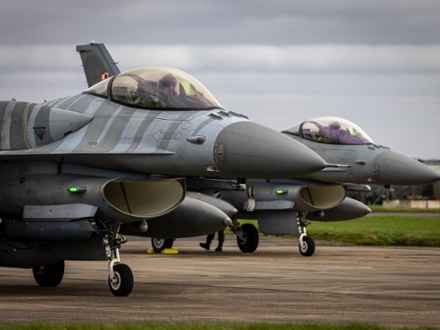
The rapid proliferation of uncrewed aerial systems (UAS) has fundamentally changed the way defence operates.
Once considered niche tools used primarily for reconnaissance, drones are now widely available and increasingly capable, posing a growing threat to military installations, aircraft, and personnel.
For the Royal Air Force, protecting air operations against these evolving threats is a core mission for the RAF Regiment, the service’s dedicated force protection arm. Drawing on a combination of advanced sensors, electronic warfare and precision Air Defence systems, RAF Regiment personnel are developing a layered approach to countering drones that reflects the realities of modern warfare.
“Drone activity is now a routine feature of the operating environment. Our force protection approach has had to evolve rapidly, and the RAF Regiment is leading that adaptation with modern, scalable counter‑UAS capability.”Air Commodore Paul Hamilton
Commandant General RAF Regiment
At the centre of this capability is a suite of technologies designed to detect, disrupt and, if necessary, defeat hostile uncrewed aircraft before they can threaten critical infrastructure.
Detecting the Threat
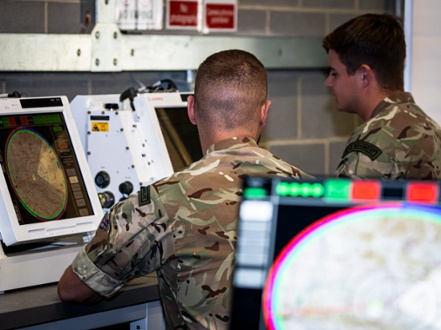
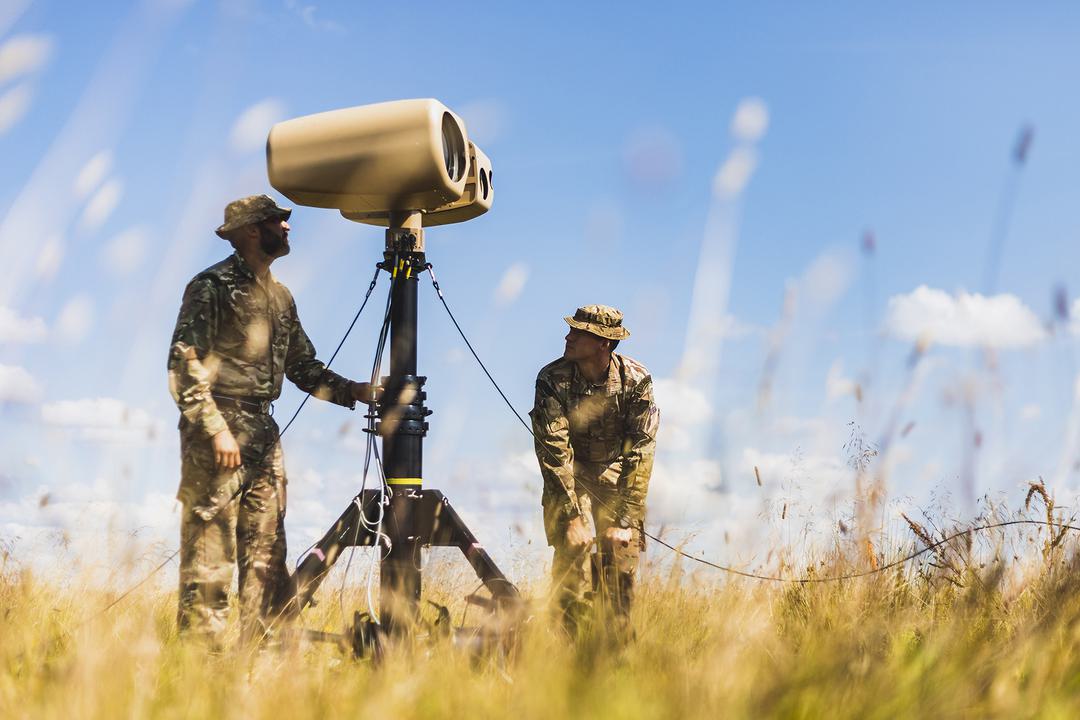
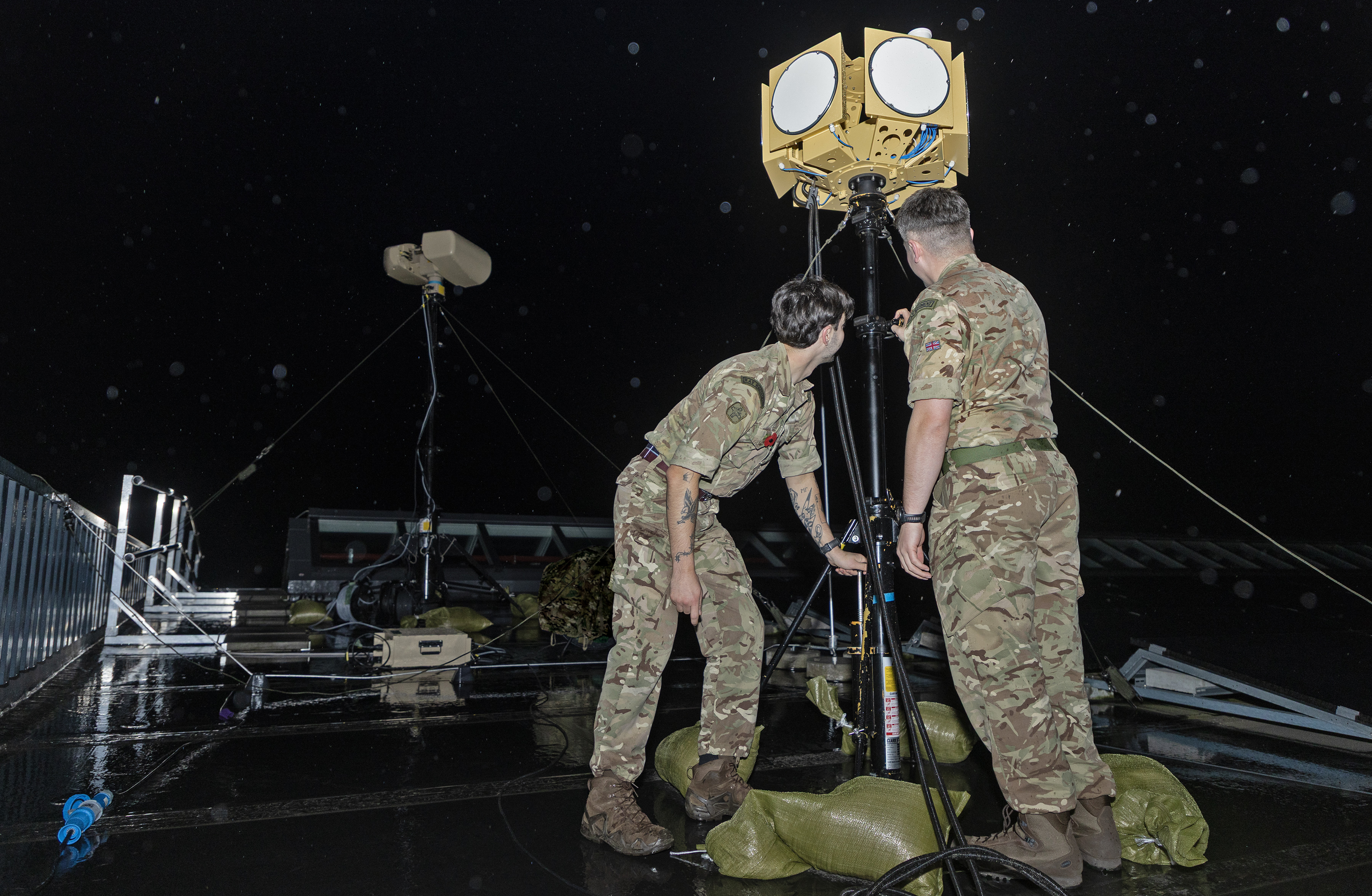
Early detection is critical in countering drone activity. Systems such as ORCUS, the RAF’s integrated counter‑uncrewed aerial system, enable operators to detect, track, identify and defeat UAS operating near protected locations.
Using Radars and Radio Frequency detection sensors, the system can detect and identify the specific radar cross section and/or the radio signals emitted by UAS and their controllers. Further identification and tracking are conducted using ORCUS’ Ultra Long-Range Thermal Imaging camera further adding to an overall picture of activity within the airspace surrounding an airbase. By identifying potential threats early, RAF Regiment teams can decide on the most appropriate response before a drone reaches sensitive areas.
“Early detection of hostile UAS is vital; we have witnessed the destruction they have caused in Ukraine. Systems like ORCUS give our operators the ability to see, understand and mitigate the threat much earlier, enabling timely and proportionate decisions.”Air Commodore Paul Hamilton
Commandant General RAF Regiment
Disrupting and Controlling Drones
Electronic warfare plays a vital role in modern counter‑drone defence. Technologies such as NINJA allow operators to interfere with or takeover control of the communications links that control many types of UAS.
By disrupting or overriding these signals, operators can prevent UAS from completing their mission. In some cases, they may even be able to redirect a drone or force it to land safely, allowing it to be recovered and analysed.
This approach provides an effective way of neutralising drone threats without the need to physically destroy them, while also offering opportunities to gather intelligence about how the drone was operated and where it may have originated.
The Final Layer of Defence
Where electronic countermeasures are not effective, kinetic air defence systems provide a final layer of protection. Together, these capabilities form a layered defence that enables RAF Regiment units to protect air operations against a wide range of threats.
As Hamilton explained: “Our layered system means we always have options: detect, disrupt, or defeat. Rapid Sentry gives us a credible kinetic safeguard when a drone cannot be defeated electronically.”
Working With Allies
Countering drone threats is not a challenge faced by the RAF alone. Across NATO and partner nations, Air Forces and ground units are developing similar capabilities to protect airbases and deployed operations.
The RAF Regiment regularly operates alongside allied forces, integrating its counter‑drone systems with those of partner nations during exercises and operations. This interoperability is essential to ensuring coalition forces can share information, coordinate responses and maintain a common picture of the airspace around key installations.
By combining capabilities across nations, allied forces can build a more resilient defence against drone threats, ensuring that air operations can continue safely even in contested environments.
“Modern air defence is a team effort. The RAF Regiment, and RAF specialists, trains, and fights alongside our Joint Partners and allies every day, ensuring that whatever the threat, we have a shared understanding and a unified response.”Air Commodore Paul Hamilton
Commandant General RAF Regiment

Protecting Air Power
Airbases remain critical hubs for air operations, enabling aircraft to deploy rapidly in support of national and allied objectives. Protecting these locations is therefore essential to maintaining the RAF’s ability to project air power.
Through a combination of advanced technology, highly trained personnel and close cooperation with international partners, the RAF Regiment continues to evolve its force protection capabilities to meet the demands of an increasingly complex security environment.
As UAS technology continues to develop, the ability to detect, disrupt and defeat these threats will remain central to safeguarding the aircraft, personnel and operations that underpin modern air power.