The next generation of remotely piloted medium-altitude, long endurance aircraft.
The Protector RG Mk1 is a highly advanced remotely piloted aircraft used by the RAF. With long endurance and precision strike capability, it supports missions such as surveillance, search and rescue, and armed operations alongside allies.
Role
Protector is the first certified, remotely piloted air system and is tactically interoperable with NATO assets. Based on the General Atomics – Aeronautical Systems Inc (GA-ASI) MQ-9B SkyGuardian®, the UK system is designated Protector RG Mk1.
Technical Specifications
Specifications


Technical Specifications
Weapon Systems
Technical Specifications
Sensors
Capability
The Protector RG Mk1 offers extended range, over 40 hours of endurance, and advanced capabilities, including UK-specific enhancements like improved data links and weapon payloads (MBDA Brimstone 3A and Raytheon UK Paveway IV). Equipped with sensors for full-motion video, infrared imagery, synthetic aperture radar, and ground target tracking, it supports long-duration missions. Based at RAF Waddington, Protector will be operated by RAF crews from the UK, with deployments to up to two additional global locations. Its potential roles include Military Aid to Civil Authorities (MACA), maritime surveillance, and search and rescue.
Protector RG1 Recognition
Interactive 3D model of the Protector RG1 aircraft follows, you can interact with the model using buttons and mouse.
Drag aircraft model to view other angles
Based at

Flying with


Roles

Inside Air Podcast
Latest News
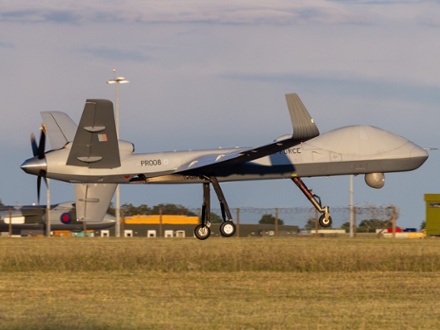
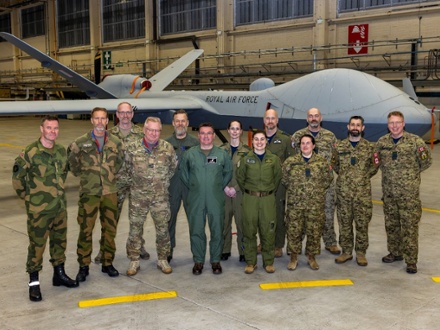
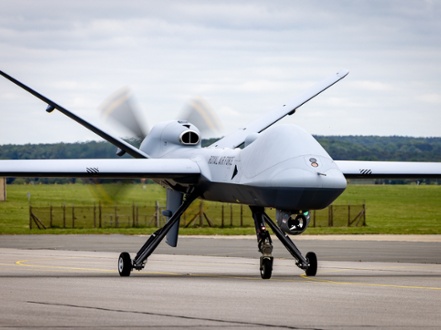


Protector RG Mk 1 in action
The Next Generation of Drones: A New Era for the Royal Air Force
The RAF's Protector RG Mk1 recently entered service, bringing world-leading remotely piloted capability (drone) to UK Defence. Able to fly for over 30 hours at altitudes up to 40,000 ft, Protector delivers cutting-edge intelligence, surveillance, target acquisition, and reconnaissance (ISTAR), as well as strike operations, all remotely piloted from RAF Waddington.
The Next Generation of Drones: A New Era for the Royal Air Force
The RAF's Protector RG Mk1 recently entered service, bringing world-leading remotely piloted capability (drone) to UK Defence. Able to fly for over 30 hours at altitudes up to 40,000 ft, Protector delivers cutting-edge intelligence, surveillance, target acquisition, and reconnaissance (ISTAR), as well as strike operations, all remotely piloted from RAF Waddington.
Ep 79: Protector to the Skies
InsideAIR goes behind the scenes at RAF Waddington as the RAF's latest Remotely Piloted Air System (RPAS) makes its maiden flight. The Protector RG Mk1 will offer a huge leap forward in terms of operability and capability as Sqn Ldr Daz Scales discovers.
RAF 60 Second Update 20
The latest 60 Second Update comes from 31 Squadron, the first UK-based Protector squadron, based at RAF Waddington.
UK's new Protector aircraft
RAF Waddington prepares for the arrival of the UK’s new Protector aircraft to its home of the Protector International Training Centre. A £94 million investment into infrastructural improvements will assist with housing the aircraft ahead of its entry into service in 2024.