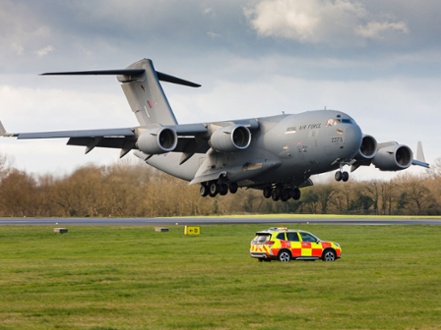
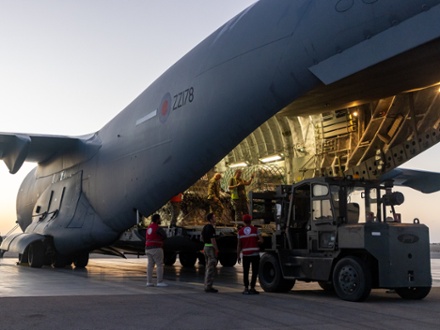
A long range strategic, heavy-lift transport aircraft to operate in combat, peacekeeping or humanitarian missions worldwide.
The Globemaster (C-17A ) is used by the RAF for transporting heavy loads in operations such as Op OVERSTUDY, Op PITTING, and supporting Ukraine.
Role
The Globemaster (C-17A) is a long-range aircraft used by the RAF to transport heavy loads for missions like combat, peacekeeping, and humanitarian aid. Recently, it has supported operations such as Op OVERSTUDY, Op PITTING, and efforts in Ukraine.
Technical Specifications
Specifications


Capability
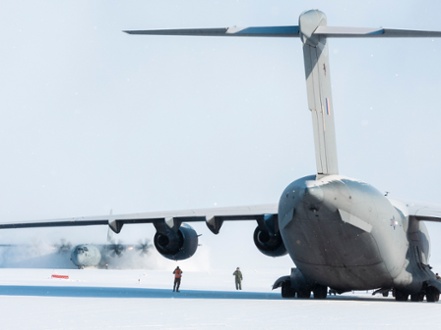
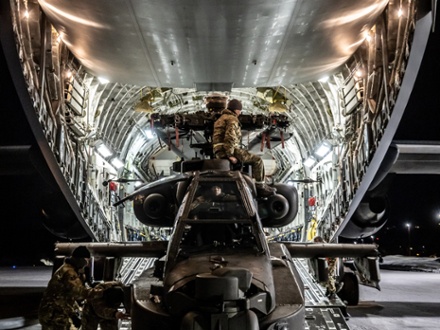
The Globemaster (C-17A) can quickly deliver troops and cargo anywhere in the world, even large and heavy loads. It can carry up to 45,360 kg of freight over 4,500 miles at altitudes above 30,000 feet and is used for long-distance medical evacuations. The UK C-17As are also developing the ability to drop troops from the air and expanding their skills in night operations and landing on rough runways. These missions are carried out in challenging conditions, allowing the C-17A to support tactical operations at a global scale. The C-17A is often the first aircraft to arrive and the last to leave in operations.