The Royal Air Force has taken a major step forward in aircraft maintenance by fitting its first in-house 3D printed component to an operational Typhoon.
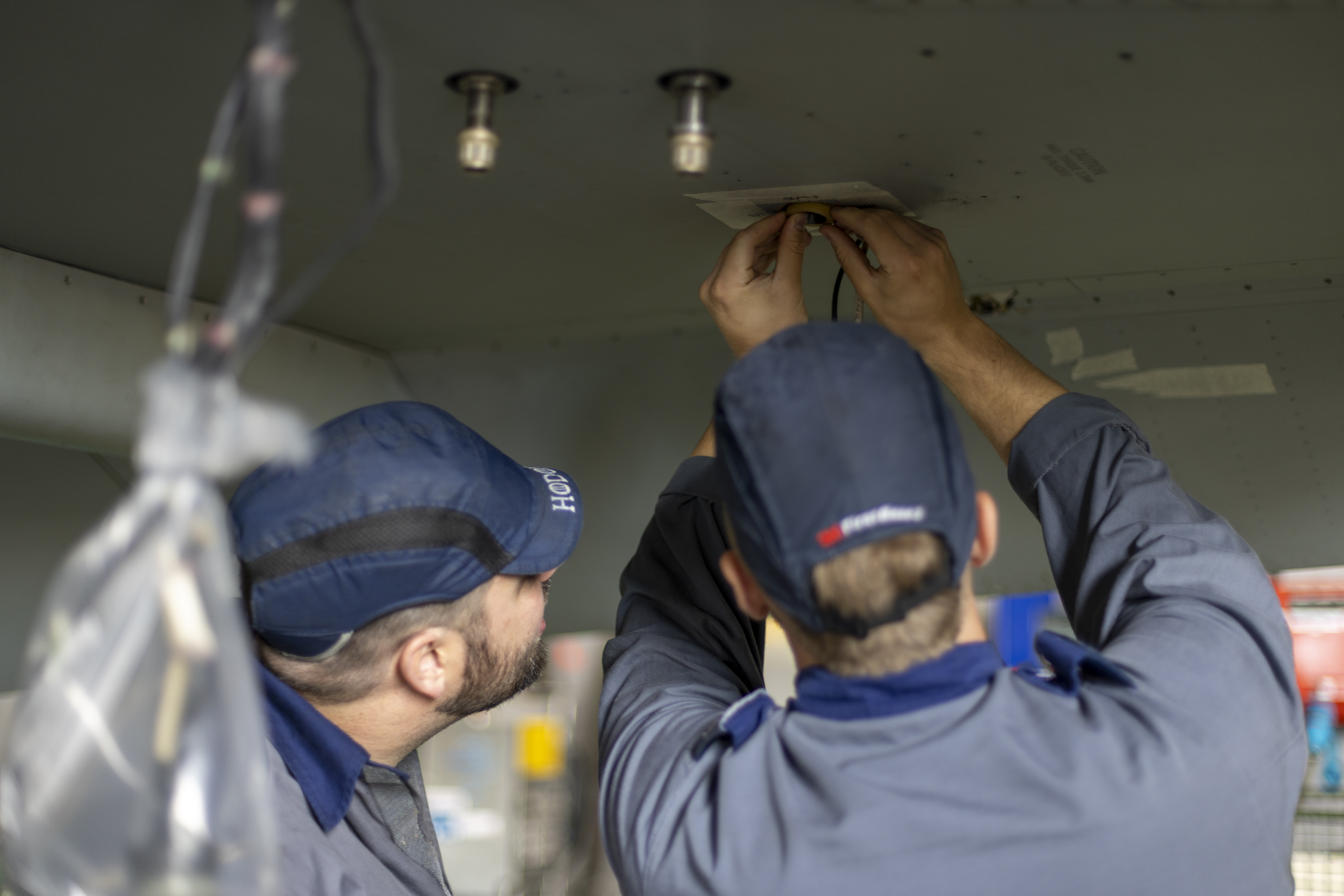
Engineers at RAF Coningsby successfully installed a temporary replacement for a pylon assembly part, demonstrating how additive manufacturing can reduce downtime and return aircraft to the skies more quickly.
Additive manufacturing, also known as 3D printing, is a process of creating a three-dimensional object by building it layer by layer from a digital file.
The process involves precision-scanning a part and sharing the data with both the original manufacturer and 71 Squadron, which then design and print an intermediate solution while a permanent replacement is developed. The achievement highlights the potential for 3D printing to transform repairs across the RAF fleet, cutting costs and increasing availability for operations.

From Concept to Capability
In 2022, innovation funding kickstarted the exploration of how 3D printing could help produce aircraft and equipment parts quickly and securely. Through testing and experimentation, this evolved into RAF Advanced Manufacturing - eXploitation (RAF AM-X), a capability that has now proven both technically viable and operationally effective.
“This achievement marks a pivotal milestone in the RAF’s journey to embed Advanced Manufacturing (AM) as a core capability and warfighting enabler. The successful return of the Typhoon to be QRA available, enabled by the metallic additively manufactured yaw spigot, exemplifies the operational impact of RAF AM-X.
Without the use of this technology, local innovation and RAF engineers’ operational mindset, this aircraft would have been unusable for many months. In the coming months, Air Support will share detailed plans for the expansion of such capabilities, to enhance our agility and readiness to fly and fight.”
Air Vice-Marshal Shaun Harris, Director Support, HQ Air
From Project Warhol to RAF-Wide Capability
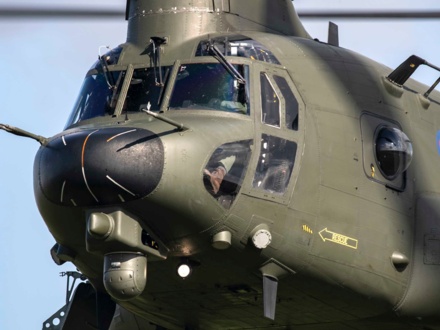
Originally launched as Project Warhol under 71 (IR) Sqn, RAF AM-X has since expanded across the Support Force. The team now produces both polymer and metallic components for a range of flying and non-flying applications such as the F-35 Lightning, A400M, Chinook Helicopter and Mk 15 Helmets.
The team is also developing a safety case to certify a 3D-printed metallic chaff and flare dispenser for the Apache, Wildcat, and Shadow aircraft.
The RAF is also partnering with the Manufacturing Technology Centre under the High Value Manufacturing Catapult initiative, and collaborating internationally with Five Eyes and NATO allies. Together, they are shaping how additive manufacturing supports Agile Combat Employment and Transition to Conflict strategies.
“While AM-X will not be suitable for every application, it is providing a paradigm shift for aircraft manufacturing and maintenance. AM-X will generate significant operational advantage, increase supply chain resilience, mitigate obsolescence, and ultimately increase fleet availability – all vital tools enhancing the RAF’s ability to ensure sustainment while maximising combat mass.”
Group Captain Justin Blackie, Programme Director for RAF AM-X
Innovation Across the RAF
Additive manufacturing isn’t limited to AM-X. The Chinook Support Centre is developing a certified modification that uses a 3D-printed cockpit mount for a transceiver. Meanwhile, the RAF’s grassroots innovation programme ASTRA has equipped Innovation Hubs with 3D printers across the Service, allowing personnel to learn basic design and fabrication skills for local use.
To bring all of this together, RAF AM-X will release a white paper in early 2026, outlining the RAF’s full additive manufacturing portfolio and providing strategic guidance for future development.
Through innovation, collaboration, and engineering excellence, RAF AM-X is ensuring that the RAF remains ready to fly and fight, no matter what the future holds.