A new Channel 4 documentary shines a powerful light on one of the most complex and chilling incidents ever to unfold on UK soil: the Salisbury nerve agent attack.
The Salisbury Poisonings: The Untold Story goes beyond the headlines to reveal the human, military and community response to the use of a military‑grade nerve agent in a busy English city - an attack that led to the death of a mother of three from Wiltshire. At its heart is the story of the teams responsible for making Salisbury safe again - with RAF Regiment Counter‑Chemical, Biological, Radiological, and Nuclear (CBRN) specialists playing a central role in the Defence response in 2018.
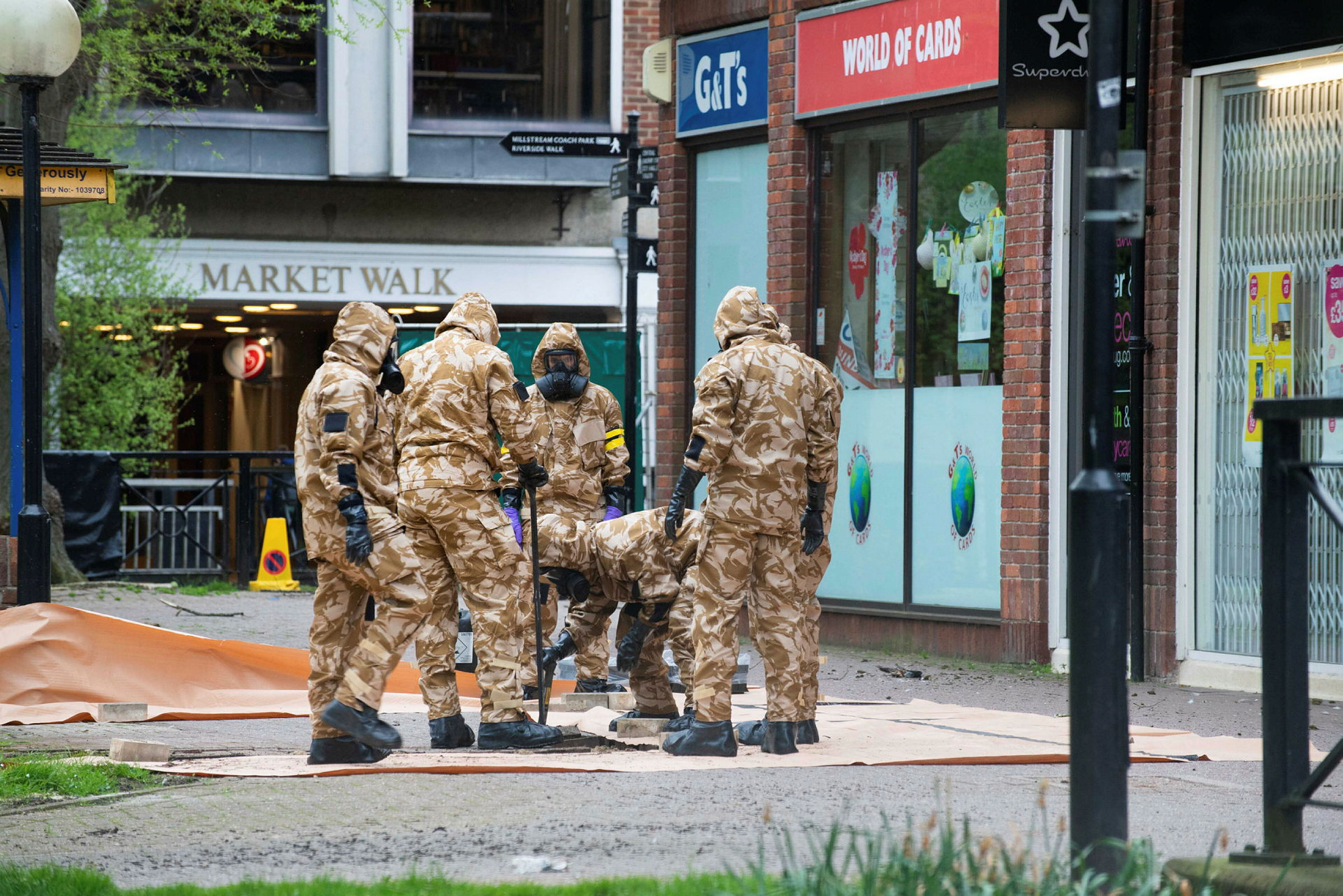
Personnel from 20 Wing (Defence CBRN) RAF Regiment and 27 Squadron RAF Regiment, based at RAF Honington, deployed to support the operation. Working alongside civilian emergency services, they conducted reconnaissance, sampling and decontamination activity across multiple contaminated sites, from public spaces to residential homes, helping ensure the safe removal of hazardous material without creating further risk.

Central to the episode is Group Captain Chez, who led the UK Defence response to the incident. Speaking candidly, he explains how the scale and nature of the crisis became clear only gradually- and how unprecedented the challenge really was.
“We were dealing with something persistent, something that didn’t go away quickly,” he explains. “To the toxicity levels of Novichok, none of us had seen anything like this before.”
When the call first came in, uncertainty dominated. Military personnel including RAF Regiment teams, were required to operate in a civilian community, not a battlefield, with lives, livelihoods and public confidence at stake.
“There was no book I could go to,” Group Captain Chez says. “No standard operating procedure for decontaminating a UK town. We were having to build the plan as we went.”
The programme reveals how the contamination spread across multiple locations, demanding a coordinated and disciplined response. RAF Regiment specialists, operating in full protective equipment, worked under intense pressure within tightly controlled time limits to carry out complex and high-risk tasks.
“If you don’t think it right through to the end,” says Group Captain Chez, “you’re not removing the threat - you’re just pushing it down the line and potentially creating a second incident.”
Dressed in full protective equipment and working under heat and pressure, teams crossed the “hotline” - the boundary between clean and contaminated areas, often with only minutes to complete each task before withdrawing.
“As soon as you step over that line, a stopwatch starts,” he explains. “Heat, stress and uncertainty all add up, and you can’t afford mistakes.”
The documentary also highlights the human dimension of the operation. RAF Regiment personnel found themselves working inside civilian homes left untouched since the incident, a stark departure from traditional operating environments.
“We don’t train to work in people’s houses,” Group Captain Chez reflects. “That brings it right back to families, to children. Doing that in the UK was something I certainly wasn’t prepared for.”
The episode also explores the moment the team learned of a second incident, a stark reminder of the lethal nature of Novichok and the importance of precision in every stage of the response.
“It reinforced everything,” he says. “Every check, every rehearsal - because this stuff is fatal.”
Ultimately, The Untold Story is about more than containment and decontamination. It is about the disciplined, sustained effort led on the ground by specialist forces including the RAF Regiment to restore a city, protect the public and deliver one of the most demanding domestic operations in modern UK history.
“We didn’t want TV coverage,” Group Captain Chez admits. “We just wanted to do our job - and make life safe again.”