While many in the Armed Forces in Europe saw victory in May 1945, there were thousands still engaged in fighting on the other side of the world in the Far East. For them, the war ended on 15 August 1945. As the nation commemorates the 80th anniversary of Victory over Japan Day, we remember the many RAF service personnel who served in the Asia-Pacific region. Here are some of their stories:
Joining the Royal Air Force was, for Warrant Officer Giles, down to his inspirational grandfather, Flight Sergeant John Price of No 605 (County of Warwick), Auxiliary Air Force Squadron,
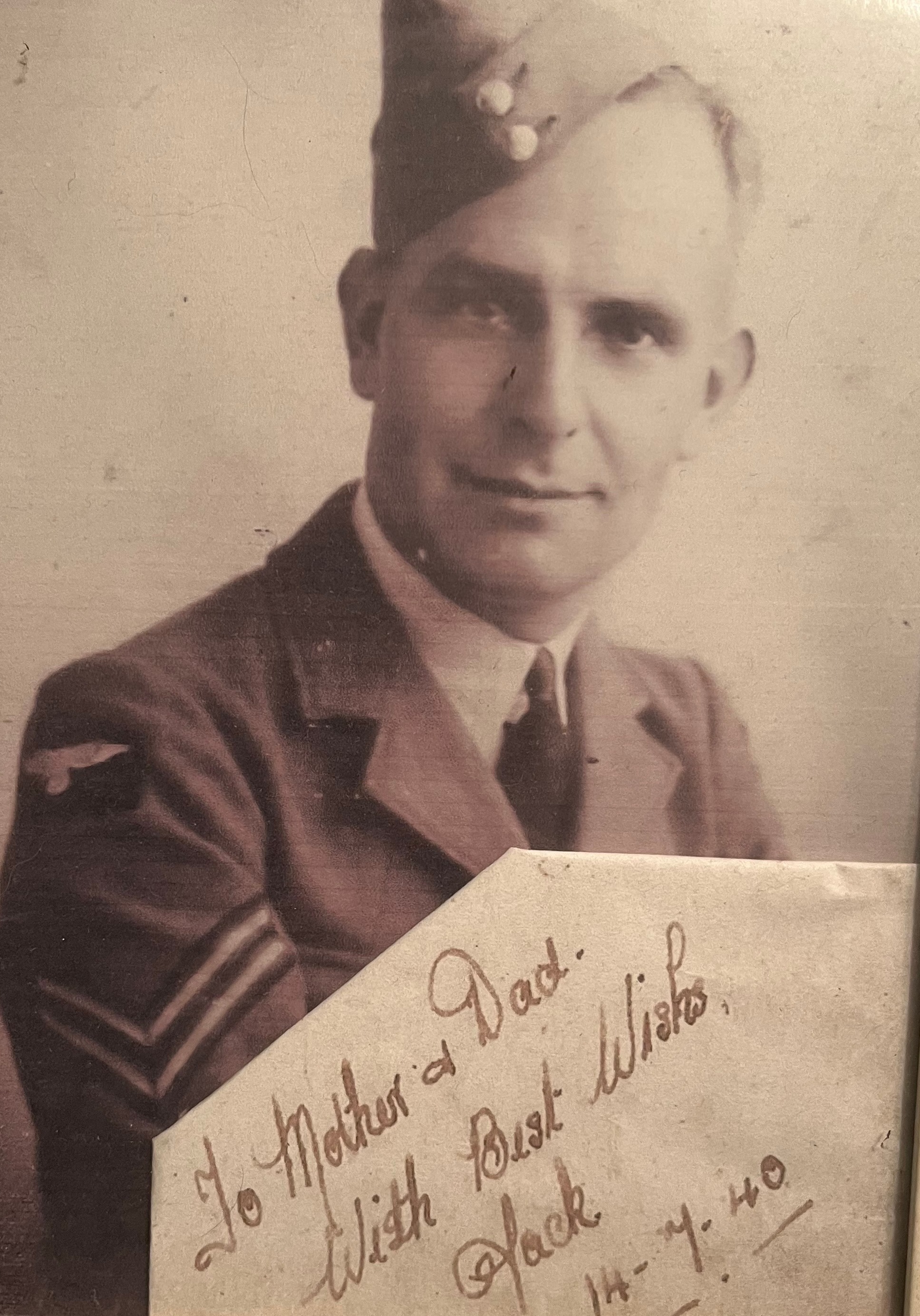
Image courtesy of WO Giles.
Shortly after the Japanese attack on Pearl Harbour in December 1941, Flight Sergeant Price and 605 Sqn departed Scotland by sea, passing through Sierra Leone and Cape Town destined for the Far East. Along with his comrades, Flight Sergeant Price was evacuated with allied troops to Batavia, Java in February 1942 after a Japanese parachute attack. Here, he was held in a prison camp until October 1942. In November a Japanese ship brought him to Hiroshima and the infamous Hiroshima 5-B prisoner of war (POW) camp.
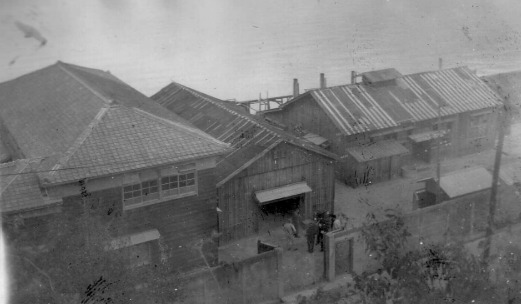
Image courtesy of Roger Mansell, Palo Alto, CA.
Located on Innoshima Island, Hiroshima 5-B housed many British and American POWs, including airmen. Prisoners were used as unskilled labour in the Mitsubishi dockyard on Innoshima. Working conditions were often harsh with inadequate food rations. Many suffered from malnutrition and terrible injuries due to the relentless work. Flight Sergeant Price spent out the remainder of the war at Hiroshima 5-B. His experiences were scribbled down on scraps of paper before he was able to write up his diary on liberation sheets whilst en route to Australia at the end of the war.
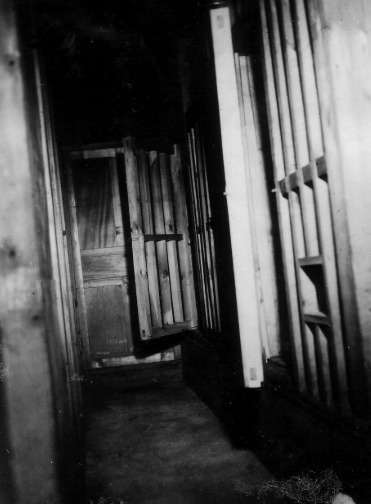
Image courtesy of Roger Mansell, Palo Alto, CA.
John Price’s diaries are a first-hand account of what it was like to live in a prison camp, in his words “under severe conditions until hostilities ceased.”
Contrary to popular belief, war didn’t just end on 15 August with everyone knowing what was going on. There was much confusion as John’s diary for 15 August attests:
We were sitting around the canteen about 4.45pm waiting for the arrival of the remainder of the working party to come in....The yard party were the first to arrive and they were very excited, asking if any of us had heard any outstanding news. Well, none of us had heard anything...one said he had heard the war was over. Of course, the people told simply could not take in such a statement......
Information was patchy due to technical hitches with the radios in the camp.
Of course, during the remainder of the evening, the whole conversation was the news, is it over or not? So, at 9pm we all turned in for the night.
The 16th August opened with yet more uncertainty:
Arose as usual at 5.15am, falling in for ‘tenko’ (roll call). Surprised to see the camp commandment on parade. Commandment said ‘I have only heard rumours, so in respect of your own safety, that you will remain in the camp.’ We were dismissed from the parade.
By 17th August, and after months of meagre rations, John and his comrades were overcome with the simple pleasure of not only freedom, but the prospect of better rations – including fresh vegetables and tea!
An announcement had been made of our daily ration of rice. The ration was now to be 16 kilos of rice, 16 kilos of pastry and beans, plus a slaughtered pig. A church service was held...... Many refused to believe it and continued to work. Quite chaotic. Although the war was officially over, there were several groups who had refused to pack in.
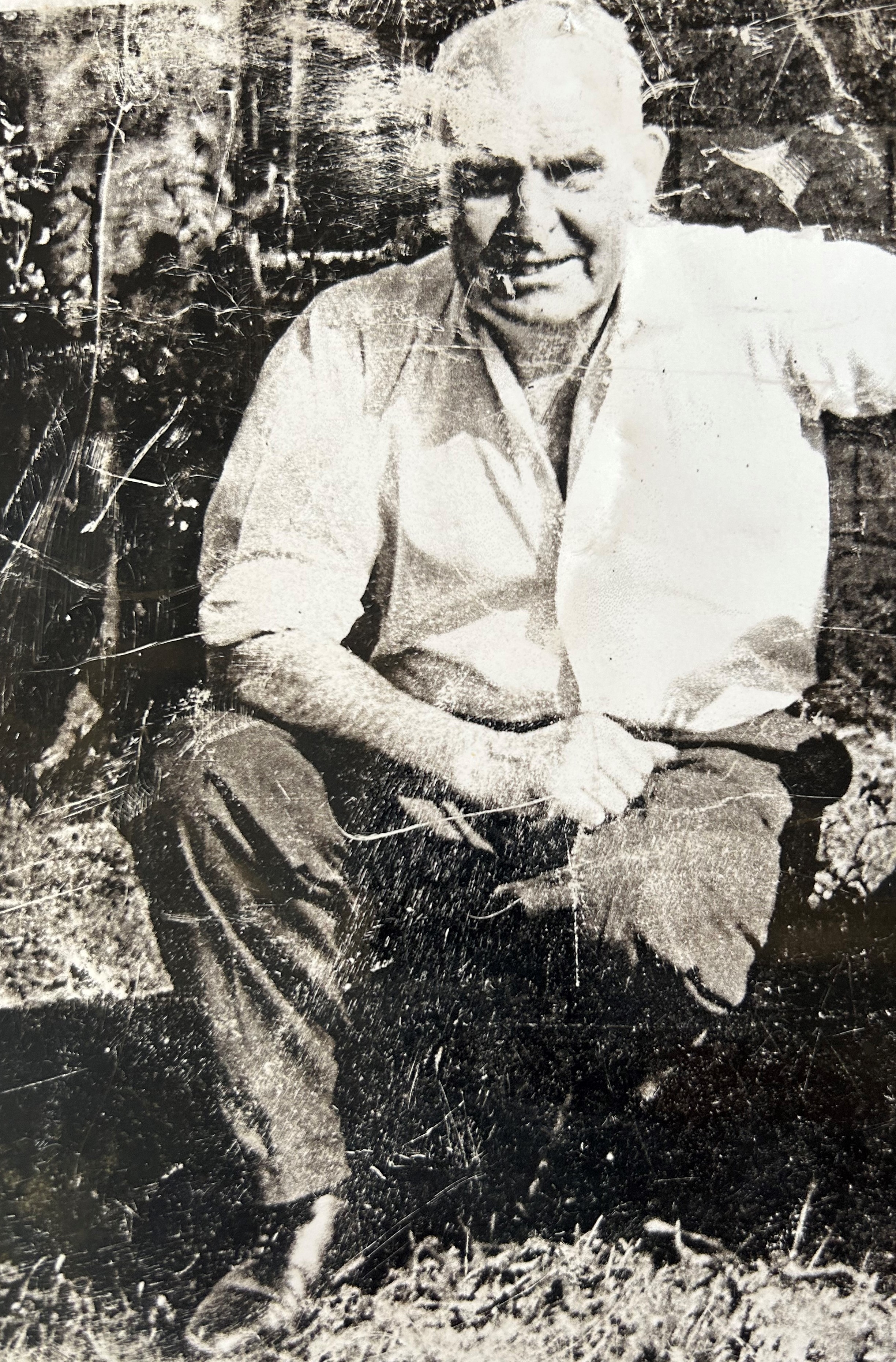
Image courtesy of WO Giles
A mechanic by trade, Flight Sergeant John Price died in his 60s in 1971. He rarely discussed his experiences whilst confined in the POW camp.
In our second story Group Captain Foy reflects on the legacy of her late grandfather, Lance Corporal John Driver Sutton of the Royal Norfolk Regiment. Captured on the day Singapore fell in February 1942, John endured nearly three and a half years as a Prisoner of War in Changi POW camp in east Singapore (the largest prison in the country). Despite the unimaginable conditions, he also kept a diary and carried his Bible with him throughout his captivity—symbols of hope and faith in the darkest of times.
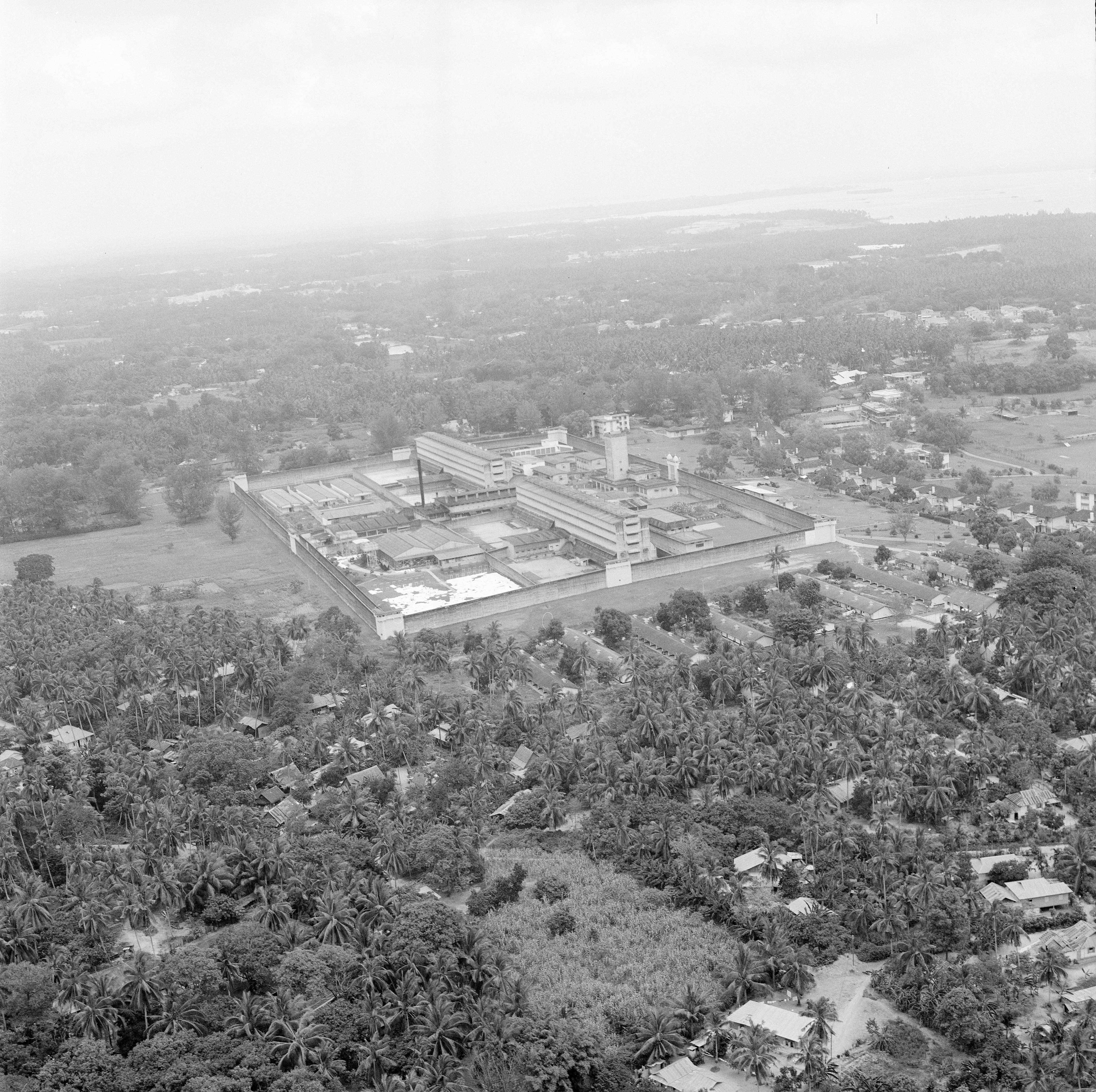
Image courtesy of Air Historical Branch
John’s service and sacrifice inspired Group Captain Foy to join the military herself, and she has since served on operations in Iraq and Afghanistan. Reflecting on her grandfather’s experiences, the Group Captain says:
It’s so important we commemorate VJ Day as everyone went through so much. We must remember their service and sacrifice. It’s not about saying who went through more than others during WW2 but recognising those who were out in the Far East had to endure awful conditions and treatment. It should be a reminder of what they went through. For me, it really does bring home the sacrifice and reinforces to me the depth of gratitude as a nation that we owe to that generation.
On this special anniversary, the Group Captain will be attending the National Memorial Arboretum to honour John’s memory and the sacrifices of all Far East Prisoners of War (FEPOWs).
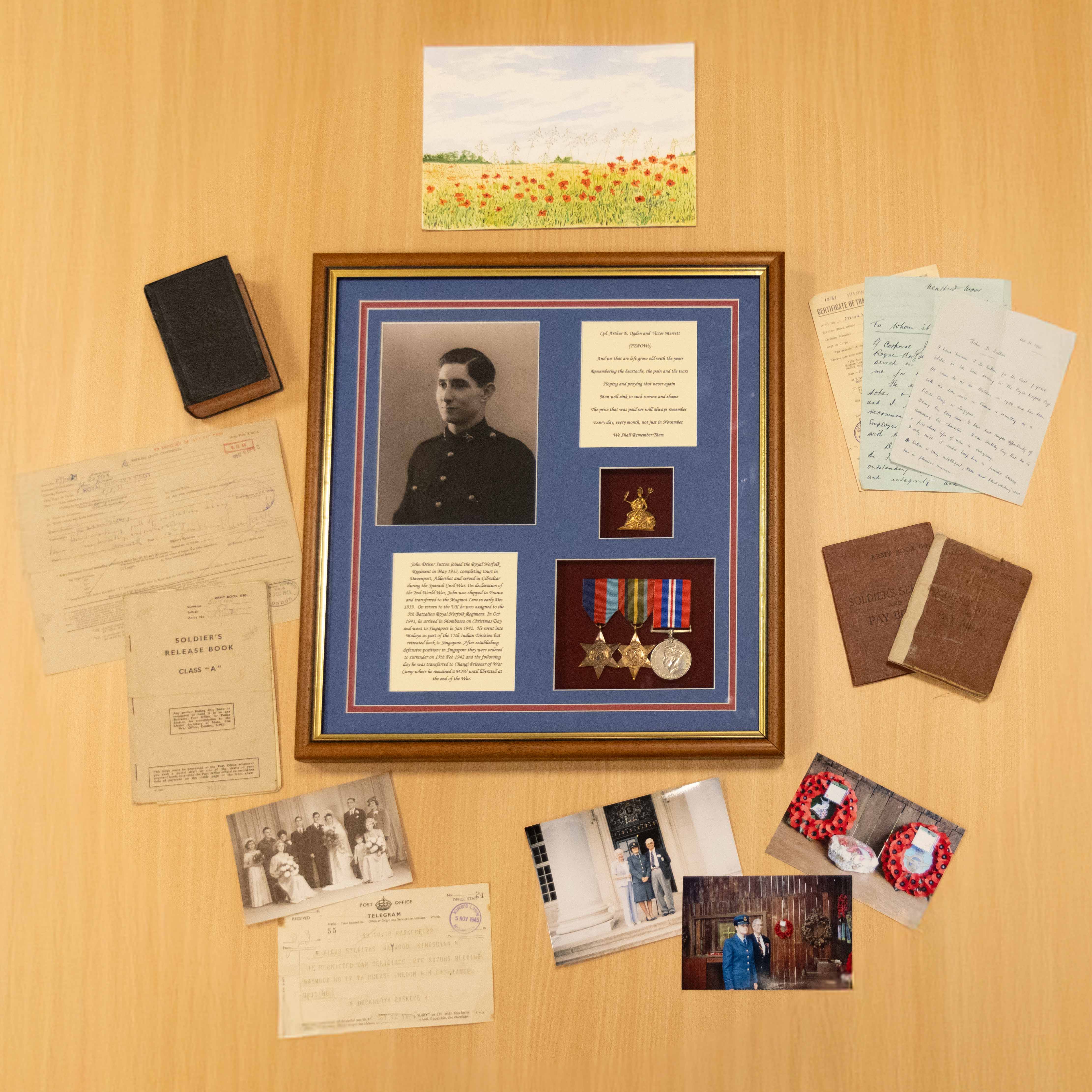
Image courtesy of Group Captain Foy.
John’s story is one of resilience and hope. Despite the hardships he faced, he returned home weighing just 5 stone 5 lbs, rebuilt his life, and married his sweetheart, Marjorie, within three weeks of his return. The silk he brought back from Singapore was even used to make her wedding dress—a poignant reminder of his journey.
Group Captain Foy was fortunate to visit Singapore with her grandparents before John passed away, laying a wreath at the Changi Memorial to honour all FEPOWs. Today, she continues to ensure his story is remembered, not just as a family legacy but as a testament to the sacrifices made by so many.
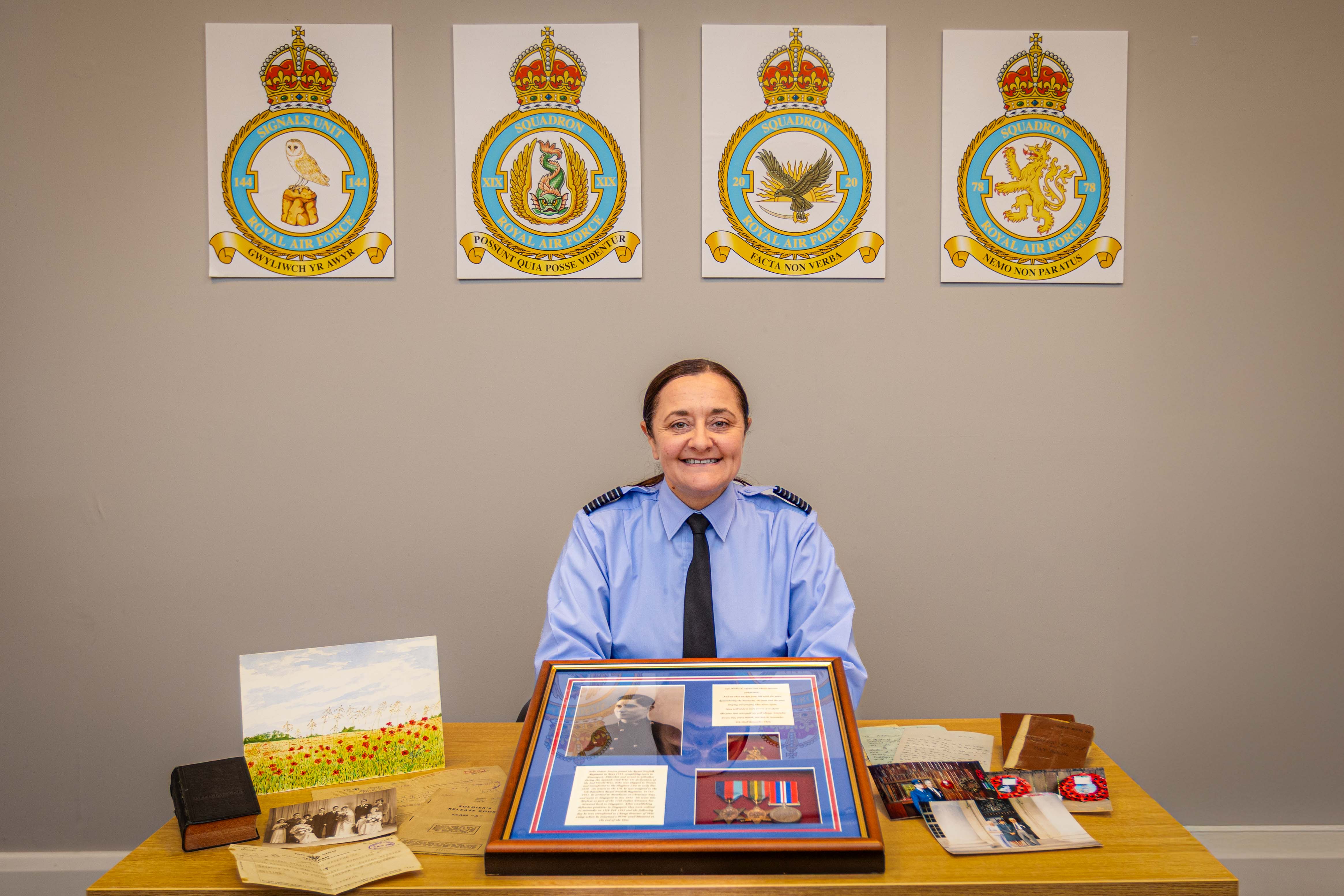
As we reflect on VJ Day 80, let us honour the bravery, resilience, and sacrifices of all who served in the Far East. Their legacy reminds us of the enduring importance of peace and gratitude.
To find a VJ Day event near you please visit VJ Day 80 - Activities & Events.
For our next life remembered, many thanks to Flight Sergeant Martin for sharing the story of his grandfather, Douglas Sidaway.
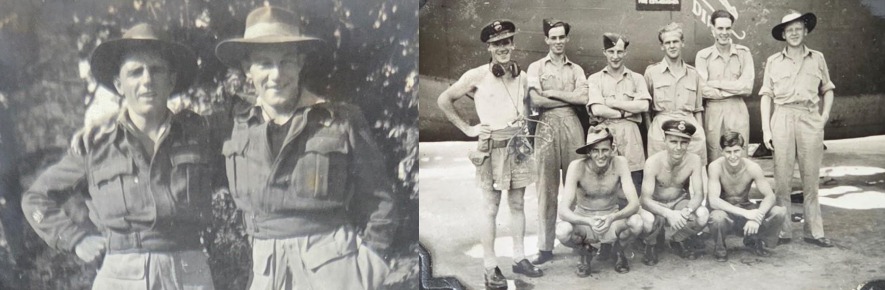
Douglas Sidaway joined the RAF and qualified as an Air Gunner on 30 April 1943 before promotion to Grade 1 Weapons Operator on 23 April 1944. His various postings took him to the Far East in 1944, before returning to the UK in March 1945.
During his sojourn to the Far East he was stationed in Jessore (now officially known as Jashore, a city in the Khulna Division of southwestern Bangladesh). Jessore played a major part in World War II, with Jessore Airport established by the RAF in 1940. It served as a hub for air operations to support campaigns in Burma. Later it became home to various squadrons such as 358 & 292. 358 Squadron operated the American B-24 Liberator heavy bombers.
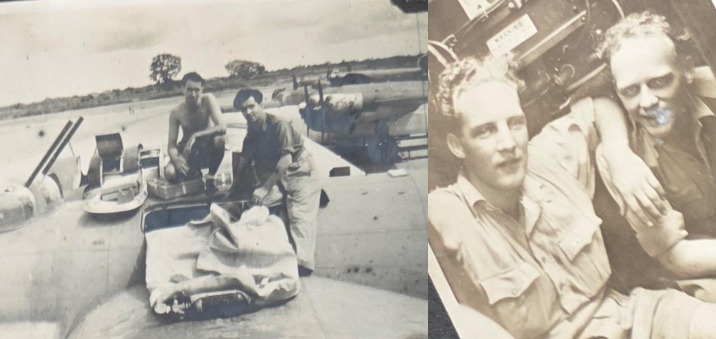
Images courtesy of FS Martin.
Entries in Air Gunner Sidaway’s logbook for 1944 show his crew searching – and locating survivors for various Liberator crashes in and around Jessore. In addition to postings to Cairo, Karachi and Bahrain he was also involved in locating missing Spitfire pilots and various torpedo runs.
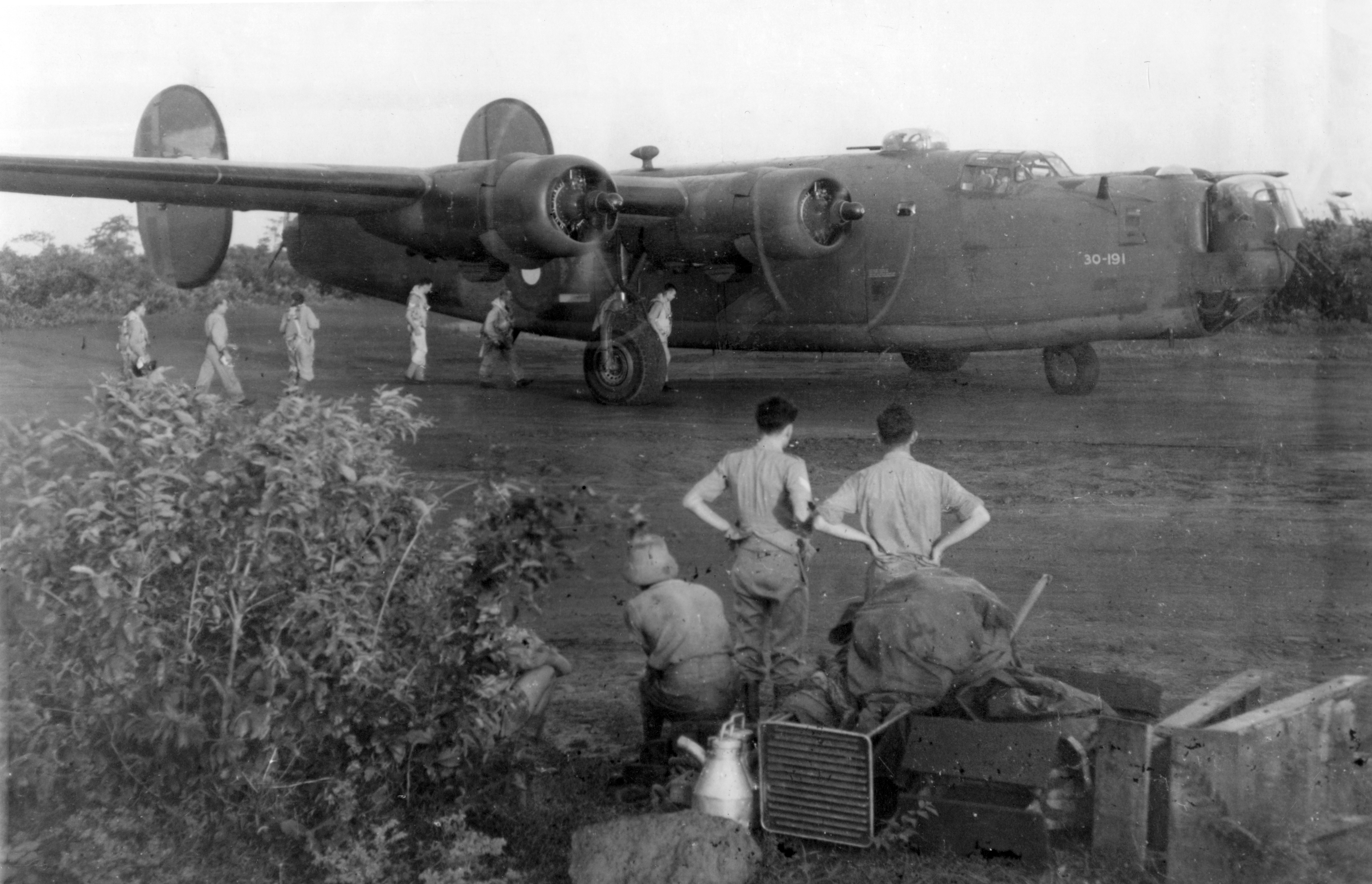
Image courtesy of Air Historical Branch.
At the end of the war, Douglas’s family believe he may have made Warrant Officer and could have been offered a commission. For his service he was awarded the 1939-1945 Star, the Burma Star and the 1939-1945 War Medal. He passed away in 1979.
Incidentally, Flight Sergeant Martin, his grandson, was a teacher on the Direct Entrant Senior Non-Commissioned Officer Course, which included brand new Weapons Systems Operators - the same trade as his grandad. A small world indeed.