

Refueling a jet fighter while its engines are running, clearing a runway of snow and ice, or being at the controls of a towing-tractor as it hauls an RAF A400M into position – these are the things that a Royal Air Force driver, posted to Airfield Support Mechanical Transport (ASMT) at RAF Coningsby, is empowered to do.
RAF Coningsby has two mechanical transport sections. While Station MT manages the white (civilian) vehicle fleet and passenger transport, ASMT works exclusively airside – in and around the airfield and the aircraft themselves. The section employs around 24 to 30 personnel working across four shifts, all qualified logistics drivers under Logistics Support Squadron.
Newly qualified RAF Drivers complete their Phase Two training at the Defence School of Transport in Leconfield, East Yorkshire, before arriving at the Lincolnshire station.
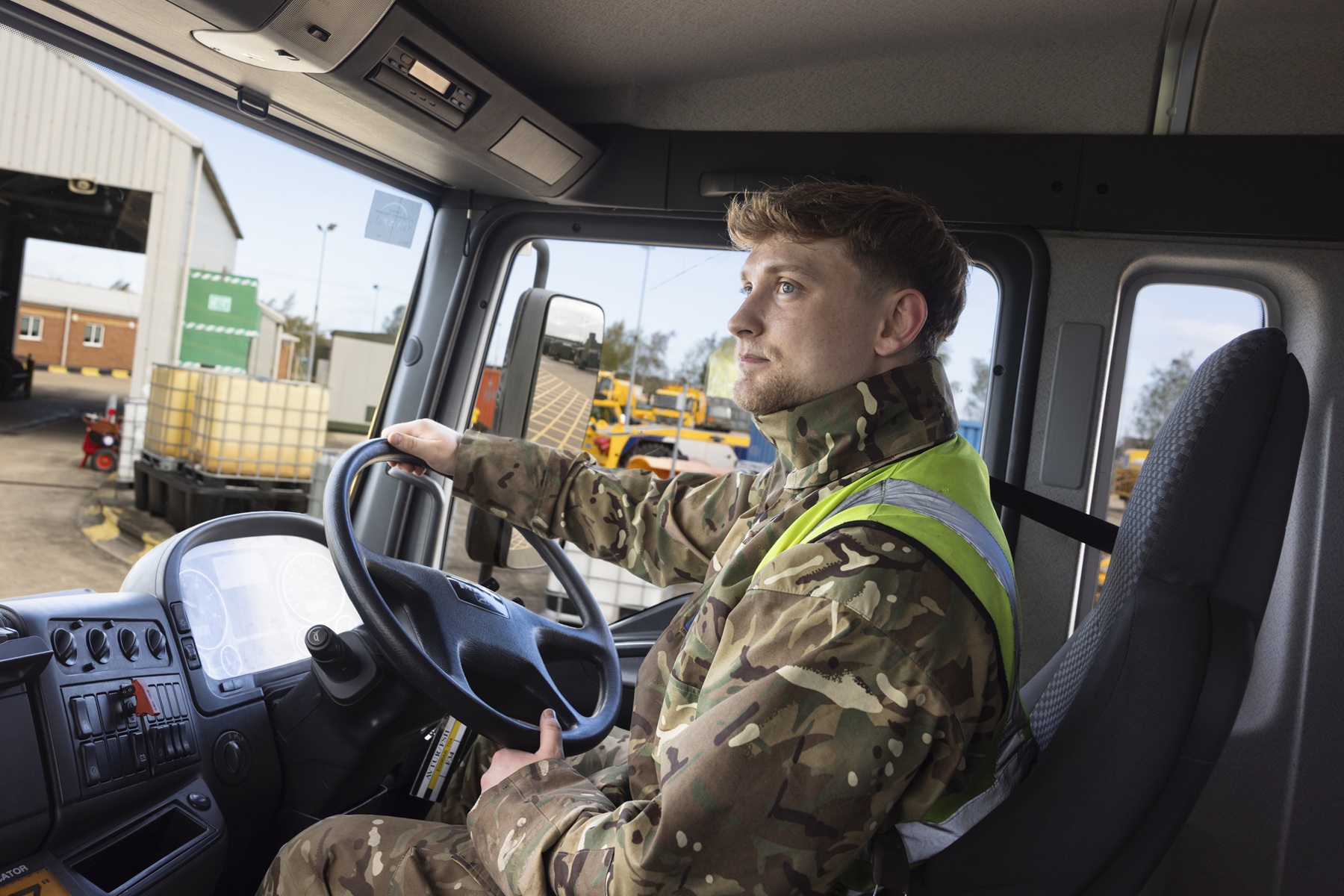
AS1 Adam Spake is a driver at Coningsby’s ASMT Section. He said:
“It takes between eighteen months to two years, but by the time you’re fully qualified you can do pretty much everything; refueling, de-icing checks, FOD (Foreign Object Debris) prevention, and operating specialist vehicles.”
An average day begins with the essentials. Drivers check aviation fuel in the bowsers for water contamination and correct levels of ice-inhibitor. Once satisfied the fuel is good, they top up the aircraft waiting on the flight line before 'bulking' – refilling the bowsers ready for the next wave. After the Typhoons have taken off, ASMT drivers refuel the diesel generators used to power up the aircraft, then sweep the manoeuvering areas for debris.
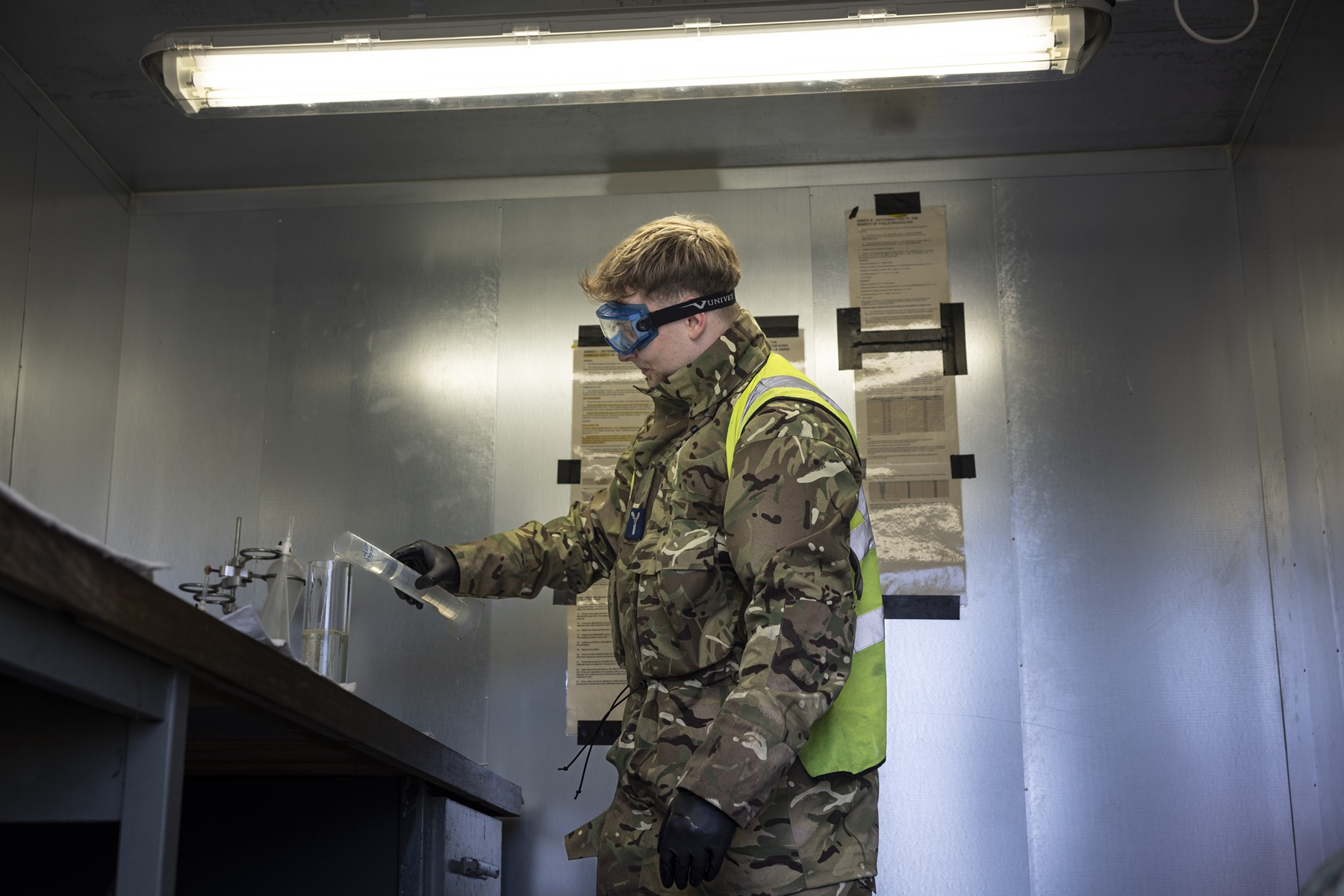
Sergeant Dom Henderson is one of RAF Coningsby most experienced drivers. He said:
“Those are the basics, but the job becomes much more interesting depending on the season, operational tempo, and how busy the station is. In the depths of winter, an ASMT driver could find themselves clearing the runway of snow and ice. During exercises, they might be towing large visiting aircraft using a specialist large aircraft towing tractor – not something just any driver can do.”
Sergeant Henderson continued:
“Then there's hot pit refuelling, topping up a Typhoon's tanks while its engines are still running. It's an adrenaline rush, conducted largely through hand signals, and it's one of the tasks that makes ASMT stand apart.”
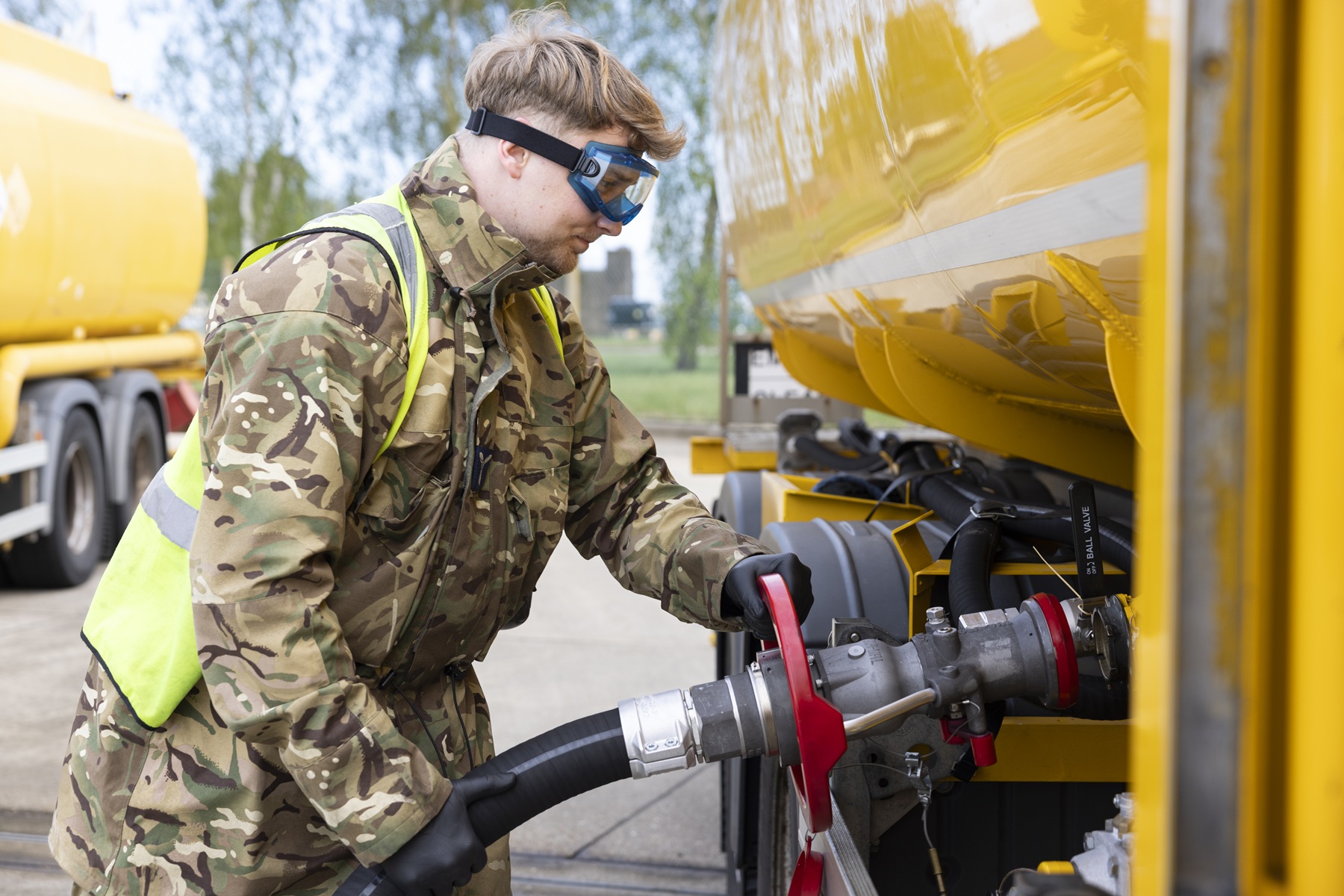
When the Battle of Britain Memorial Flight deployed to RAF Waddington, ASMT personnel went with them, providing aviation fuel support – a reminder that while the section doesn't routinely operate off-station, they're ready to support deployments when the RAF needs them.
For anyone considering a career as an RAF Driver, ASMT offers something genuinely unusual: the chance to drive big, specialist vehicles, work alongside fast jets, and play a direct role in keeping aircraft in the air. It's the kind of work that becomes routine to those who do it – but to anyone watching from the other side of the fence, it's nothing short of fascinating - and the RAF is recruiting for Drivers now.


