

Imagine getting a message that says: come and spend a day with a Typhoon squadron, and bring your questions. That is exactly what happened to a group of Britain's best swimmers, several of them Olympic and Paralympic medallists, when they turned up at RAF Coningsby to find out how fighter pilots handle pressure.
It started with a podcast. Wing Commander Luke Wilkinson, who leads No. 12 Squadron, had been chatting about high performance on a podcast when Emma Lawson, host of the Exceed High Performance podcast, got in touch.
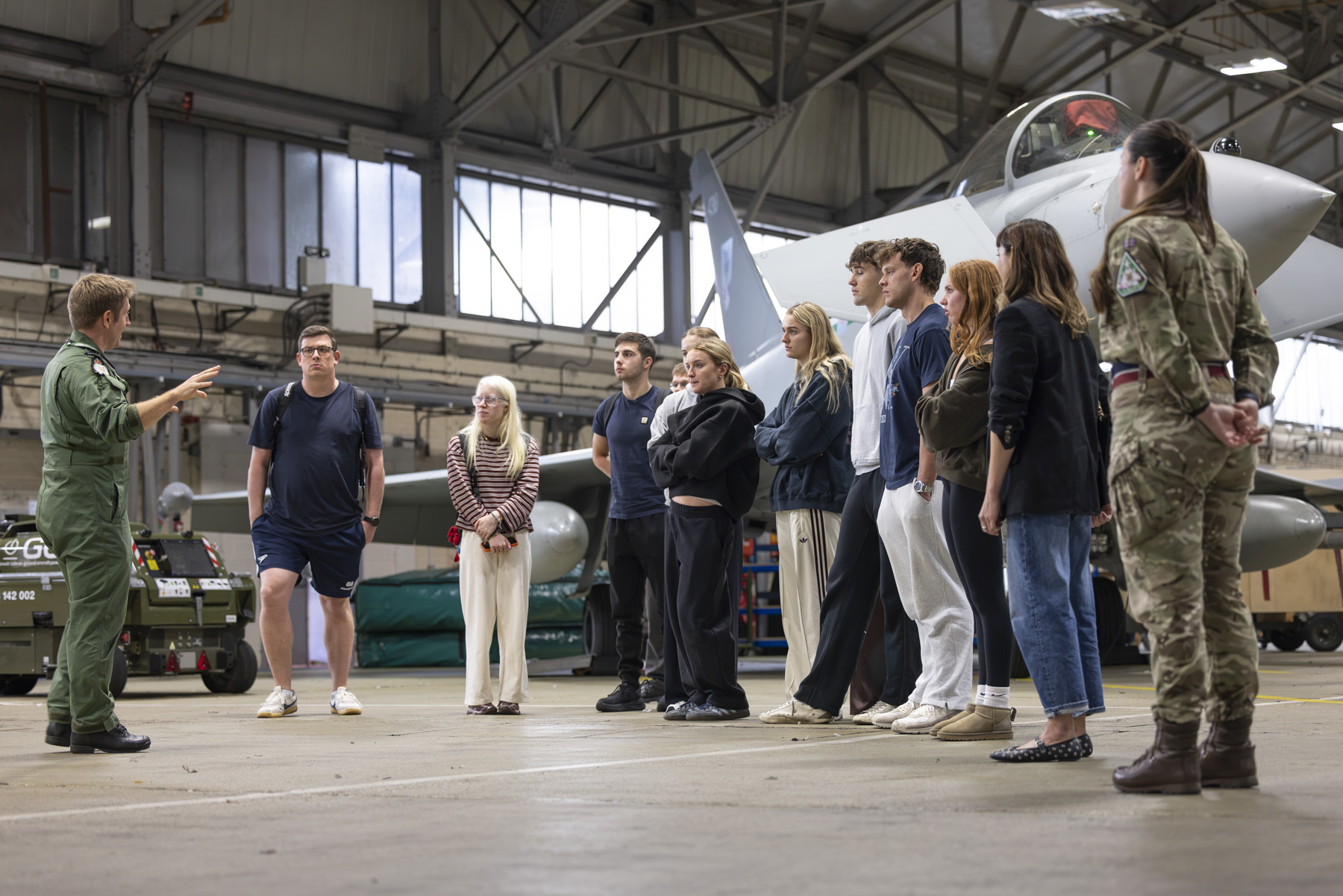
Emma works with senior leaders and elite athletes, exploring how lessons from high-performance environments can be applied across different disciplines. She saw an opportunity to bring together two very different worlds and explore what elite swimmers could learn from the RAF's approach to performance.
The answer was an easy yes, and it led to one of the more unusual training days in recent memory: gold medallists learning from fighter pilots, and fighter pilots quietly taking notes back.
So, what does a Typhoon pilot actually have to teach an Olympic swimmer? More than you might think. Both jobs come down to the same problem: performing at your absolute best when it counts, with no room for a bad day.
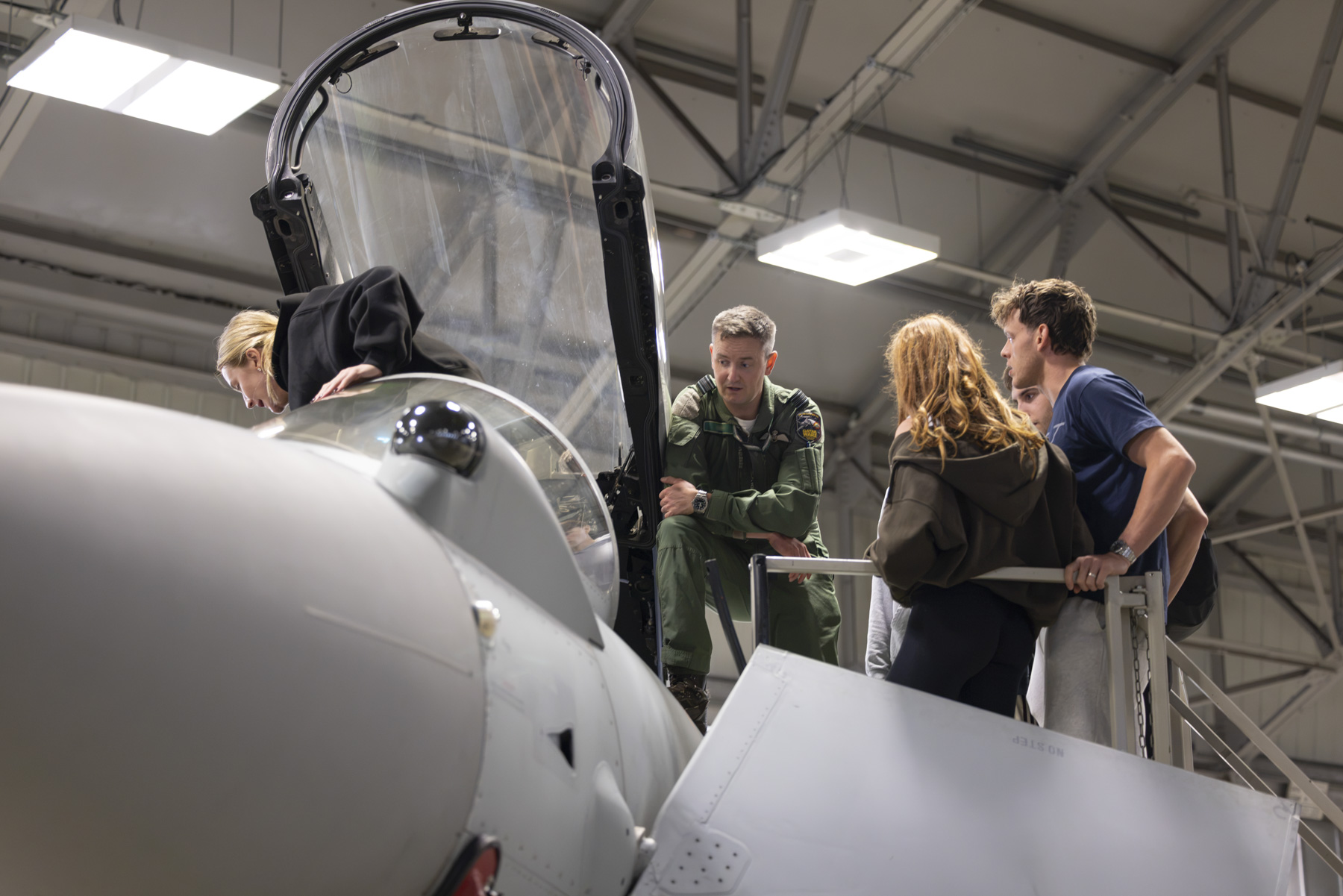
Wilkinson, together with fellow Typhoon pilot Squadron Leader James Sainty, talked the athletes through how pilots make decisions in seconds, how they mentally rehearse everything before it happens (a technique called "chair flying"), and how they debrief honestly afterwards so mistakes actually get fixed instead of repeated.
"We don't do anything superhuman," Wilkinson says. "We just have processes, and once you understand them, you can get better at literally anything." That is not false modesty. It is the whole point: performance at the top level is not about being a different species, it is about being relentlessly disciplined with the basics.
The swimmers, it turned out, were quick studies. Wilkinson noted the driven athletes in the room, were asking the sharpest questions and pushing hardest to understand the detail. By the end of the day, the group even got into the flight simulator to try applying what they had learned.
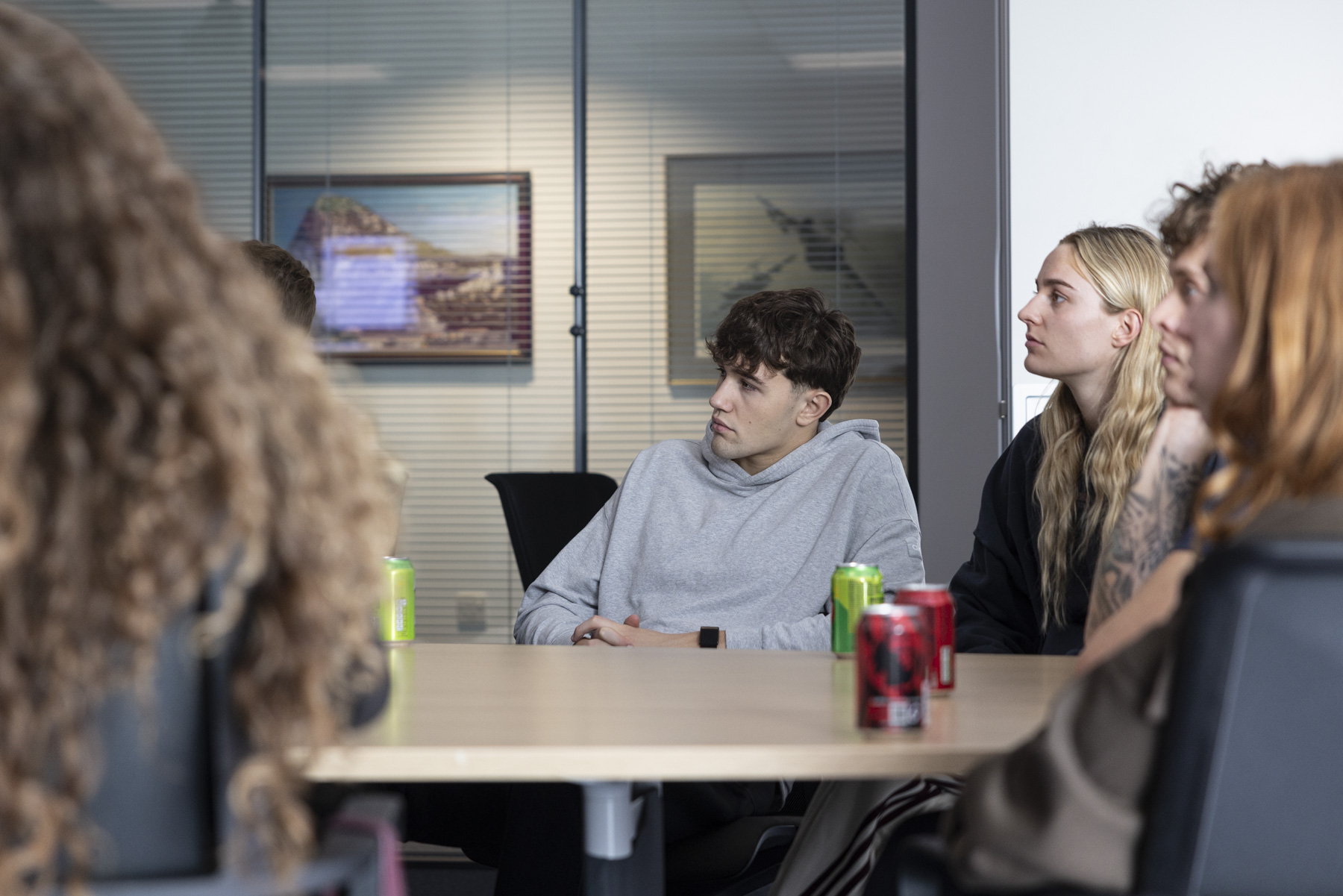
Here is the bit that might matter most if you are wondering what a career in the RAF could actually involve: this is not a one-off gimmick. It is what the culture at a frontline squadron looks like day to day, curious, sharp, always trying to get a little bit better, and confident enough to compare notes with some of the best athletes in the country and come away having learned something too. If that sounds like the kind of environment you would want to be part of, this is what it looks like from the inside.
Ends.


