

Squadron Leader Andrea Jackson manages the flow of aircraft in and out of some of the RAF's busiest airspace. She also manages something rather more personal — what it means to be yourself.
Lincolnshire is still RAF country. Four flying stations — Barkston Heath, Coningsby, Cranwell and Waddington — sit beneath the county’s wide skies. At RAF Coningsby someone is always on duty. The Station runs around the clock delivering Quick Reaction Alert, which means there is always a qualified Air Traffic Controller in the Terminal Air Traffic Control Centre (TATCC).
Andrea Jackson is the Lincolnshire Terminal Air Traffic Control Centre Commander. She leads a team of more than 70 people managing the region’s airspace from all four Lincolnshire airfields. She is 33, has been in the RAF for almost eleven years, and she is, by any measure, doing well.
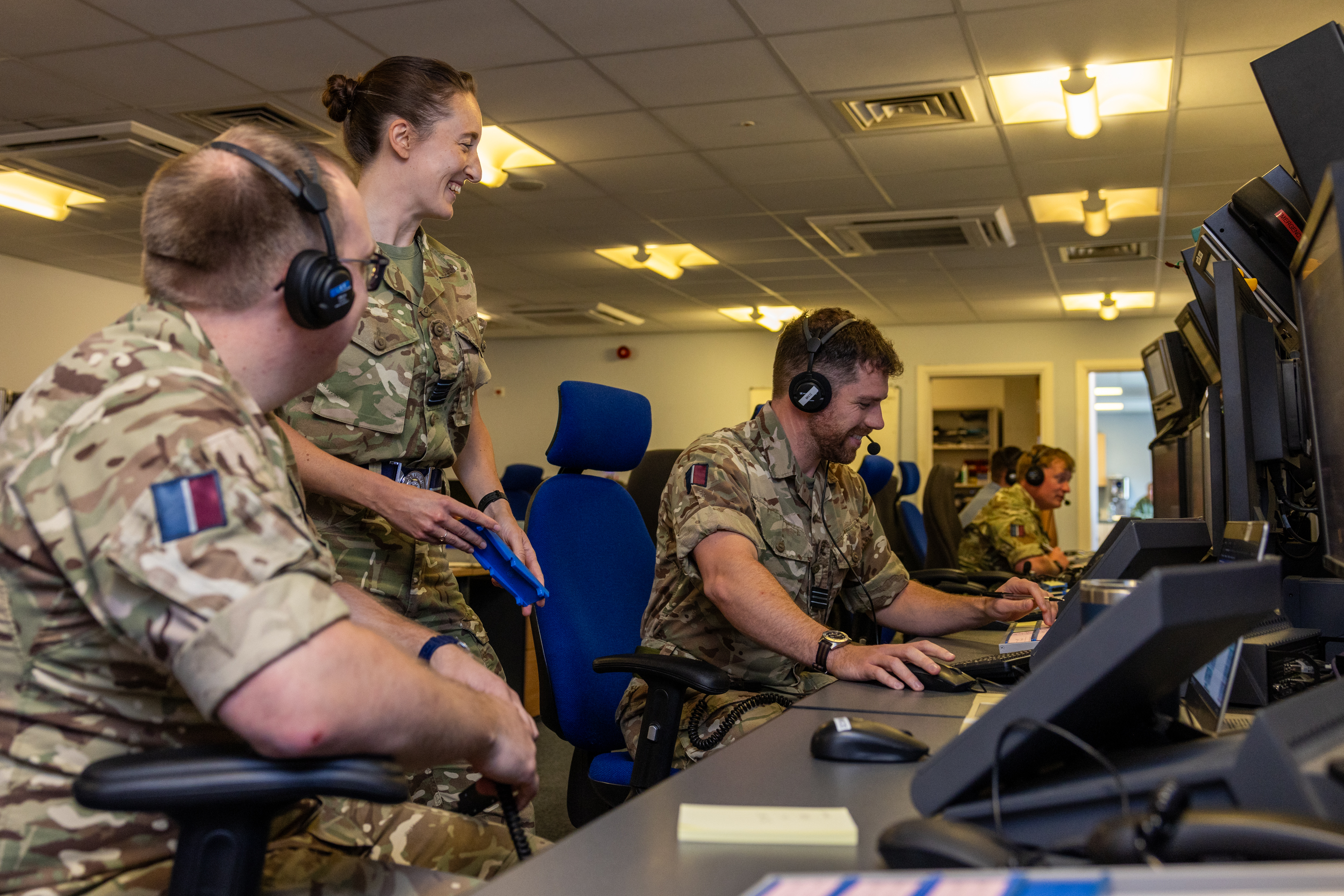
She is also, she says plainly and without fuss, a gay woman.
Andrea didn't always plan on the RAF. She came to it via Army Cadets, a degree, four years as a Special Constable in Lincolnshire, and a near-miss with the Metropolitan Police, who were going to post her to Hackney.
"It felt more dangerous," she says, with a dry smile. "So I held out for the RAF after a few more days, and thankfully they said yes also."
What drew her to Air Traffic Control specifically was its unusual mix of the vocational and the military.
"It's one of the few cadres where you deliver the vocation as well as deliver as an officer," she says. "That appealed to me." It was the right call. She made Squadron Leader within eight years.
Her personal journey arrived later, and quietly. Andrea did not grow up knowing she was gay. The understanding came gradually, in her late twenties, while she was in what she describes as a good, solid, long-term relationship. The realisation, when it came, wasn’t easy.
"It was completely unexpected. And it was very sad, because I liked my life the way it was. It didn't feel like a choice at that point."
She sat with it. Let the thoughts settle. And over time she reached the only honest conclusion she could.
"Going through that experience, while difficult, has led me to a place where I am who I'm supposed to be. That's probably the best way I can summarise it."
Coming out at work is something a lot of LGBTQ+ people approach carefully. For Andrea, it happened gradually — and it happened after she had already been promoted.
"There were a couple of close friends I'd confided in as I was going through it. But I think I was a Squadron Leader before I was actually public about it."
When the moment came, the reaction from her professional peer group was, she says, essentially nothing. Which is exactly what she had hoped for.
"It's just been complete acceptance. It's almost like it has no bearing on your professional output", which clearly, it does not.
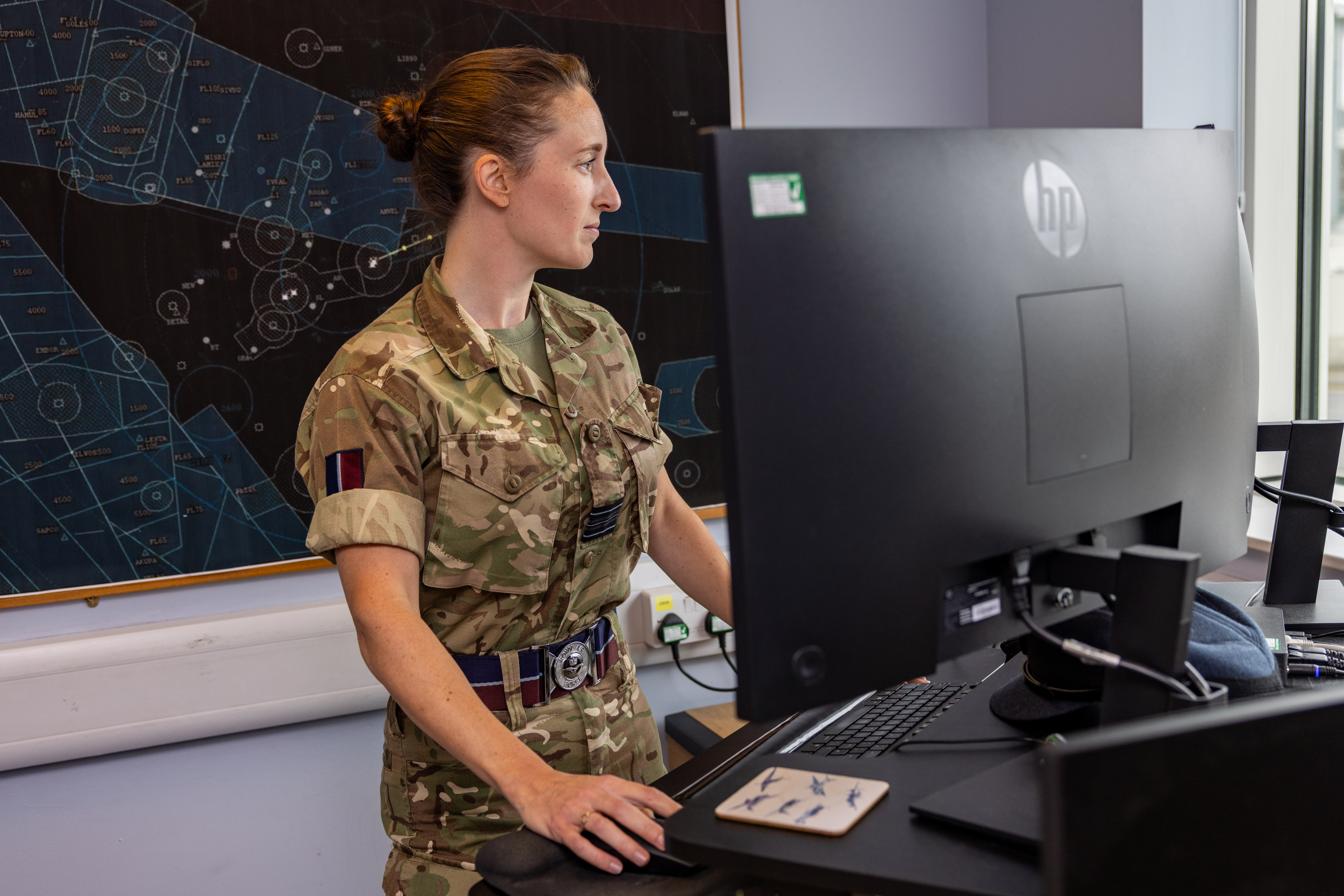
Her chain of command was actively supportive. A previous role had placed her as Military Assistant to a Major General — a senior infantry officer, and, coincidentally, Senior Advocate for the Army’s LGBTQ+ network, and the first person in her chain of command she told.
"He couldn't have been more brilliant," she says.
Her current chain of command at Coningsby has been no different.
"It's not been a thing. Not been a factor."
Andrea is deeply conscious about the privilege of being white, educated, from a stable background. But she describes the quiet recalibration that happened when she began moving through the world as a gay woman.
"I didn't feel self-conscious about holding hands in public necessarily, but I felt aware that I was slightly different." She pauses. "I think that's gone now."
What has stayed is the clearer empathy she brings to leadership. Every new arrival to her unit hears her personal position on inclusion early on. Not a policy briefing. Her view, stated plainly.
"Nothing is taboo and it's a safe space — because you never know," she says. "Everyone is welcome. Despite rank, despite anything, we're all human beings that work together."
She thinks this makes her teams perform better, and she is direct about why.
"People who feel included and welcome and happy will deliver better. If you have humans who are in a psychologically safe place, we will deliver. That's my take on it."
So what would she say to someone in the LGBTQ+ community thinking about a career in the RAF? Or to someone already serving, watching quietly, not quite sure whether it's safe to be seen?
She doesn't hesitate.
"It's absolutely an environment for them — and for everybody. They should expect to be welcomed and received at any unit with the complete support that anyone else would receive."
No caveats. No qualifications. In the skies above Lincolnshire, what matters is whether you can do the job. Down on the ground, in the tower at RAF Coningsby, the same principle applies.


