

Since meeting Nikki and Alli two years ago, I have never failed to be impressed by these two ladies’ tenacity in developing the Defence Support Cancer Network (DCSN) founded in 2022. Its sole aim? To influence change, educate, befriend, and be that support to anyone affected by cancer.
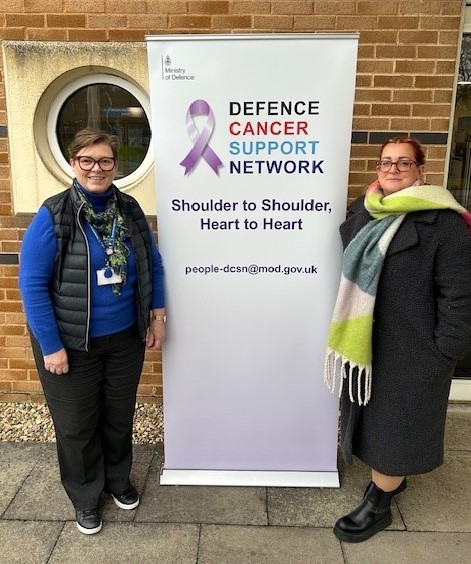
The network also champions World Cancer Day which occurs annually on the 4th of February. The three-year theme for 2025-27 is ‘United by Unique’ – which invites people to share their own individual stories. Each story is punctuated with resilience and above all hope for a brighter future. Sharing a story can be immensely helpful to those on their own personal journey.
Before the DCSN was established, those affected by a cancer diagnosis had nothing but a few broken page links to greet them when searching for help on Defnet. Now there is a sympathetic ear, a suite of resources to assist (including families & colleagues) and comprehensive webpages. The network attracts a combination of those first diagnosed, carers, friends, colleagues and line managers. Three new champions have been recruited in recent months including an Air Commodore!
Over coffee and a great deal of excitement I caught up with Nikki and Alli to hear about what has been happening with the network over the last twelve months:
“We have gone from just under 100 members at the start of last year to about 300 – all tri-service personnel too. It is a mixture of civilians and military. More service personnel have joined recently,” said Nikki.

Throughout the year the network has run regular monthly meetings taking in a variety of topics. It also supports charity events such as Macmillan Cancer Research cake sales. This year the network raised over £2k in cake sales across Defence. Perhaps the highlight of the year has been the signing of the Worldwide Working with Cancer pledge in September 2023 – the first government department to do this. This has resulted in an action plan of about twenty items that the network will be collaborating on with people across defence.
“One in two will contract cancer in their lifetime. We want to build networks with other people to help.”
With the assistance of carers, the network has begun to produce the first MoD Cancer & Serious Illness Guide for Military Personnel. “Having a military champion in Air Commodore Lincoln will help with this work enormously,” said Alli. “This will be the big focus for 2025 as our knowledge of how things work for the Military is still growing and we are keen to develop it.”
What is in store for the next twelve months?
The emphasis on the monthly meetings will alter. There will be a move to securing external speakers rather than a spotlight on a cancer awareness month. “We want to move away from the telling bit to more storytelling to include topics such as returning to work, mental health, cancer & genetics…..even travel insurance,” commented Alli. There are a number of organisations who can offer assistance including the RAF Association and the Charity for Civil Servants.
“In the 1970s average life expectancy following diagnosis was a year. In 2007 it was still only four years. Now it is ten years plus and rising.”
The ambition for 2025 is three-fold: to continue to work with policy makers, increase membership and create a tri-service Ambassador network. Promoting the activities and ethos of the network and being a point of contact for line managers is the main duty of an Ambassador. If you have a little spare time, Nikki or Alli would be pleased to hear from you! Please email [email protected] for more information. The ambition is to have an Ambassador in every unit and station across the country.
The 2024 Women in Defence Awards saw Nikki shortlisted for her work with the DCSN and again highlights the important work of the network.
It is easy to lose sight of the fact that these two incredible ladies have their own cancer stories, and it is through their personal experience, and that of others that the network was created:
“Sometimes it does affect you personally – like anniversaries of the MRI scan,” said Nikki, wistfully. “I still have to go every year for check-ups. Although the scans are clear and people say you are cancer free, that is great, but I am still living with the aftermath…. the loss of some physical ability and continue to manage pain with medication,” said Alli. Both are unanimous in their belief that just because active treatment may have ended, and a person has completed a phased return to work that everything is fine. This is not always the case. There may be long term effects including mental health issues, and the need for intensive medication. Workplace adjustments are therefore crucial.

If the co-chairs had one wish for the network, it is to prevent people living with cancer from falling through the cracks and closing the grey areas in policies so that they have a clear direction. In addition, linking with career managers is all important. “We need to educate this group too. We need to relay the fact that those recovering from cancer may not be deployable, but they are employable…It is about changing misconceptions,” said an impassioned Alli.
If you have been affected by cancer, the Defence Cancer Support Network is a welcome lifeline. You can find them on SharePoint or by emailing [email protected]
“We tend to give ourselves big goals for the year, but we don’t beat ourselves up if we don’t meet them, “laughed Nikki. “We achieved 99% this year.” Talking to Nikki and Alli, you can understand why.


