A World War Two Spitfire pilot visits Leuchars Aerodrome to watch a Spitfire land on a 90th anniversary trip.
It was an honour to welcome World War Two Spitfire pilot, Mr Douglas Seale, to Leuchars Aerodrome last week. He was invited to attend the base to watch the Spitfires.com owned Spitfire aircraft arrive at Leuchars on the ‘Spitfire 90’ tour of the UK.
In order to commemorate 90 years since the first Supermarine Spitfire flight on 5 Mar 1936, the Royal Air Force and the Battle of Britain Memorial Flight (BBMF) have collaborated with industry partner Spitfires.com to give members of the public the opportunity to bid for a place to fly as a passenger in this iconic aircraft, in order to raise money for The Mark Long Trust and The Royal Air Force Benevolent Fund.
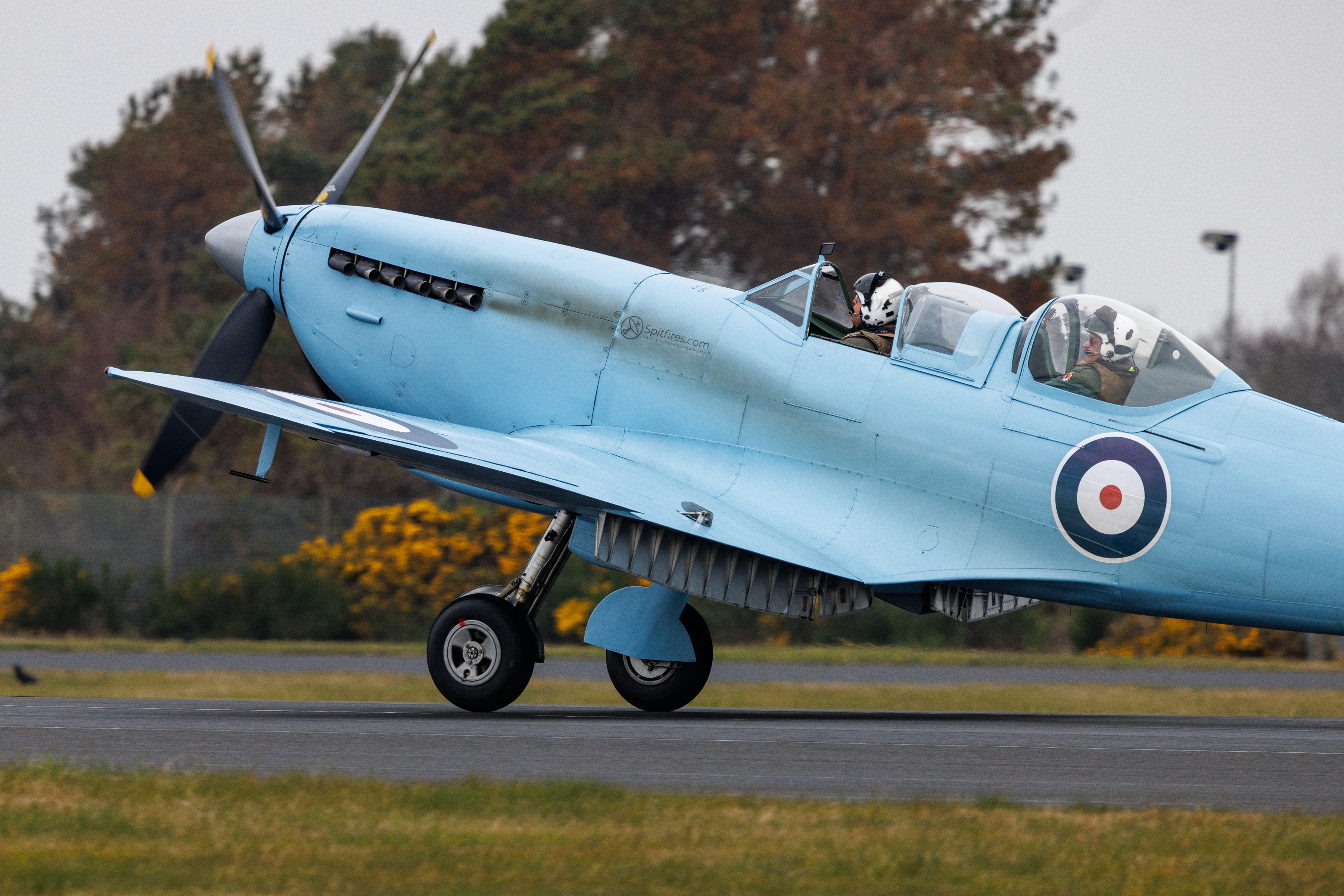
The aircraft has been painted in pale blue, with tail number ‘K5054’ to replicate the original prototype which first flew from Eastleigh Aerodrome 90 years ago. To mark each decade, the aircraft will fly nine legs of the UK, starting and finishing its tour at Southampton Airport (formerly Eastleigh Aerodrome).
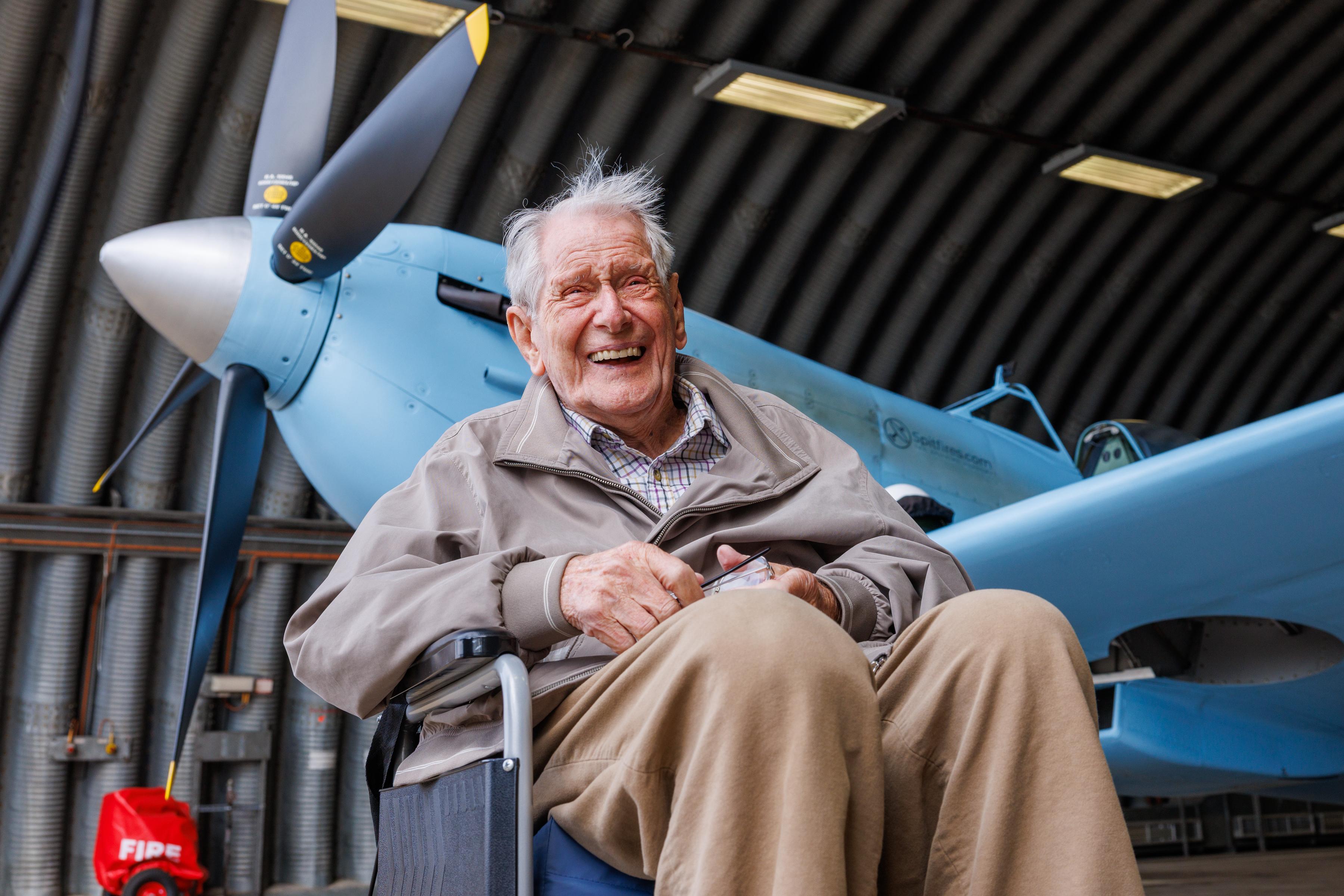
Seeing the Spitfire at Leuchars, Douglas said:
“It’s like seeing an old friend,” and did not hesitate in adding: “I’ll take it up!”
Australia born, Douglas joined the Royal Australian Air Force at the age of 18 and conducted flying training in Sydney:
“On my first sortie, I remember the instructor in the back asking me if I knew which direction the airfield was in. I was able to tell him straight away, to which he responded that I would make a good pilot! Lots of people get quite disorientated when they first go up”.
Douglas was one of many young men to have earned their wings at such a young age, however it didn’t seem to have phased him:
“It wasn’t scary, no, it was exciting! We were so young; 18, 19, 20 years old…it was a busy time with lots going on!”
When asked what prompted him to become a pilot, Douglas said:
“I used to love climbing trees and being up high as a child. It was my father who suggested that I might like to fly a plane”.
Douglas was sent to the UK during World War Two to assist with the war efforts:
“I was told I was being sent to RAF East Kirkby for a rest, but I was a fighter pilot being sent to an RAF Bomber Command Station, so there certainly wasn’t any rest!”
Alasdair Seale, Douglas’ son, said that his father doesn’t talk much about the war at all:
“I do recall him telling me of a time that they shot down a German aircraft. They received radio communications from another German aircraft, telling them to “roll over and fall out.””
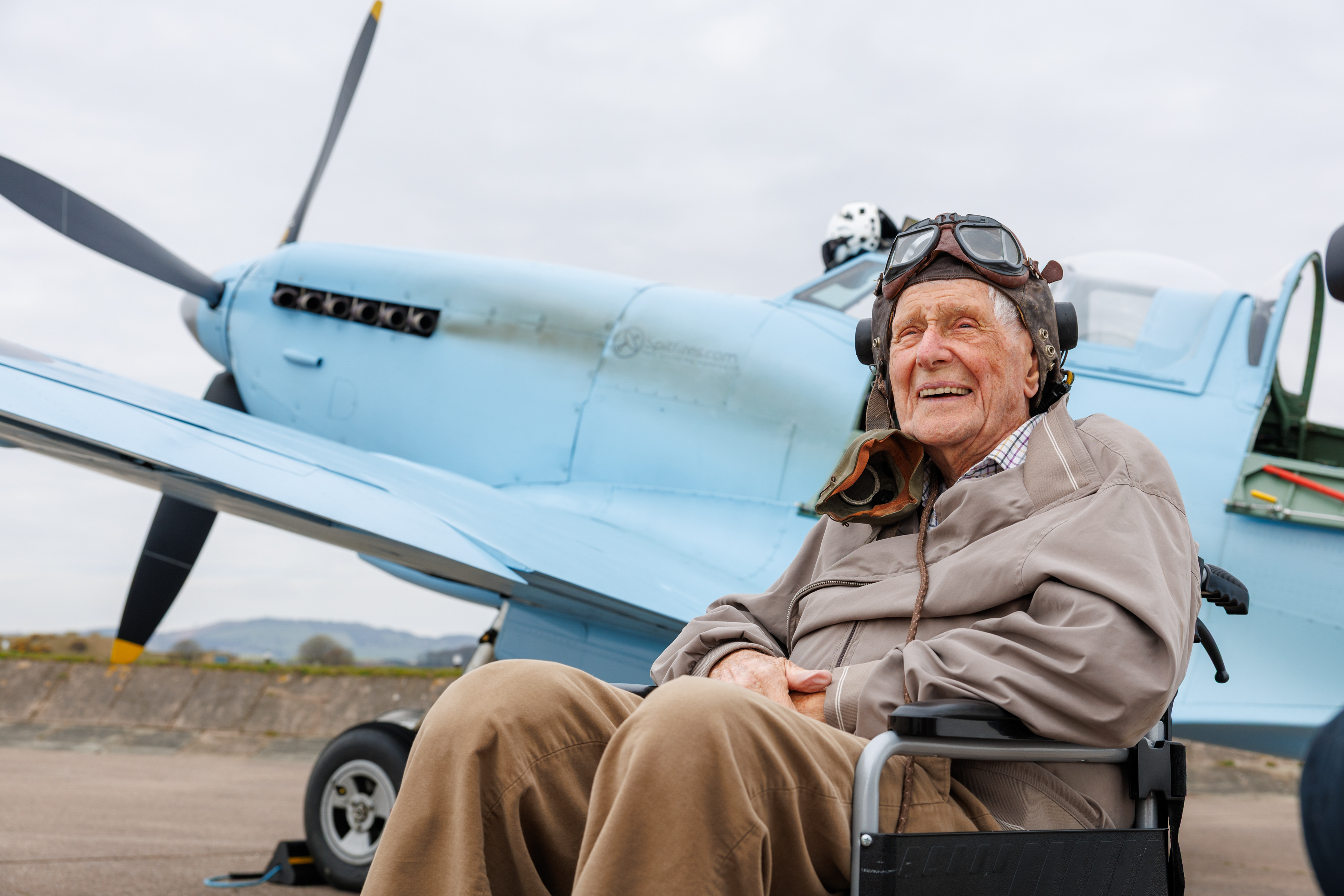
Douglas remembers being sat on his fathers’ shoulders as a 3-year-old watching the landing of the first ever solo flight from England to Australia in 1928, conducted in an Avro 581E Avian light aircraft. 50 years later, he witnessed the 50th anniversary sortie flying the same journey:
“In 1978, I saw a de Havilland DH.82A Tiger Moth aircraft land in a field, having been flown solo by Royal Air Force pilot, David Cyster, as it completed the final leg of the journey”.
By pure coincidence, years later, Douglas bumped into David when he was on a flight to Uist:
“It turned out that David was the pilot! He couldn’t believe it when I told him I’d watched the maiden flight land in Australia, he’d never met anyone who had seen it”.
In addition to his many hours flying the Spitfire, Douglas also flew the Hurricane, and described it as:
“A nicer plane, much more comfortable. It turned faster and was much sharper”.
Having returned to Australia after the war, Douglas met a girl from Edinburgh, and together they decided to head back and settle in Scotland where he has lived since.