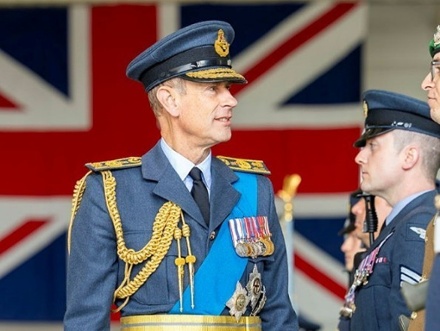
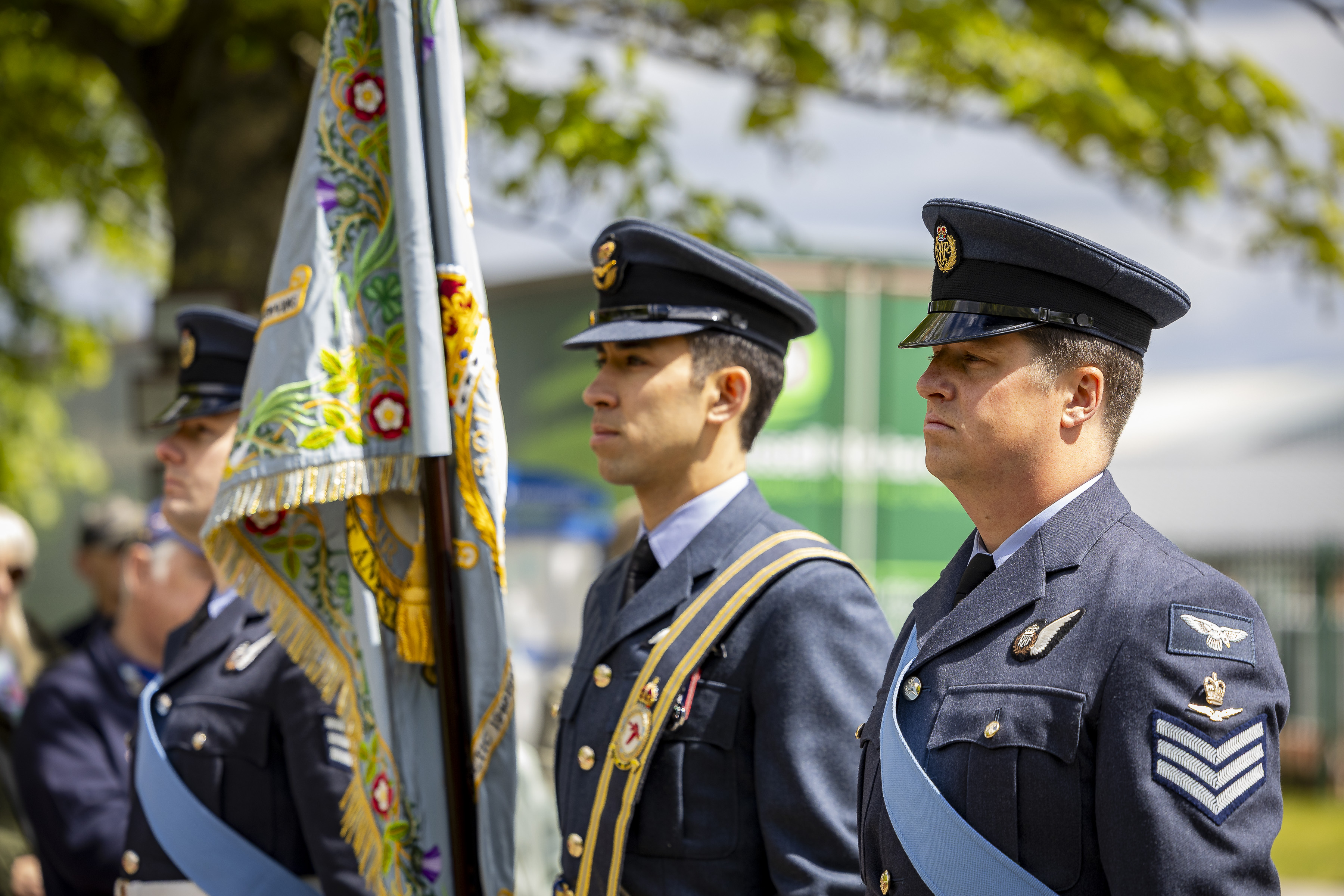
On 15th May, 51 Squadron visited the site of the former RAF Snaith - the Sqn’s spiritual home, to hold a memorial service at the Pollington Airfield Memorial Garden.
51 Squadron flew Halifax Bombers from RAF Snaith between 1943-1945. During this time, 687 Sqn personnel lost their lives, the highest number of any of the 19 locations where the Squadron has been based.
The service marked the 110th anniversary of 51 Squadron and concluded a week celebratory events which comprised of: a traditional Dining in Night with honoured guests, including former OCs of 51 Sqn and the oldest surviving squadron member (95yr old MAcr Jim Fell); a whole sqn ‘Hangar Bash’ with guests from across station and culminating with a formal parade at RAF Snaith.
Since its inception, 51 Squadron has played a key role in the events of history. Between 1916-1918 51 Sqn defended Britain from German Zeppelin raids. During the Second World War 51 Sqn was active as a Bomber Squadron from day one, dropping propaganda leaflets on Germany on the first day of the war, while its final sortie was just 2 weeks before the war’s end. In 1943 51 Squadron was briefly under the command of Coastal Command hunting U-Boats before returning to Bomber Command and operating from RAF Snaith.
Notable wartime operations include the Op BITING - Brunival Raid. In this operation 51 Squadron dropped men of C Company 2nd Parachute Battalion, led by the Major John Frost, behind enemy lines in occupied France to capture components from a new German radar called Wurzberg. The knowledge gained from this raid enabled the development of radio counter measures including "window" which saved the lives of countless aircrew in future operations.
After the war 51 Squadron was assigned to Transport Command flying York aircraft bringing allied POWs home from the Far East after years of captivity and war a long way from home. In 1948 world events called again and 51 Squadron took part in the Berlin Airlift, carrying vital supplies to the people of West Berlin in the face of the Soviet Blockade, a logistical marvel.
A notable 51 Squadron figure is F/O Porokoru Patapu Pohe, the first Māori pilot in the RAF and later the first Māori flying instructor. F/O Pohe led the second wave of Whitley bombers during Op BITING, the first being led by the Legendary Gp Capt Percy Pickard. During his second tour, F/O Pohe was shot down, captured and interned at Stalag Luft III where he took part in the Great Escape and was one of the 50 escapees murdered by the Gestapo upon capture. 51 will visit Stalag Luft III in Poland later this year in honour of F/O Pohe.
In 1958 51 Sqn was reformed as an ISTAR Sqn, taking part in operations such as Desert Storm, Herrick, Telic, Ellamy and Shader.
“From defending Britain against Zeppelin raids in the First World War, contributions to Bomber, Coastal and Transport Command during WW2, to its now long history of ISTAR expertise contributing to all interceding major UK military campaigns, few can claim to be as consistently active as 51 Sqn. With significant capability enhancements already forecast for the coming decades, 51 Sqn and the Rivet Joint Platform will undoubtably continue to play a central role in the collection of Intelligence for the UK, NATO and our allied partners, remaining Swift and Sure for many years to come”
Wing Commander Thurston
OC 51 Sqn