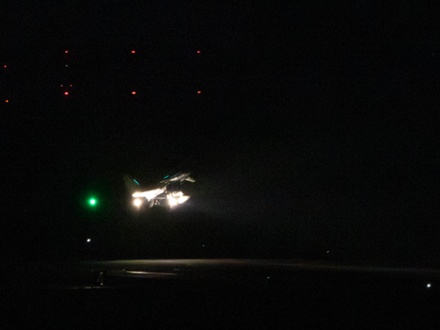
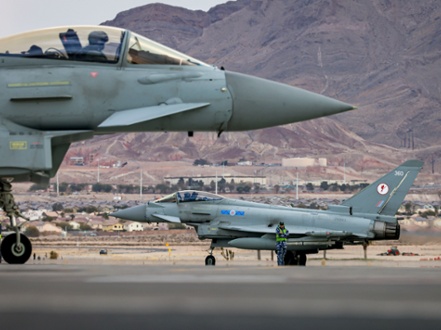
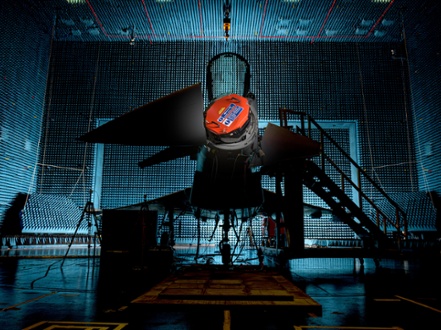
The global Eurofighter Typhoon fleet reached a major milestone this week, surpassing one million flying hours in operational service.

Since first entering service in 2003, Typhoon has established itself as one of the world’s most capable multirole combat aircraft. Over more than two decades it has demonstrated adaptability across air policing, joint patrol initiatives, combat operations and Quick Reaction Alert (QRA) duties.
Today, the RAF Typhoon FGR Mk4 is a highly agile and potent combat aircraft. As a versatile fourth-generation fighter, it operates across the full spectrum of air operations — from routine airspace security and peacekeeping to high-intensity conflict. Its distinctive delta wing configuration remains instantly recognisable in skies around the world.
"The Typhoon is the 24/7 backbone of the RAF: defending the UK, protecting NATO and striking terrorists. And it is a real engine for growth, supporting more than 20,000 skilled jobs across the country, backed by our £8 billion exports deal with Türkiye."
Luke Pollard MP
Minister for Defence Readiness and Industry
Nine nations currently operate Typhoon, with Türkiye set to become the tenth.
“Typhoon is incredibly powerful” said Group Captain Andy Shaw, Deputy UK Combat Air Force Commander, “it carries a potent weapons payload, advanced sensors and datalinks, and delivers exactly what air forces need from a modern fast jet. With air policing and ground attack forming the bulk of Typhoon operations globally, speed and payload matter. A million flying hours is proof of Typhoon’s continued relevance and effectiveness in NATO and beyond.”
From the cockpit, that capability is immediate and tangible.
“In the aircraft, you feel the performance the moment you advance the throttles,” said an RAF Typhoon pilot. “Whether you’re scrambling for QRA or supporting troops on the ground, the aircraft gives you confidence. It accelerates hard, it turns aggressively, and it manages an enormous amount of information for you. In demanding airspace, that trust between pilot and jet is everything.”
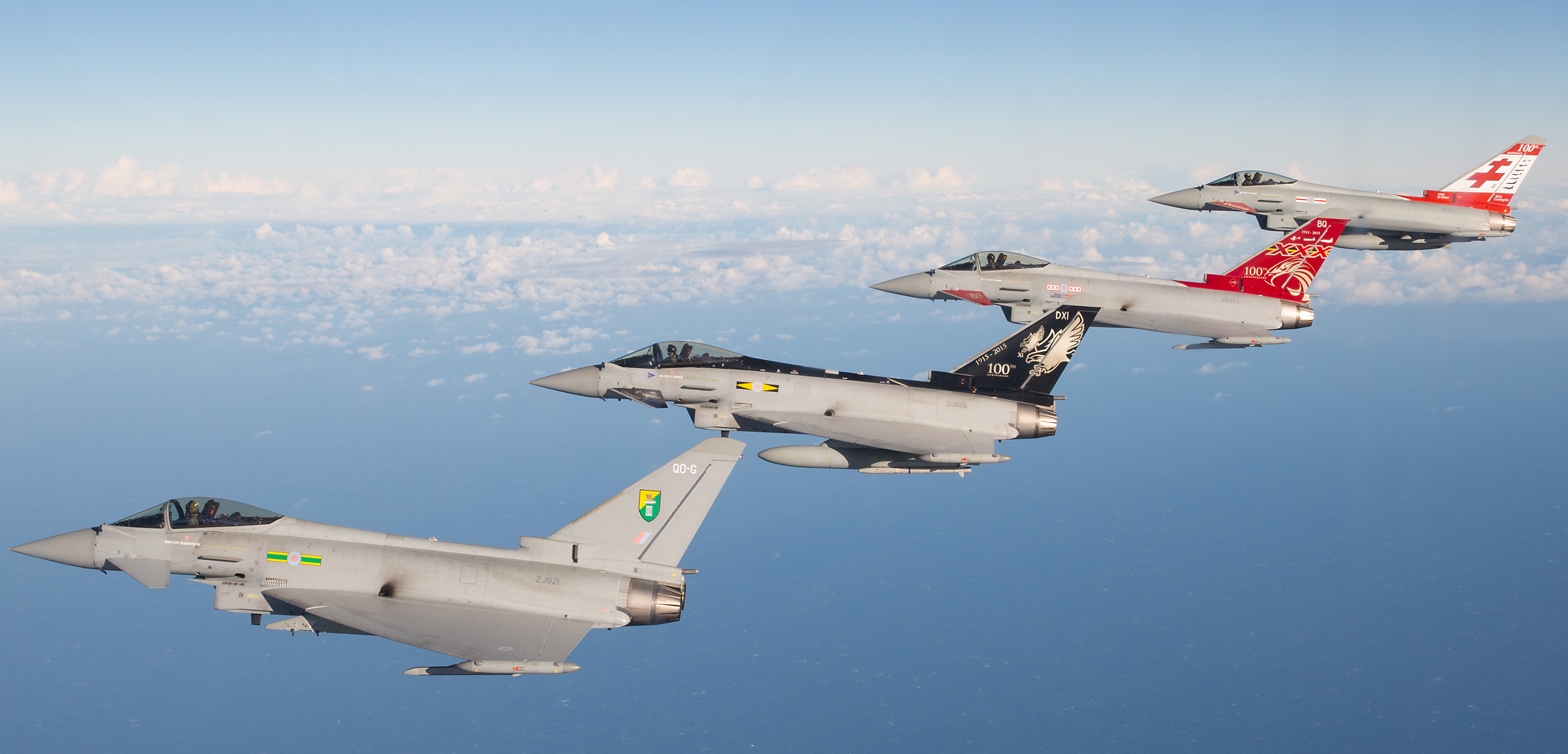
Typhoon’s combat power is reflected in its diverse weapons suite. For air-to-air operations, ASRAAM, Sidewinder, AMRAAM and MBDA Meteor provide short and long-range lethality. In the strike role, Typhoon can accurately deploy Storm Shadow, Brimstone and Paveway, delivering a credible and flexible threat against hostile forces.
Group Captain Shaw added: “Typhoon is the tip of the spear, the UK’s first responder to most crisis. The core Eurofighter nations rely on it for most of their operational air missions. It is the UK’s primary offensive air platform, and is they key component in NATO airspace security — and beyond.”
The Royal Air Force operates six frontline Typhoon squadrons: four at RAF Lossiemouth and two at RAF Coningsby. RAF Coningsby is also home to No 29 Squadron, responsible for Typhoon pilot training, No. 12 Sqn a joint UK-Qatari squadron, and No 41 Squadron, which leads Typhoon capability and tactics development.
Typhoon first saw combat during the 2011 intervention in Libya. Since then, it has been almost continuously deployed on operations including Op Shader in Iraq and Syria, Op Azotize for Baltic Air Policing, and Op Biloxi for Southern Air Policing in Romania. The aircraft continues to play a vital role in Quick Reaction Alert duties in the UK and the Falkland Islands.
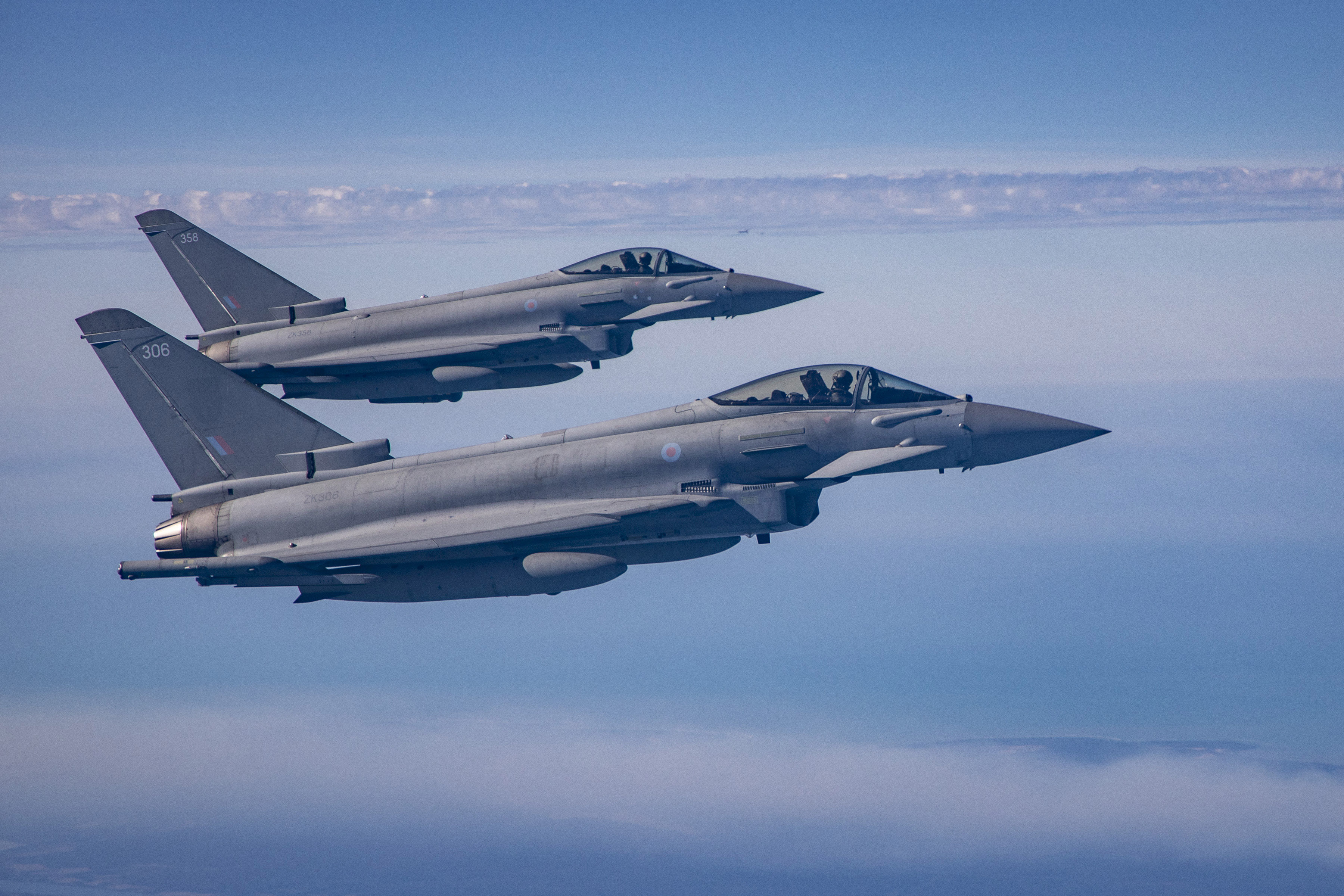
Concluding, Group Captain Shaw said: “A million flying hours represents far more than time in the air. It reflects three decades of close co-operation and hard work between partner nations and industry. All of us who have helped to shape this aircraft over the years can take great pride in knowing that the Typhoon has never been more adaptable, or more capable.”
As the global Typhoon programme reached its millionth flying hour, in recent days RAF Typhoons have deployed for defensive purposes in the Gulf and to Exercise Red Flag in the US, aircraft in the UK are on constant 24/7 standby for Quick Reaction Alert to defend Britain's skies.