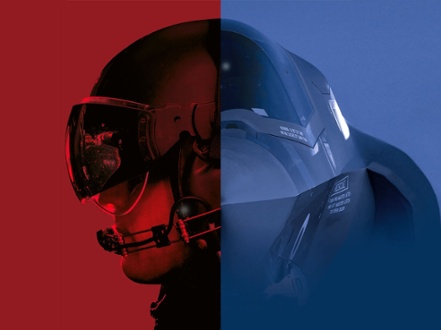
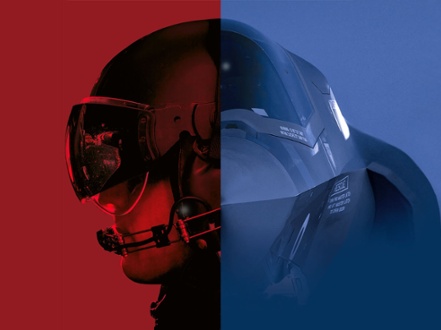
Surrounded by fast jets, tankers and military aircraft from across the globe, most people would naturally look skywards. We did too, at first.
But the real stories start on the ground, with the engineers, movers, chefs and support personnel whose hard work keeps the aircraft flying and the mission moving!
Listen on your favourite podcast app or on our dedicated podcast page.
InsideAir Podcast Episode 149 Transcript:
Please note that this transcript is automatically generated, and may have some errors. The original audio is the authoritative wording.
Narrator: Standby for broadcast. Standby for broadcast.
You're listening to Inside Air, a behind the wire view of the Royal Air Force, its people, technology and operations.
Squadron Leader Peter Lisney: I'm Squadron Leader Peter Lisney, and in this episode, we're in Australia on Exercise Pitch Black.
Air Specialist (Class 1) Sam: So today we're working with the Australians, the Papua New Guinea, Fiji, the Canadians. The Spanish just arrived. The Koreans arrived yesterday, and I think the Indians just arrived today as well.
Wing Commander Alan Turner: It was a car that was involved in a missile strike, so there was a bunch of blast and burn injuries.
Air Specialist (Class 1) Lucy: You know, we're all in the military. We know exactly what we're doing, so we just get stuck in and get the job done.
Flight Lieutenant Chris Sully: Also in this episode, we'll reheat a few stories just in case you missed them, and we'll be finding out who is under the hat this week.
AS1 Ben Russell: Best location you've served?
Under the Hat: It's gotta be Kenya just 'cause it's such a beautiful country and amazing wildlife.
Flight Lieutenant Chris Sully: Find out who's under the hat at the end of this episode.
Now, nothing happens in the air without the support of those on the ground. That's what hit home to Squadron Leader Amy when she deployed to Australia on Exercise Pitch Black.
Squadron Leader Amy: For weeks, I followed one of the world's largest multinational air exercises. Like most people, I arrived expecting the story to be about aircraft. Fast jets crossing the skies over northern Australia, tankers refueling fighters thousands of feet above the ground. More than 100 aircraft, 21 nations, thousands of personnel.
That was the story I thought I was here to tell. I came to Australia with the Royal Air Force, expecting to spend most of my time looking up.
But after several weeks moving between kitchens, hangars, medical facilities, and movements areas, I realized I've been looking in the wrong direction. Because while aircraft may be the most visible part of coalition air power They're only possible because of thousands of people whose work begins long before the wheels ever leave the runway. This is the story of the people who feed the Force, move its equipment, fuel its aircraft, and prepare specialist medical teams to care for patients wherever they're needed. The people whose work often goes unnoticed, yet without them, none of the aircraft fly.
This is The Invisible Air Force. My first lesson in interoperability didn't come from a pilot, a senior officer, or even an aircraft. It came from a kitchen. Inside RAAF Base Darwin, Royal Air Force chefs were working shoulder to shoulder with colleagues from Australia, Canada, Fiji, and New Zealand. For them, international cooperation wasn't something discussed in a briefing room. It started with the first shift of the day.
Air Specialist (Class 1) Lucy: I'm Air Specialist Class One Lucy, based at RAF Honington, here on Exercise Pitch Black at RAF Darwin.
Squadron Leader Amy: Interoperability can sound a lot like an abstract military term, a word that crops up in speeches and planning documents. On the ground, it often begins with something much simpler, learning how somebody else works, even if they happen to call the same piece of equipment by a completely different name.
Air Specialist (Class 1) Lucy: There's a lot more similarities in the kitchen here than, than you'd think. Apart from the equipment and things like that, they have a lot of different names for, so if you get asked to get something, it's under a completely different name. So it's tricky working around that. But in terms of the food, the quality of the food here is fantastic.
The meat and the fresh veg and fruit they get in quite regularly is brilliant. We have the freedom to create whatever we like and put our spin on things and showcase what we can do as chefs.
Squadron Leader Amy: The similarities quickly outweighed the differences, and once everyone understood each other's way of working, something else started to happen. Knowledge flowed in every direction.
Air Specialist (Class 1) Lucy: We pick up different techniques from each other, people with a [00:05:00] lot more experience and knowledge than others. Just in the kitchen, we have a new AC, which is equivalent to our AS2s back home, which I've just finished mentoring, and it's good to help them too, like I've done with them.
So it's great to kind of share knowledge and experience and then learn from them as well. Not only do you learn from the chefs from the other countries, but you learn a lot about yourself as well. Working closely with the chefs from other nations brings us together and builds relationships for sure.
We're all in the military. We know exactly what we're doing, so we just get stuck in and get the job done, and we get good friendships out of this too.
Squadron Leader Amy: That spirit extended well beyond the workplace. One evening, the aircraft were left behind altogether. Instead, representatives from every participating nation came together to share something much more personal, their food, their culture, and plenty of conversation.
Air Specialist (Class 1) Lucy: There's one experience I'll take home with me, and that's always gonna be International Night. It's such a fantastic event with 21 nations coming together, sharing their cuisine, culture, and just having a great time.
Squadron Leader Amy: Across the base, another team was preparing for a very different task. While chefs kept hundreds of personnel fed each day, RAF logistics specialists were making sure equipment kept moving. Every pallet, every vehicle, every load, another essential part of keeping the exercise running.
Air Specialist (Class 1) Sam: AS1 Sam. I'm a Royal Air Force logistics mover.
Air Specialist (Class 1) Elliot: AS1 Elliot. I'm a logistics mover.
Squadron Leader Amy: What I'll get you to do is just explain where we are,
lads. Just set the scene for me because we're sitting underneath, a shed. There's trucks, and movement is awesome. It's happening. Look at
Air Specialist (Class 1) Sam: it. So right now we have a lot of ground moves going on, so a lot of pallets being loaded onto trucks, ready to be moved across Australia to Amberley Air Force Base.
Squadron Leader Amy: There's a lot of different nations that are working here. Just from my eye line, not only are Brits here, but we can see New Zealand the Aussies. We can see Spain. So just walk me through some of the people you've had the chance to work with.
Air Specialist (Class 1) Elliot: So today we're working with the Australians, the Papua New Guinea, Fiji, the Canadians. Spanish just arrived. The Koreans arrived yesterday, and I think the Indians just arrived today as well.
Squadron Leader Amy: It's easy to be distracted by the backdrop here, the sunshine, the blue skies, the beautiful green trees, military aircraft arriving from across the world. But for the people working here, this wasn't a holiday.
It was a demanding operational environment. Long hours, heavy equipment, new procedures, and temperatures that meant fatigue had to be managed just as carefully as the freight itself.
Now, it's very hot here in Australia. How have you changed up your work to be able to accommodate with the heat?
Air Specialist (Class 1) Sam: Definitely a lot of sunscreen and water, and then also, like, taking more breaks than we normally would, and just making sure we stay on top of our fatigue levels.
Squadron Leader Amy: Is it very different working with partner nations? Do they do things.
Air Specialist (Class 1) Sam: very differently? Just some small differences. So with marshaling signals, but that's easy to work out with them, so we'll speak to them just before, and it's similar enough that we can work it out.
With other stuff, like maybe loading cargo, it's very much the same. There's small differences, but we can communicate with them and work out
Squadron Leader Amy: how to work together. Before they could begin working alongside their Australian counterparts, the RAF movers first had to become familiar with local equipment. The vehicles looked similar, but they weren't identical, and learning those differences here meant they wouldn't become obstacles later.
Tell me about the conversion training. Has that been quite interesting?
Air Specialist (Class 1) Sam: Quite similar. So their vehicles are very similar to ours, but slightly different, so they're more sensitive, so it's getting used to that, getting used to the speeds that they operate at, which is slightly different to ours, and the different controls, and the different vehicles that they use.
So they have... A lot of their stuff's open top, so that's quite interesting with the wind and the noise. Trying to look at their signals a lot more than listening to someone.
Squadron Leader Amy: But for Elliot and Sam, this wasn't just another overseas deployment. Pitch Black was their first major exercise. Less than two years into their RAF careers, they suddenly found themselves working alongside personnel from across the Indo-Pacific.
Is Pitch Black your first exercise?
Air Specialist (Class 1) Sam: So Pitch Black is my first exercise.
Air Specialist (Class 1) Elliot: Yeah, mine too.
Squadron Leader Amy: It's the kind of experience that accelerates learning in ways a classroom never can.
Air Specialist (Class 1) Sam: As soon as I saw it available to volunteer, I knew [00:10:00] that I wanted to volunteer for it. I'd spoken to a few of the lads on my shift that said that they had a great experience out here before, and they prompted me to do it and to push me for it, so I put my name down as soon as I saw it available.
Squadron Leader Amy: The same story was unfolding elsewhere across the base. On the flight line, air specialist class one Derren was preparing aircraft from across the exercise. Different aircraft, different operators, different procedures, but always the same objective: to keep the flying program moving safely and efficiently.
Air Specialist (Class 1) Derren: So I'm AS1 Derren, and I'm an avionics refueler.
Squadron Leader Amy: Okay. So where are you based normally? What does the day job look like for you?
Air Specialist (Class 1) Derren: Normally I'm based up at RAF Lossiemouth. Day-to-day it depends. So if you're on ASMT side, it's similar to this,
Squadron Leader Amy: for refuelers, every new aircraft type offers another chance to develop professionally, not because the fundamentals change, but because every nation brings its own procedures and ways of working. There's over 100 aircraft that are flying as part of this exercise.
Will you be tasked with refuelling those aircraft?
Air Specialist (Class 1) Derren: Yeah, we will be tasked with refueling those. Some nations do want us to refuel, and some... There's some nations that are able to refuel their own. But a lot of the, the aircraft, especially on the main ai- apron, we will end up refueling. We do get a varied aircraft at Lossiemouth but nothing compared to this.
Yeah. Like the different type of... even the cargo, like the sort of like C-17s, A400s, the 130s. We only get a select handful at Lossiemouth. Different types of aircraft can expand your knowledge a bit.
Squadron Leader Amy: With more than 100 aircraft operating during the exercise, every day presented another opportunity to expand that experience.
The more aircraft, crews, and procedures encountered here, the more [00:12:00] confidence people take back to their home units. So do you think that this exercise is important for you to grow professionally?
Air Specialist (Class 1) Derren: I would say so. It would... is it... It allows me to develop professional skills but also to become a bit more confident in different procedures with the machines we work on and as well as the personnel we work with.
Squadron Leader Amy: Yeah. Different chain of command and all that- Yeah ... stuff.
Air Specialist (Class 1) Derren: Getting on with different countries that you don't normally and just kinda just get on with them- Yeah ... actually getting involved with them and stuff outside of work as well.
Squadron Leader Amy: Eventually, almost every path I followed across Exercise Pitch Black led back to the same aircraft, Voyager. For many people, this is the symbol of the Royal Air Force's contribution to the exercise, a tanker aircraft supporting fast jets operating across one of the largest military training areas in the world. But after spending time with its crews, it became clear Voyager was doing far more than simply transferring fuel in the air It had become a flying platform for training, collaboration, and international partnership.
Flight Lieutenant Sam: Hi, I'm Flight Lieutenant Sam, a pilot on the Voyager force. Voyager's been very busy on Pitch Black so far. We've flown every day providing gas to our international partners, Germans, Spanish Australians, also by taking our tac med wing in the back and training them for mass casualty events. It's been a very busy exercise so far.
Squadron Leader Amy: Known as Purple Gas, the tanker supports aircraft across both sides of the exercise scenario, keeping aircraft airborne for longer, allowing crews to train more realistically, and making full use of the enormous distances Northern Australia provides.
Flight Lieutenant Sam: Purple gas in practice is giving as much gas as we can to everyone who is in the fight and keeping them there for [00:14:00] as long as possible, whether that be to the guys who are training on the exercise or the guys that are pretending to be the enemy, both of them at the same time, just to keep everyone flying.
Squadron Leader Amy: Every sortie looked different, one day supporting international fighter aircraft, the next carrying specialist medical teams as they rehearse complex aeromedical evacuation scenarios. The aircraft remain the same. Its role adapted to whatever the exercise demanded.
Flight Lieutenant Sam: So apart from air-to-air refueling we've had Tac Med wing in the back practicing for mass casualty events and working with their Australian partners. We've also obviously transported ourselves across the world and currently going backwards and forwards from Amberley and Darwin.
Squadron Leader Amy: While Voyager was highly visible in the skies above Australia, its contribution made far more sense on the ground air Commodore Dan James commands the Royal Air Force's Air Mobility Force, and for him, the [00:15:00] exercise wasn't simply about aircraft performance, it was about people and how those people were working together.
Air Commodore Dan James: What's been most impressive, I think, is the range of our people that have managed to integrate themselves into the Australian-led setup here. So it's been absolutely fantastic to see the chefs, the movers and all the other supporting personnel working hand in glove with our partner, partners and allies in the Indo-Pac region.
Squadron Leader Amy: Australia provides something few places in the world can, space. The sheer size of the exercise area allows aircraft to operate across vast distances, creating scenarios that closely reflect the challenges of modern air operations. Keeping those aircraft airborne depends on one critical capability, air-to-air refuelling.
Why is Voyager so key to this particular exercise?
Air Commodore Dan James: Because Australia and the exercise area is absolutely massive having a really capable, modern, reliable tanker like the Voyager MRTT is really important because it allows you to force extend your fighters. It allows you to keep them in the fight for longer because you can refuel them and increase their endurance. So having a tanker these days is really critical to an air war.
Squadron Leader Amy: But Voyager is only one aircraft within a much larger system. Every day, the Air Mobility Force moves people, equipment, and supplies wherever they're needed, supporting operations, exercises, humanitarian tasks, and national commitments around the world. Pitch Black offered just one snapshot of that wider mission.
Air Commodore Dan James: On any given day, the Royal Air Force's Air Mobility Force supports around 20 different operations worldwide. So whether it's the Voyager aircraft taking people out for exercises or operations or providing fuel for operations over the Middle East or wherever else in the world.
We've also got our A400Ms and our C-17s providing air mobility, taking cargo and vital equipment around the world. We've also got a large contingent of parachute jump instructors who are training parts of the army and special forces to make sure that they're ready with all the skills that they might need in times of tension.
Squadron Leader Amy: During this exercise, Voyager also enabled another capability being demonstrated by the United Kingdom here for the first time, one that had nothing to do with fuel and everything to do with saving lives. That was the RAF's Strategic Aeromedical Evacuation capability, a team preparing to deliver advanced medical care in one of the most challenging environments imaginable: an aircraft in flight.
Warrant Officer James: My name is Warrant Officer James. I'm an aeromedical flight nurse commanding the deployed aeromedical evacuation team participating on Exercise Pitch Black. As a team of 15 personnel, our capability includes a strategic critical care air support team, two strategic aeromedical evacuation teams, a medical crew director, and a dedicated medical training team
Squadron Leader Amy: Military medicine is never delivered by one person alone and increasingly, it isn't delivered by one nation alone.
Wing Commander Alan Turner: Practicing clinical medicine in this aviation environment brings a whole bunch of different challenges. Additionally, the space is really constrained and so when you're trying to get access to your patient and examine them, it makes it all the more difficult. As well as that, we've got all these other distractions that are going on that can take the team's focus away from what they need to do. So we really need to be strict in our thinking about bringing our focus back to the patient and our procedures that we need to apply to make sure we provide safe care for the patient
Squadron Leader Amy: Wing Commander Alan Turner has spent much of his career preparing clinicians for operational medicine.
Wing Commander Alan Turner: On Pitch Black, realistic clinical training has been vital for a variety of reasons.
What we're doing is bringing two teams together who have slight differences from the way they practice medicine. Neither of those teams get to deal with bombs and burns and blast injuries on a day-to-day basis, so giving them realistic scenarios that allow them to hone their confidence in those situations is really vital.
Squadron Leader Amy: One of the exercise serials brought together Australian medical personnel and RAF aeromedical evacuation team and French air crew to move simulated casualties across the same patient journey. Different uniforms, different procedures, one shared outcome.
Wing Commander Alan Turner: We started with a incident that started in Top End Island. It was a car that was involved in a missile strike, so there was a bunch of blast and burn injuries. So the team was initially the Australian team [00:20:00] that resuscitated those patients at the outset, and then they handed the patients over who were pretty seriously injured to the RAF aeromedical team for transport back to Australia. So it was a really good opportunity to get those two teams working together
Squadron Leader Amy: For him, the greatest value of exercises like Pitch Black isn't that everything goes perfectly, it's that people are challenged to solve problems together before they're ever asked to do it for real
Wing Commander Alan Turner: What I think makes me most proud of both of those teams is the ability to adapt and overcome. We've thrown some really interesting scenarios at them that they probably weren't expecting, and their ability to just take it in their stride to work together and come together as a team and overcome those challenges has been really rewarding for me
Squadron Leader Amy: Although Australia's KC-30 and the RAF Voyager share the same Airbus platform Seeing the aircraft configured for aeromedical evacuation offered fresh ideas and a valuable chance to learn from one another.
Flying Officer Jesscia Wiblin: Hi, yeah, I am Flying Officer Jessica Wiblin, and I'm a registered nurse at 1 EHS Amberley. It's been an incredible experience getting the opportunity to come on board the Voyager from the UK. Although it is pretty similar to our KC-30 I've never seen a medical setup on a passenger aircraft, so that has been a real good experience for... that I'll take away.
Squadron Leader Amy: Over the previous weeks, I'd watched chefs, movers, refuelers, and air crew quietly doing the jobs that make an exercise like Pitch Black possible. The medics were no different.
Sergeant Victoria: So working alongside the Australian medical teams has been really interesting, as I've not worked with the Australians before. As... And a lot of us haven't. So it's been interesting to see how we do things so different but also so similarly. It can be really nuanced things that you wouldn't even realize might be a problem with the name of drugs, for example. There's been a lot of clarification on that. So it's been interesting to see how these things would actually impact in a proper environment.
This line of training between the nations is really important, 'cause you never know where you're gonna work, who you're gonna work with, who's going to be there, and even the aircraft that are going
Squadron Leader Amy: to be there. Sergeant Victoria from the RAF's Tactical Medical Wing explained when the moment arrived, nobody saw British uniforms or Australian uniforms or French air crew. They simply saw colleagues, professionals, people with a shared purpose.
When I arrived here in Australia, I thought this story would be about aircraft. But somewhere during the exercise, I realized I'd stopped looking at them. Instead, I found myself watching the people who quietly made every sortie possible.
Air Specialist (Class 1) Sam: Working with partner nations, there's a lot of similarities. There's some small differences. We can communicate with them and work out how to work together.
Air Specialist (Class 1) Derren: It's been a good experience. It's an eye-opening experience to see how they do the same job that we do, but different processes and procedures.
Squadron Leader Amy: Every conversation revealed something different, but every person shared the same purpose, to learn from one another, to build trust, and to leave better prepared than when they arrived.
Sergeant Victoria: It didn't matter what uniform everyone was in, and everyone just quickly worked together. It didn't matter that we were taking over from the Australians or you guys were handing over to a British team. Everyone just went into medical mode, and that's what we really need to be aiming for here, and we've achieved it.
Squadron Leader Amy: As the aircraft leave Australia, temporary work spaces disappear. The friendships, experience, and lessons built here will travel home with every nation that took part.
Air Specialist (Class 1) Lucy: Working closely with the chefs from other nations brings us together and builds relationships for sure. We're all in the military.
We know exactly what we're doing, so we just get stuck in and get the job done, and we get good friendships out of this, too.
Squadron Leader Amy: I came to Australia expecting to tell the story of aircraft. Instead, I found the people behind them, the professionals behind every sortie, every mission, and every success.
That's The Invisible Air Force.
Air Specialist (Class 1) Lucy: Probably one word I'd have to sum up Exercise Pitch Black is opportunity. It's been an absolute privilege to come back here. This is my second Pitch Black, so it's ... I'm very lucky to be here again. This one I've had real opportunities to do things I've never tried before.
Squadron Leader Amy: And what did your family say when you told them, "I'm going to Australia for my first exercise"?
Air Specialist (Class 1) Lucy: Oh, they were excited for me, 'cause it's been a dream of mine to go to Australia since I was a kid, so they're definitely really happy for me.
Squadron Leader Amy: Have you seen any crocodiles or anything like that yet?
Air Specialist (Class 1) Derren: Not yet, no. But they have warn us that even on the accommodation we've been warned about snakes. But not seen any yet.
Squadron Leader Amy: Were you nervous about that? Your Highland cows they might give you a run for your money, but that's about it.
Air Specialist (Class 1) Derren: Yeah. The, the ... It doesn't really pose the same kind of threat as a snake would. And I'm I'm a bit at more at ease if I see a Highland cow than a snake, but- ... it's more spiders I'm not a big fan of.
Squadron Leader Amy: Have you ever tried Vegemite on toast? Have you tried barramundi? Have you tried any of the Australian delicacies that have been on offer?
Air Commodore Dan James: I have tried some of the the local Australian fish, which I thought was great. I've tr- also tried that biscuit, Tim Tams. Not quite sure what all the fuss is about.
And as for Vegemite on toast, I'm afraid it's Marmite all the way for me. I'll stick with that.
It's a strong no.
Squadron Leader Amy: Sir, thank you for your time.
Air Commodore Dan James: Thank you.
Corporal Kirwin: Hi, I'm Corporal Curwin, and this is Reheat, where we take a look at some of the RAF stories you might have missed.
A Royal Air Force Rivet Joint intelligence aircraft has deployed to Norway for Exercise Arctic Stone. Personnel are training alongside the Royal Norwegian Air Force to improve technical integration with Norwegian F-35 fighter jets. The deployment focuses on surveillance operations to support NATO security across the High North.
Aircraft and personnel from the Royal Air Force Aerobatic Team have arrived home following a successful tour of the United States. Called Operation Eagle Hawk, the Red Arrows visit to the US marks the 250th anniversary of American independence. Their return home was delayed due to bad weather. Next, we've got an update about the upgrades at RAF Brize Norton's airfield.
Three weeks after handover to project teams, around 500 personnel are working on site to overhaul the runway. 8% of [00:27:00] the airstrip surface has already had its plan out completed. More than 42,000 cubic meters of material have been removed so far. That's the equivalent of 16 Olympic swimming pools, which will be all recycled directly back into the new runway construction.
And personnel at RAF Coningsby have been mastering off-road driving skills to tackle steep slope, narrow tracks, and challenging terrain. The training aims to make sure service members are fully prepared for the demands of deployed operations. Instructors from the station's mechanical transport section put on the training.
That was Reheat for Inside Air.
Air Specialist (Class 1) Ben Russell: I'm AS1 Ben Russell and this is Under the Hat, where we get to know an aviator in less than a minute Name you're known by?
Corporal Wes Mulverni: Corporal Wes Mulverni.
Air Specialist (Class 1) Ben Russell: What's your profession?
Corporal Wes Mulverni: RAF paramedic based at Tac Med Wing here at Brize Norton.
Air Specialist (Class 1) Ben Russell: What's the best thing about your job?
Corporal Wes Mulverni: Being able to travel been to Africa, [00:28:00] America Australia all around the UK as well.
Air Specialist (Class 1) Ben Russell: Hardest part of your job?
Corporal Wes Mulverni: It can be quite draining being on constant readiness, but it's quite exciting being able to deploy around the world.
Air Specialist (Class 1) Ben Russell: Best location you've served?
Corporal Wes Mulverni: It's gotta be Kenya just because it's such a beautiful country and amazing wildlife.
Air Specialist (Class 1) Ben Russell: What bit of luxury kit do you never deploy without?
Corporal Wes Mulverni: It's gonna have to be a hammock, which I've recently bought, and I'm itching to to test it out.
Air Specialist (Class 1) Ben Russell: And what's your proudest moment in the RAF?
Corporal Wes Mulverni: Qualifying as a paramedic.
Flight Lieutenant Chris Sully: That's all for this episode of Inside Air. Please give us a review and subscribe on your favorite podcast app, and join us again soon
Narrator: You've been listening to Inside Air, a Behind the Wire view of the Royal Air Force, its people, technology, and operations. If you're serving in the RAF and have a story for us, please speak to your unit media and communications officer.[00:29:00]
Inside Air is written and produced for the Royal Air Force by RAF Media Reserves