Not one to miss an opportunity, II Squadron RAF Regiment test themselves as part of their wide-ranging work to integrate new technologies and capabilities into its existing forces to improve lethality - troops are being trained to fly FPV UAS as use of the technology is developed.
Project ARTEMIS sees II Squadron Royal Air Force Regiment developing the use of nano-drones (under 250g in weight) for light, quick and agile intelligence gathering at the section level. They have already conducted experimentation at RAF Akrotiri and UK training areas, now time to test them in the inaugural drone racing competition.
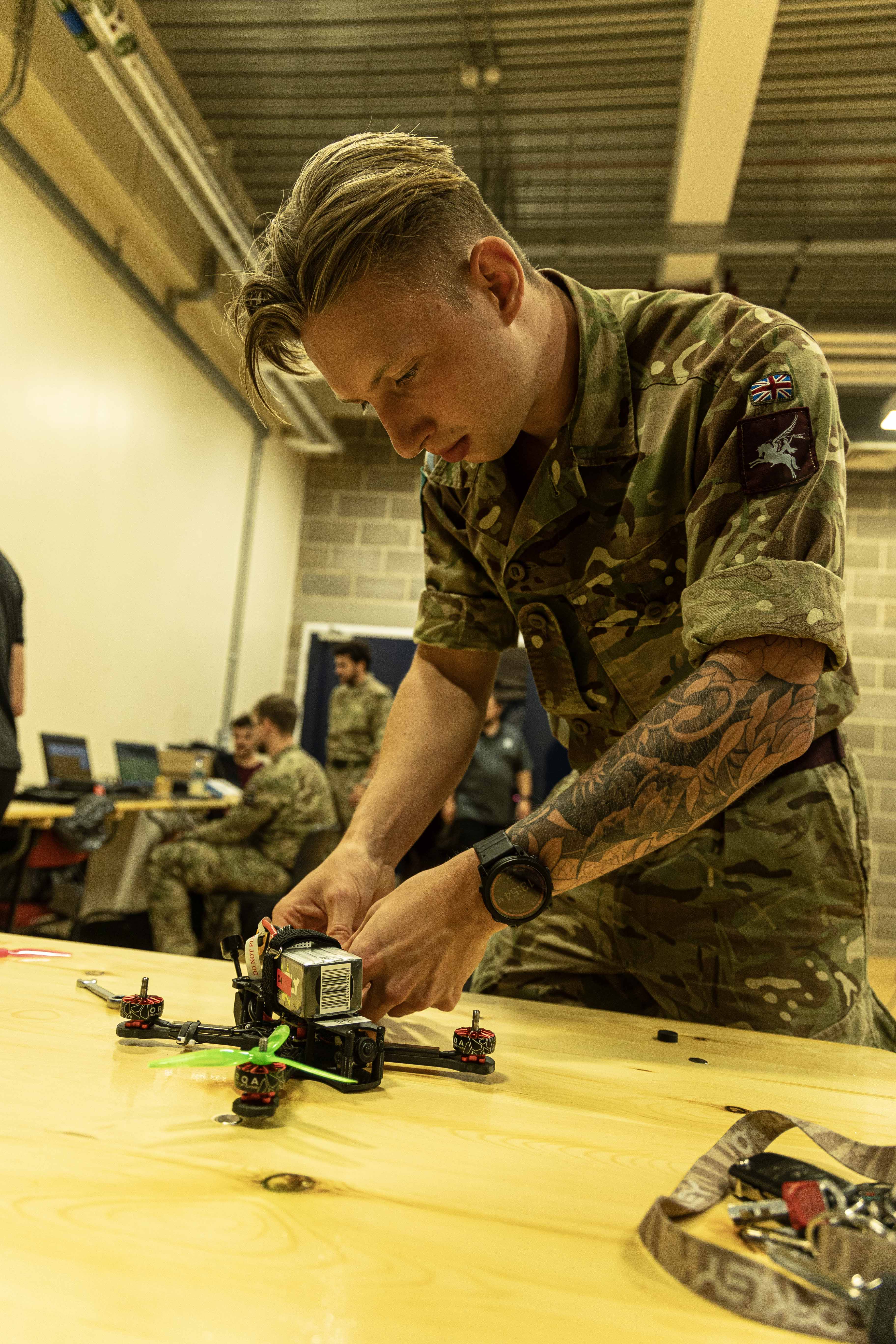
Flight Sergeant Best, ARTEMIS Project Lead said:
‘’It is a real honour and privilege to represent the RAF Regiment in the inaugural Drone Academy competition. II Squadron RAF Regiment have been working with FPV UAS for the last 2 years so it will be great to showcase our current competency at the competition’’
Flight Sergeant Best
ARTEMIS Project Lead
II Squadron RAF Regiment were the best performing team overall at the Military International Drone Racing Tournament (MIDRT) 16-19 Sep 24, and the winners of the 1st UK Division Drone Racing Competition.
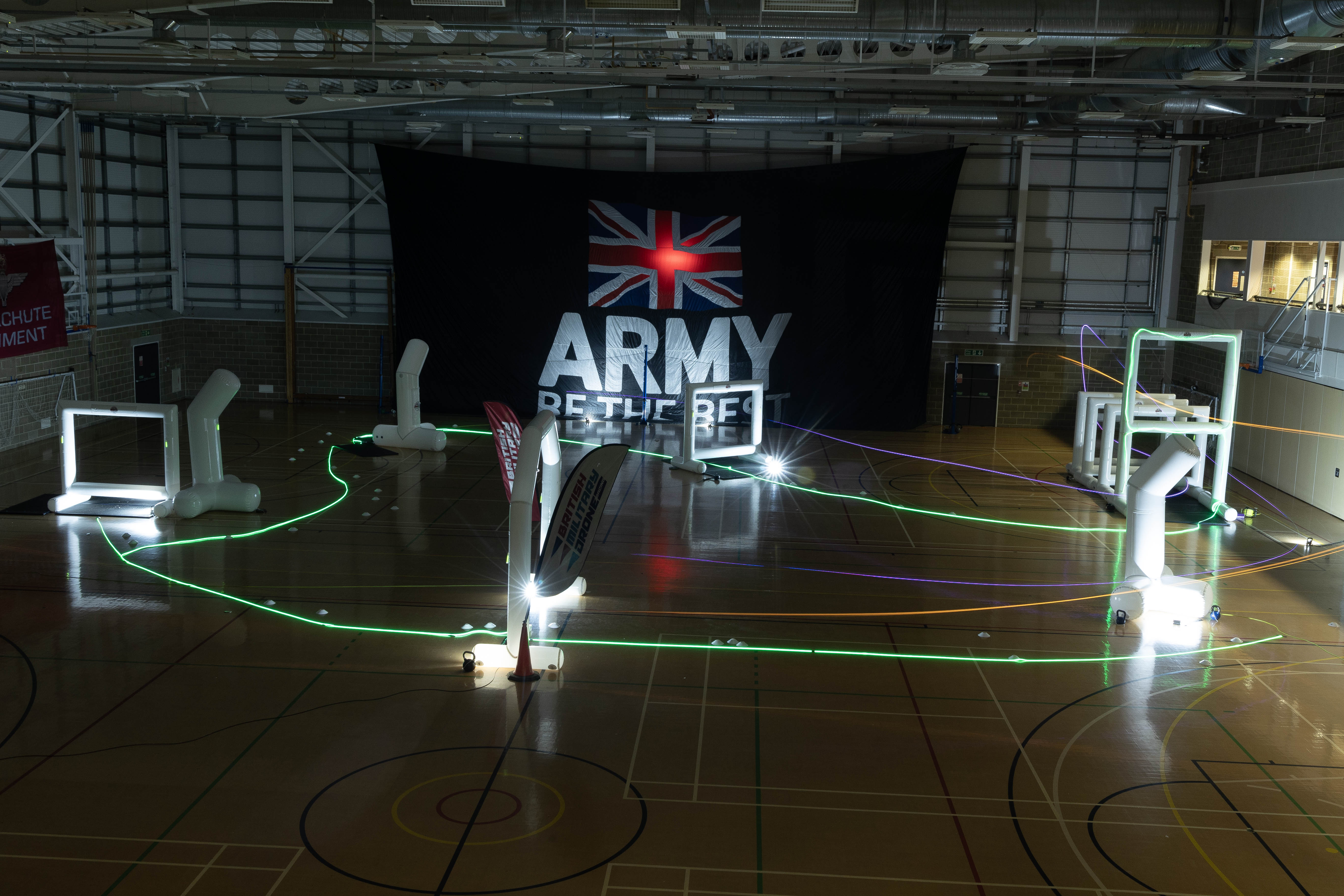
This event was followed by the 1st (UK) Division drone racing competition held in Colchester, an event designed to showcase the skills of troops learning to fly First Person View (FPV) Uncrewed Aircraft Systems (UAS). II Squadron emerged as the winners from the five teams in the military competition, with Australia taking the international fixture.
First Person View UAS provide a precision strike capability on the battlefield and are being used to great effect by the Ukrainian Armed Forces. Flown using a virtual reality headset and carrying small explosive charges, the manoeuvrability of FPV UAS means they can punch above their weight, such as flying through an open hatch to destroy an armoured vehicle by exploding inside it.
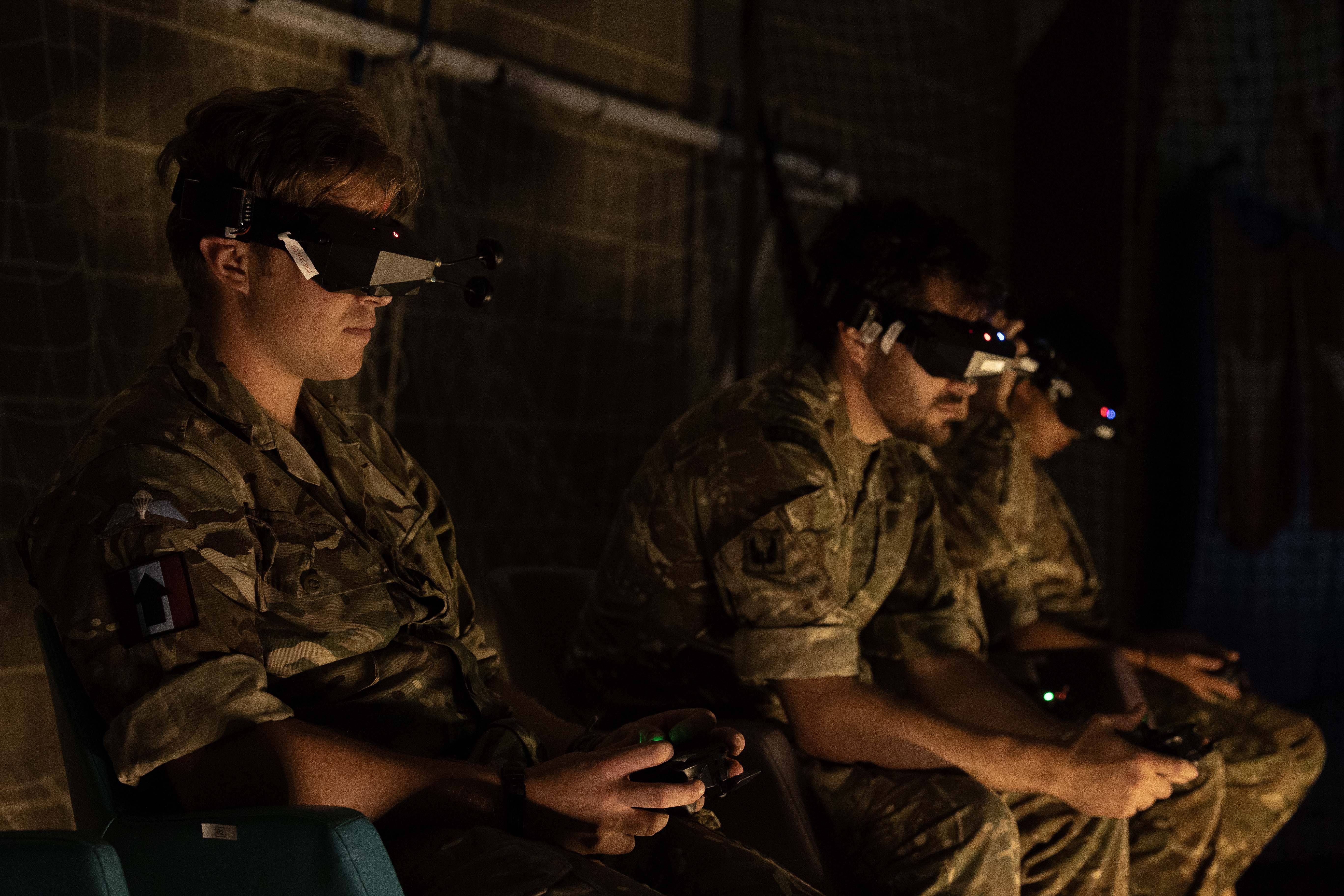
The competition is capability driven; it is designed to add momentum to the rollout of FPV drones within wider Defence. This event will also bring together key stakeholders within Defence and industry and provide the opportunity for discussions around capability development.
The first of its kind sees competitors from across Defence coming together at Merville Barracks in Colchester to battle it out. Heats will see racers fly as many laps of the track as possible in a given time period. The best racers from each team will then progress to the finals. The finals will be a head-to-head where racers will fly a specified number of laps, with up to 6 racers flying at any time.
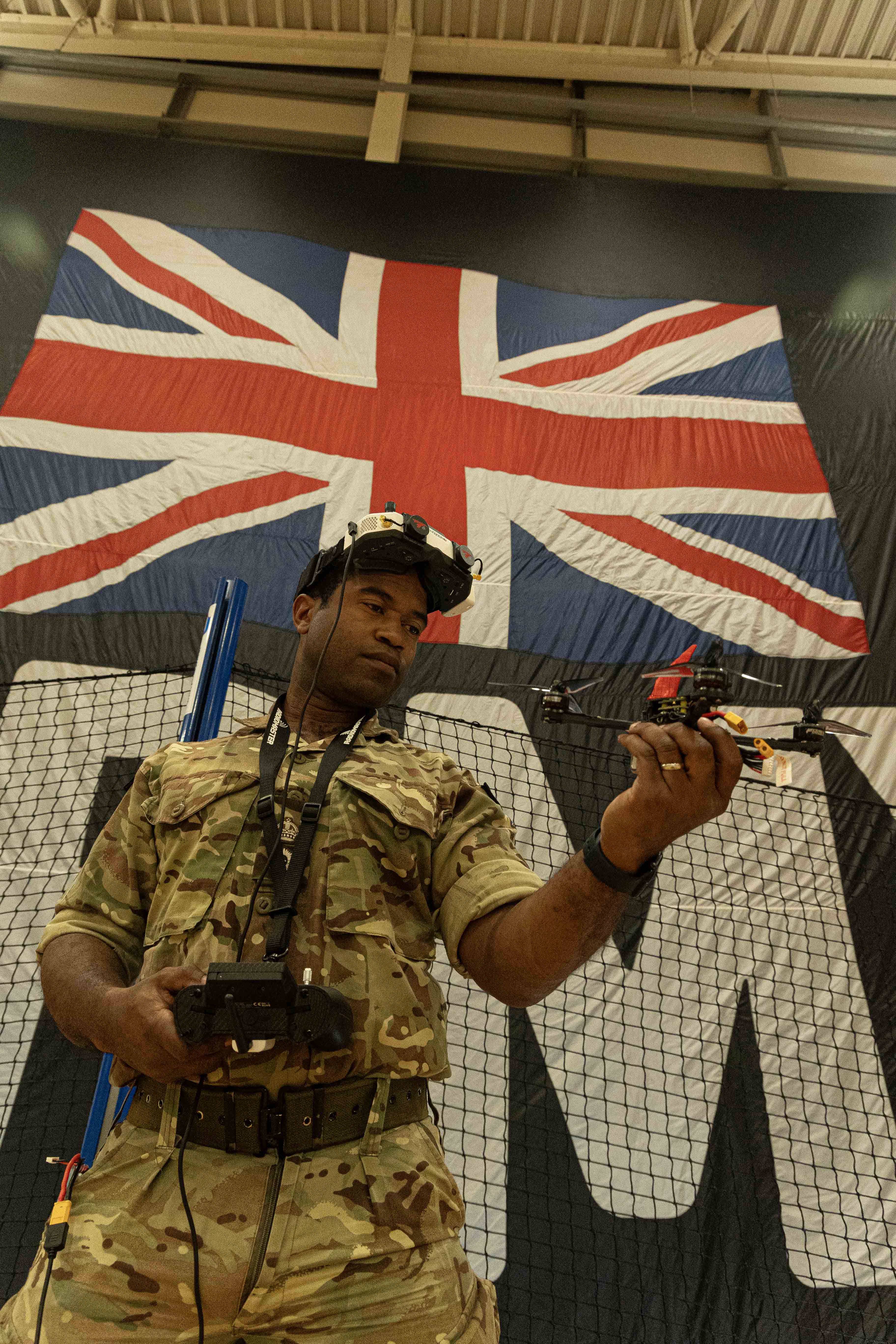
The tournament will have two entry categories, for most of the pilots this will be the first time many have taken part in a racing competition. The event is open to allied international drone racing teams who will compete against the British Military Drone Racing Team.
The Royal Air Force has established its own drone racing team under the Royal Air Force Model Aircraft Association (RAFMAA). The team currently consists of four members. Last year, two of these members participated in the Military International Drone Racing Tournament held in Australia. Additionally, members from II Squadron will be eligible to join the team once they demonstrate proficiency in flying 5-inch drones which the Squadron are currently working towards. These drones are capable of reaching speeds of up to 70 mph.