Royal Air Force aircraft operating across the Middle East rely on more than aircrew and aircraft alone.
Behind every defensive sortie launched in the region is a specialist ground force ensuring deployed infrastructure is built, sustained and protected in demanding conditions.
That force is 5001 Squadron.
Operating across the Broader Middle East (BME), 5001 Squadron is delivering expeditionary infrastructure that underpins UK and coalition air operations at pace. The Squadron provides the foundation that allows air power to operate safely, reliably and continuously.

Enabling Air Power on Operations
As RAF Typhoons, F‑35B Lightning, Voyagers, A400M and C‑17’s continue to support operations across the region, 5001 Squadron personnel are working on the ground to ensure air assets can remain functional, resilient and protected.
Their role includes establishing and sustaining critical infrastructure such as aircraft shelters essential to support sustained flying operations. Without 5001 Squadron’s vital infrastructure, the UK’s flying squadrons couldn’t store, service, or ready their aircraft for critical missions in the region.
Building Resilience in a Challenging Environment
The Middle East remains a complex operating environment, characterised by harsh climatic conditions, evolving threats and rapidly changing operational demands. In this context, the work of 5001 Squadron is focused not only on construction and sustainment, but on resilience and protection.
The squadron provides the essential foundation for protecting personnel, aircraft, and critical assets. It has the capability to establish deployed operational infrastructure, including Technical Working Environments that shelter and safeguard both aircraft and technicians, deployable HQ facilities to maintain command presence overseas, and a wide range of environmental control solutions designed to mitigate the climatic challenges and risks faced by UK personnel operating in austere environments. This layered approach ensures that UK air operations can continue even in the face of disruption.

A High Readiness Engineering Force
5001 Squadron’s current activity builds on a long heritage of enabling air power wherever it is required. Evolving from the RAF’s historic requirement to build, maintain and defend airfields in challenging environments, the Squadron is now a high readiness, deployable engineering force that routinely supports operations worldwide at short notice.
Its contribution sits firmly within the RAF’s “Built to Respond” approach - supporting global reach, enabling air operations, and integrating seamlessly with coalition partners to deliver effect.
Strategic Impact for UK Defence
While often unseen, the capability delivered by 5001 Squadron is strategically significant. By reducing reliance on fixed infrastructure and enabling flexible, expeditionary operations, the Squadron increases the UK’s operational independence and freedom of action.
In practical terms, this means the RAF can deploy, operate and sustain air power where and when it is needed - a critical advantage in today’s security environment.
5001 Squadron may not fly the aircraft, but its role is fundamental. Without the engineers, infrastructure and support delivered on the ground, air operations simply do not happen.
Across the Middle East and wherever the RAF is deployed, 5001 Squadron continues to quietly enable operational success.
The squadron you don’t see - but every mission depends on
In the Middle East, UK air power is visible in the skies - Typhoons, F-35B, Voyagers, A400Ms, C-17’s
What you don’t see is the force on the ground making every sortie possible.
That’s where 5001 Squadron comes in.
Part of the Royal Air Force’s specialist ground engineering capability, 5001 Sqn delivers expeditionary engineering, and rapidly deployable infrastructure - the backbone of deployed air operations.
A heritage built on enabling air power
5001 Squadron traces its roots back to the RAF’s long-standing requirement to build, maintain and defend airfields in contested environments.
From early expeditionary deployments to modern operations, the squadron has evolved into a high-readiness, deployable engineering force, capable of supporting operations anywhere in the world at short notice.
5001 Squadron provides almost all non-aircraft engineering required for deployed air operations. It was reformed in 1999 and is the last surviving squadron of the Airfield Construction Branch and Airfield Construction Service.
Its role has always been consistent:
Make air power possible, wherever it’s needed.
What 5001 Squadron does in the Middle East
Operating across the Broader Middle East (BME), 5001 Sqn provides the critical ground support that enables sustained UK and coalition air operations.
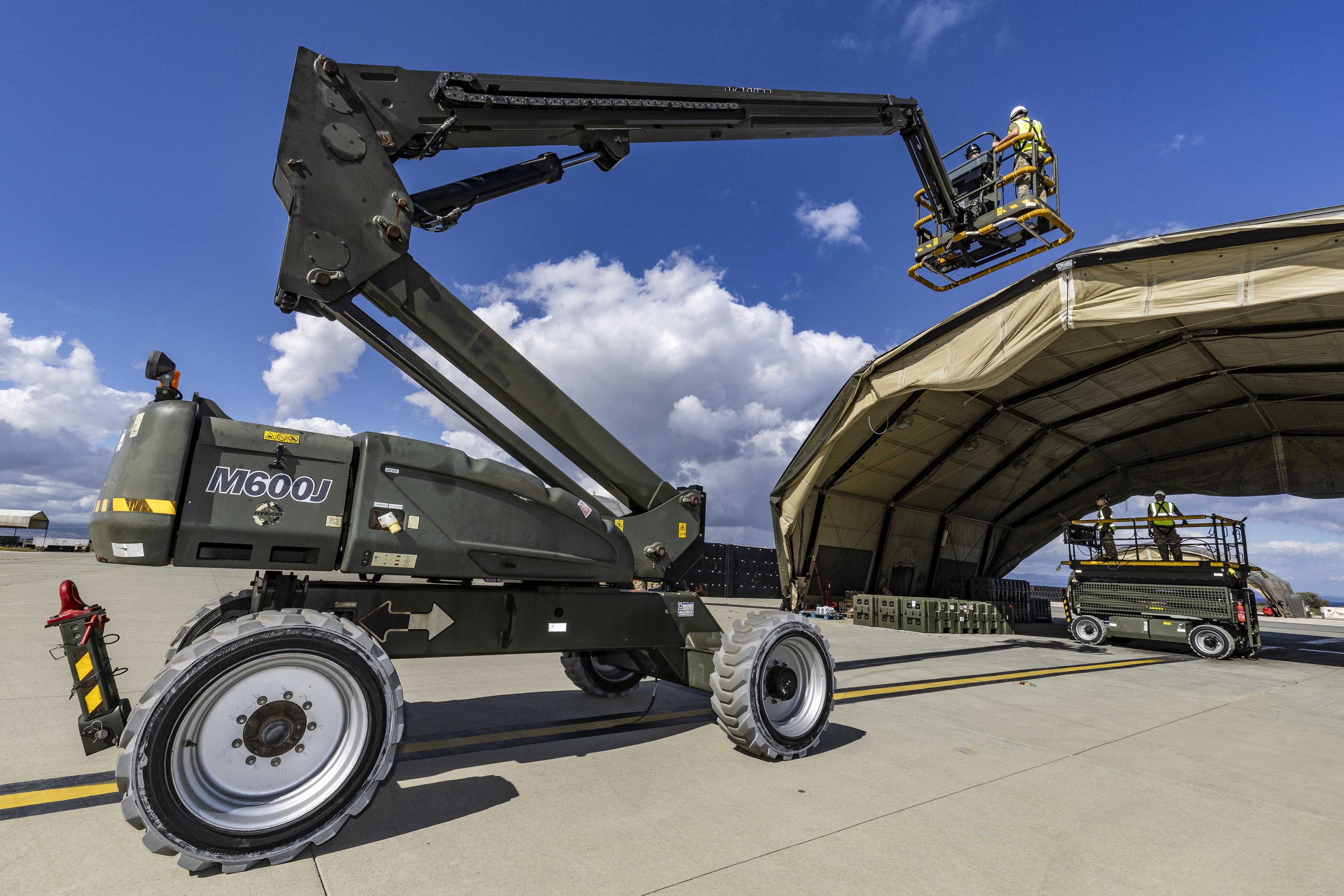
The team drawn from across 5001 Sqn will build a number of Rapid Environment Shelters, a working environment for maintenance and storage, ensuring aircraft remain protected, maintained and mission ready.
Providing Technical Working Environments and Environmental Conditioning, which allow essential maintenance on Jets, Helicopters, UAV's and supporting systems to actively deliver global Air Power.
Why they matter in today’s fight
The Middle East remains a contested and unpredictable operating environment:
- Drone and missile threats
- Harsh climate conditions
- Rapidly shifting operational demands
5001 Squadron provides:
- Resilience — the ability to absorb and recover from disruption
- Agility — rapidly adapting infrastructure to changing needs
- Endurance — sustaining operations over time
Part of the RAF’s “Built to Respond” model
5001 Squadron sits at the heart of the RAF’s operational approach:
- Fly & Fight – enabling combat air to operate effectively
- Global Reach – supporting rapid deployment and sustainment
- Integration – working alongside coalition partners
They are a key part of the RAF’s layered, system-wide capability, linking ground infrastructure directly to operational effect in the air.

The strategic value to UK Defence
5001 Sqn delivers something that is easy to overlook but strategically critical:
- The ability to deploy and operate from anywhere
- Reduced reliance on fixed, vulnerable infrastructure
- Increased operational independence and flexibility
In short, they give the UK the power to:
Project air power at a time and place of its choosing
Bottom line
5001 Squadron doesn’t fly the aircraft. They make sure the aircraft can fly, can fight, and can keep flying.
In the Middle East - and wherever the UK operates - they are the quiet enablers of operational success.
No engineers. No infrastructure. No mission.
“Having deployed in and out of Theatre within the BME over the past few months, I’ve really seen how much the tri-service environment values the support we provide. It’s clear that the capability delivered by 5001 Sqn is genuinely appreciated by all users of TWE.”
Corporal Alex
“Having spent significant time in the BME supporting British and allied operations across the region, I feel I’ve fulfilled my role to a high standard. Working as part of 5001 Sqn has been extremely rewarding, and I’ve genuinely enjoyed contributing to the mission.”
Corporal James
“Over the past 12 months, I have spent considerable time in the BME, working alongside a wide range of trade groups from across the RAF and wider MOD. As part of 5001 Sqn, we are consistently well received and made to feel fully integrated into the NATO missions operating within the BME.”
AS1(T) Shuson