

Wocka, wocka, wocka
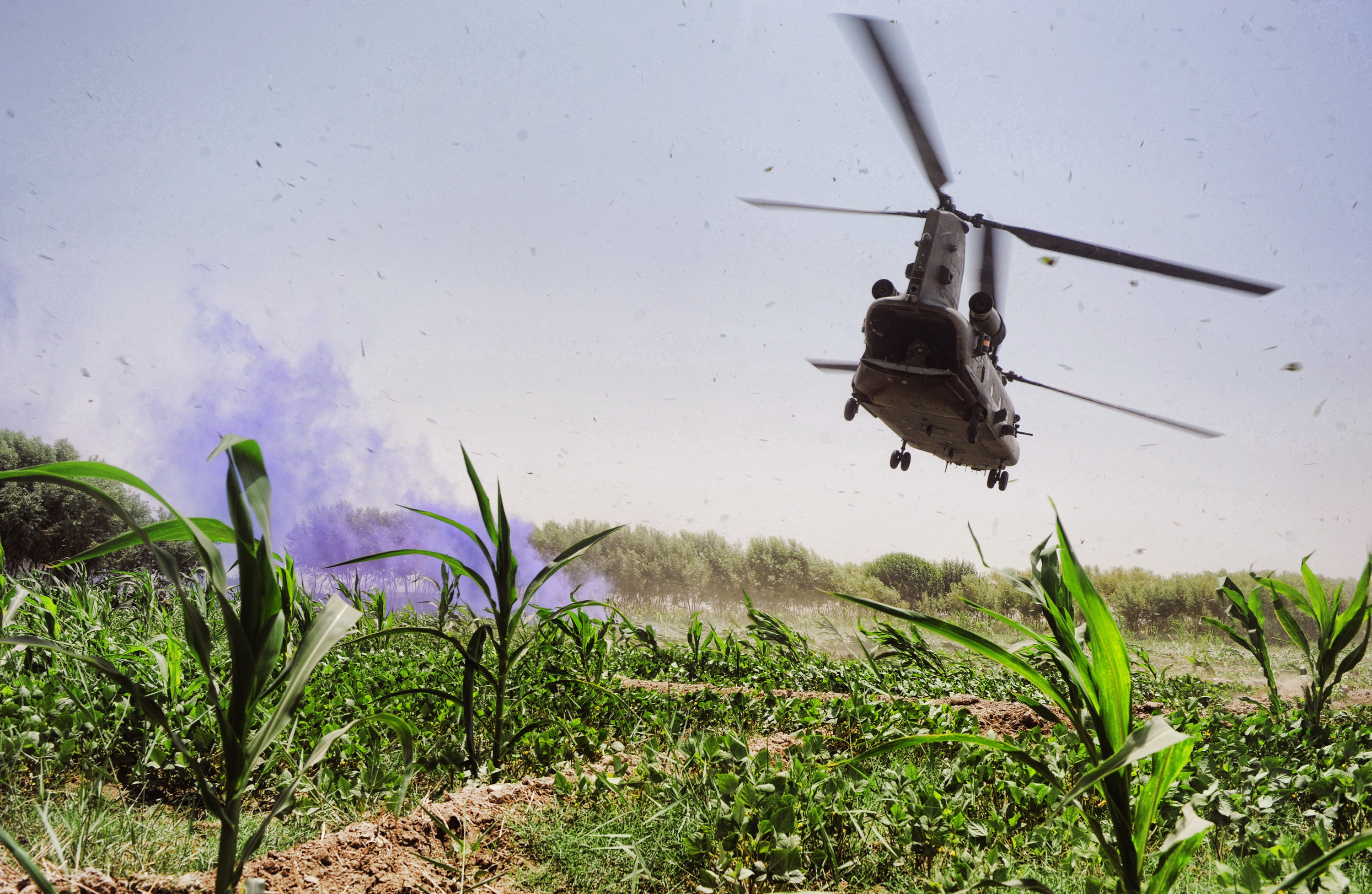
As the sound carries across the battlefield, relief falls across the Squadron. We're safe. We're going home.
The Squadron assumes positions to protect the wounded as the Chinook pilot brings the aircraft down to land. The rear hatch opens and the paramedics come rushing out to assess the injured, bullets cracking overhead. It's a rush to get everyone on board. They hoist the wounded onto stretchers, moving quickly and efficiently. Once inside, the work begins, emergency healthcare in the back of a moving Chinook as the pilot climbs to safety.
Nobody reacts to the clinking of bullets against the exterior. This is what they train for: forward medical care under duress. There's calm in the chaos.
The Gold Standard
The people responsible for that calm are the RAF's Tactical Medical Wing (TMW). Sitting within the RAF's Medical Force, one of the Wing specialities is Forward Aeromedical Evacuation (Fwd AE) historically known as the Medical Emergency Response Team (‘MERT’). They provide an agile RAF Pre-Hospital Emergency Care (PHEC) capability, able reach the wounded at their point of injury, and provide lifesaving care in transit, before delivering them to a medical facility.
"The job is to stabilise the wounded so they can survive the flight," says Corporal Georgie, one of the Wing's medics.
During 2025 alone, the RAF Medical Force supported more than 90 operations and completed more than 1,500 evacuations around the globe. The breadth of capability and clinical skill of these personnel is such that they are considered global leaders in all forms of Aeromedical Evacuation – including PHEC in conflict zones. Their partnership is sought for the world over; their gold standards adopted just as broadly.
But, since the earliest days of ‘MERT’ twenty years ago in 2006, Fwd AE and RAF PHEC has evolved significantly.
Building in Flexibility
"During Afghanistan, there was a defined and predictable patient pipeline," says Wing Commander Oli, one of the leading Fwd AE Consultants on the team "We'd collect them, provide pre-hospital care in the aircraft and then take them back to a hospital."
Since the departure from Afghanistan and emergence of more complex and contested operational environments - the team has had to adapt. "Without the defined pipeline, we've had to become far more flexible, because we no longer see a consistent pattern of injuries and we're not always heading back to the same hospital."
It is Oli's job to develop and evolve the capability, as well as train new recruits. One of the most significant changes has been becoming what the Wing calls becoming "platform agnostic."
"In normal language, that means give me a plane, car, van, helicopter, pickup truck, anything, really. We are trained and equipped so that we can deliver the highest levels of pre-hospital care in any environment. We can do it anywhere."
Today, with the reduction in military casualties, the Wing is most often deploying its skills for civilians in humanitarian crises, exercise support, or alongside emergency services at home in the UK.
Humanitarian Relief
In 2023, that humanitarian role was tested on a significant scale. As civil war broke out in Sudan, the UK Foreign, Commonwealth and Development Office (FCDO), RAF and Army came together to plan the evacuation of British nationals from the country. The mission was codenamed Operation Polar Bear.
"TMW keeps a team of four people on Extreme High Readiness at all times – and more teams behind them," explains Flight Sergeant Craig. "I happened to be on the rota for that first team when we began to hear murmurings of something happening in Sudan. To begin with, it seemed like we might be tasked with helping get everyone out of the Embassy."
To give the Fwd AE team the best chance of success, they were paired with 40 Commando Royal Marines. Craig and the rest of the TMW team flew to Cyprus to run rehearsals alongside them ahead of the mission.
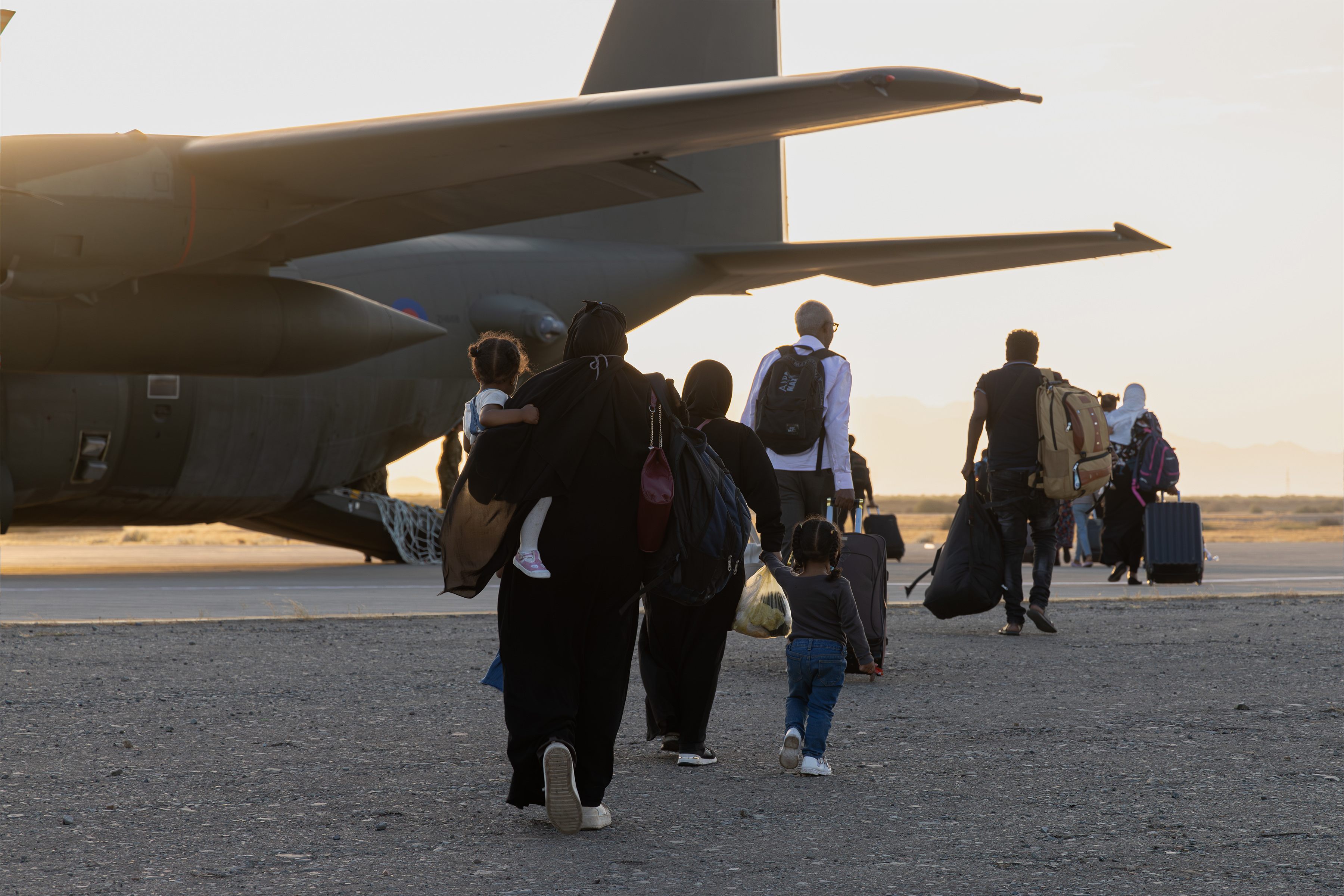
"While we were in Cyprus, we were informed the mission had changed. We would be running evacuations out of a temporary airbase, about 20km outside the capital, Khartoum."
The FCDO used social media to inform British nationals and Entitled Personnel that they had to make their way to the airfield. "From the minute we landed the work started, we had to clear the airfield, the hangars, and make sure we could start treating people as they arrived."
The first 48 hours were relentless. "We were treating newborn babies, children, adults, everyone. Some people had walked full 20km carrying their lives with them, so there was a lot of severe dehydration and malnutrition." To keep the aircraft as light as possible and maximise capacity, everyone travelled with minimal kit. Craig spent those nights sleeping on empty ration boxes, using his bergen rucksack as a pillow.
While Team 1 operated out of the airfield, the next crew on standby flew out to Port Sudan. Between them, the two teams helped care for and evacuate over 2,400 people.
"It was great working alongside the FCDO and Marines," says Craig. "The operation was so well planned and efficiently run that it went with little to no hiccups."
One moment stayed with him. The Commanding Officer of the Marines gathered the teams and told them: "We will walk every one of these people onto the plane. You will carry their bags and personally seat them."
"It was extremely rewarding to help so many people," Craig reflects. "It will be something that stays with me forever."
For the Nation
When there is no battlefield, the Wing's personnel work to keep their skills sharp, and the way they do it benefits the entire country.
"We work for the NHS while we're not deployed, you can’t tell that we’re part of the RAF" says Sergeant Nathan. "We work all across the emergency services, as paramedics for the Ambulance Service, or as Emergency Medicine Consultants and nurses in A&E."
The arrangement works both ways. "Knowledge sharing between us and full-time NHS staff means we're always improving one another's skills," says Corporal Georgie.
For Wing Commander Oli, that exchange once made the difference between life and death on a British motorway. During a seconded shift with the Thames Valley Air Ambulance Service, his team was called to a lorry driver who had crashed and rolled his vehicle.
"The Fire Service had arrived and couldn't free the driver, so they created a perimeter. Once we landed, it became apparent we weren't going to be able to simply lift him out of the cab. Due to the way it was crushed, the only way to free him was to perform an on-site amputation above the knee. With the open fractures present in the other leg, we could then get him clear."
They got the driver into the helicopter and began stabilising him for transport. Once at hospital, the other leg also required amputation. Six weeks later, a photograph arrived from his family: the driver on a beach, on holiday, in his wheelchair.
"Thanks to our Fwd AE and PHEC skills, we could provide lifesaving care," says Oli. "Without them, the driver would have bled out there and then."
Oli came to the RAF via an unconventional route, four years into medical school before joining the Army as a medic, completing his degree while serving, then joining the RAF in 2010. However, his path is not unique. The Armed Forces offers routes for people to build careers and qualifications they might not otherwise access.
Saving Lives Wherever, Whenever
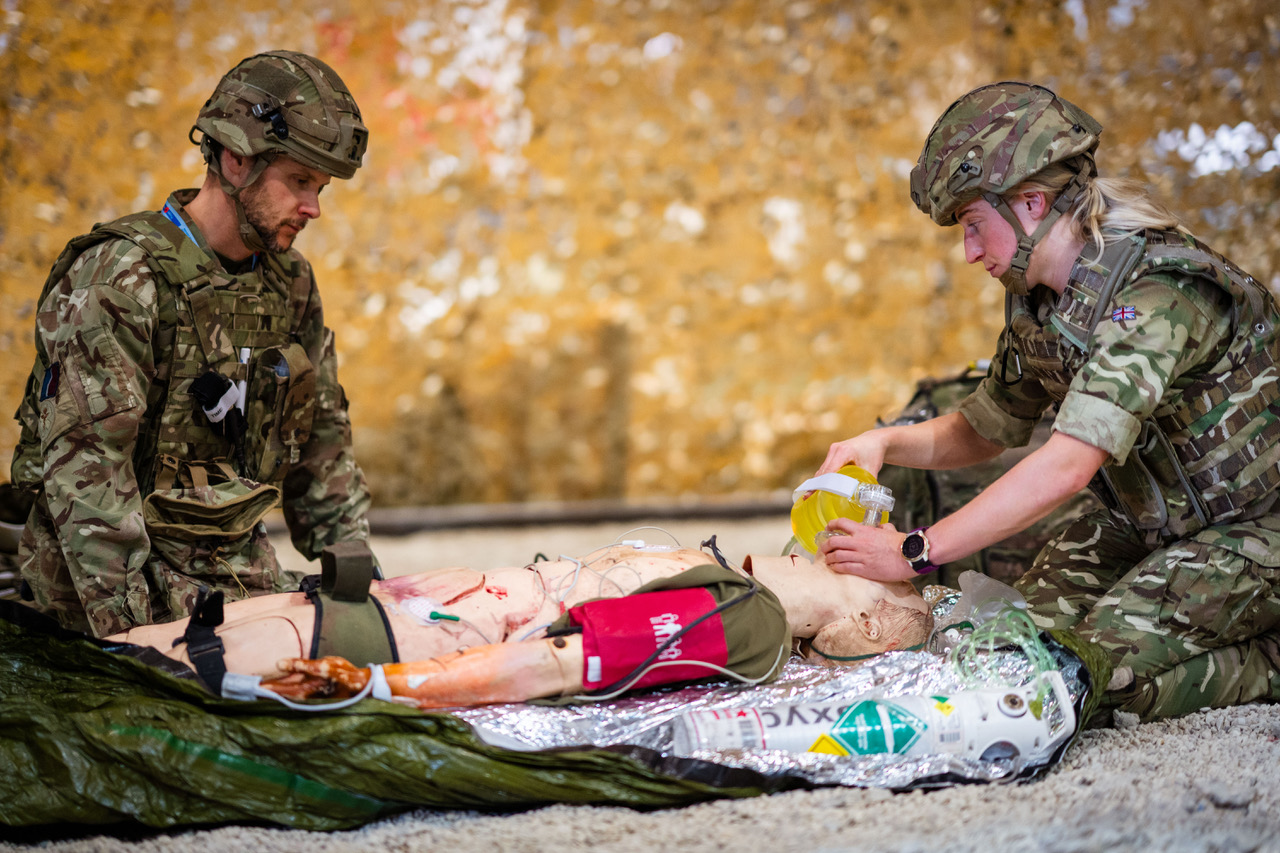
Corporal Georgie and Sergeant Nathan both joined the TMW as medics and went on to qualify as paramedics through the RAF. Now, alongside their military duties, they give back to the NHS wherever they can.
For the entire Wing, the line between serving their country and serving their community has never really existed. When they are not extracting the wounded from a battlefield, they are working alongside NHS colleagues in A&E departments and on ambulances, bringing the same focus and composure that defines their work in combat.
That is what makes the TMW remarkable. The skills that save lives under fire are the same skills that save lives on UK streets. And the knowledge flowing back from the NHS makes them sharper in the field. It is a two-way relationship that strengthens both services.
When Craig thinks back to those days in Sudan, to the newborns, the families who had walked 20km through a warzone, the Marine CO's quiet instruction to carry every bag, he does not reach for grand language.
"It will be something that stays with me forever."
For the people of the Tactical Medical Wing, that is enough.