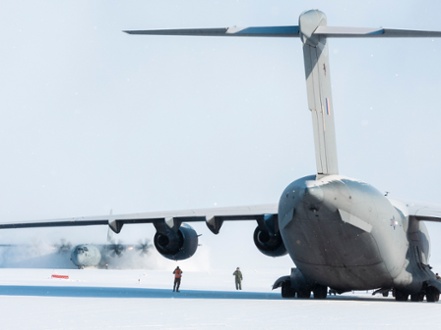
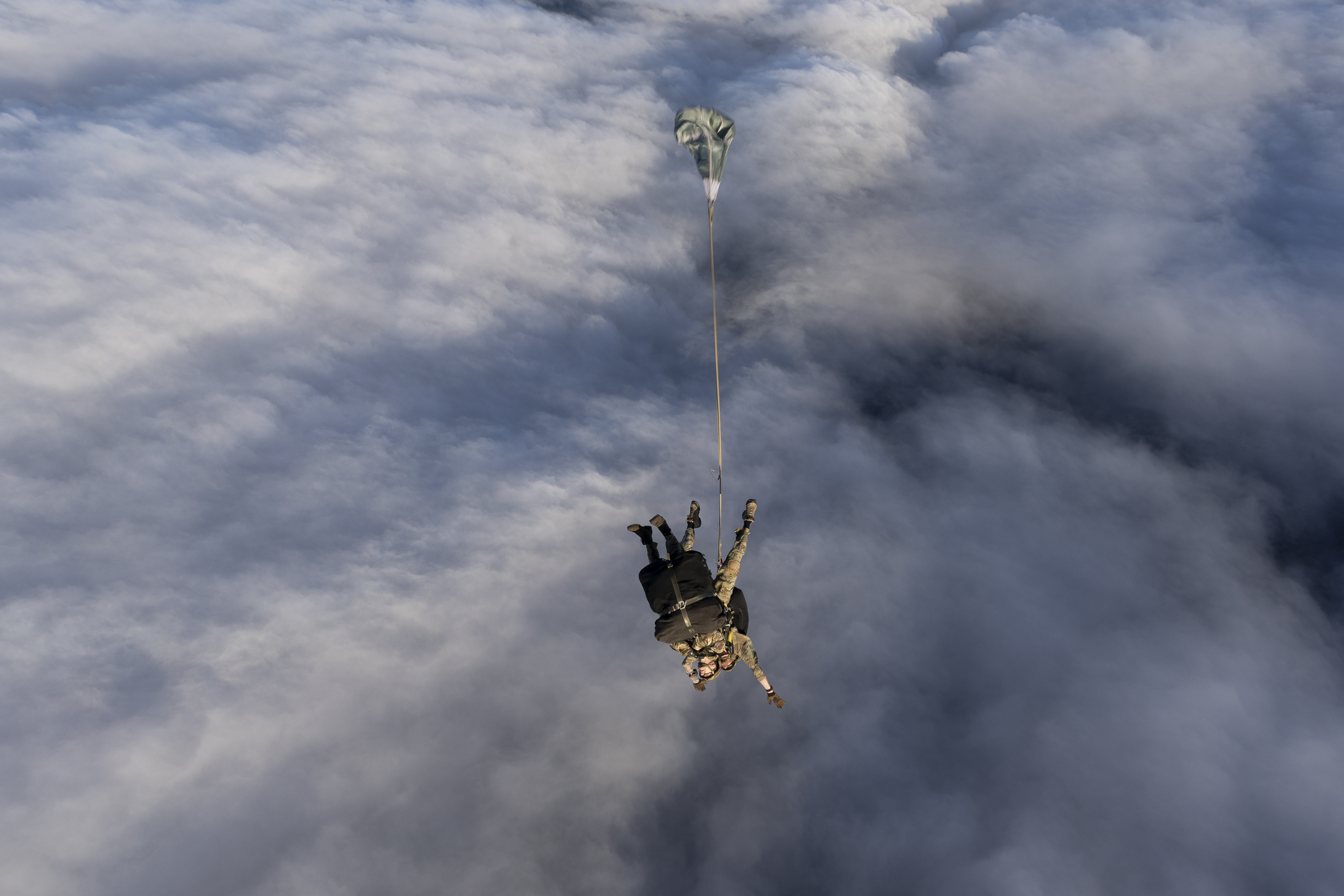
With no airfield available, critical medical supplies, along with an RAF anaesthetist and an Army nurse, were delivered by precision parachute airdrop in support of a Foreign, Commonwealth and Development Office‑led mission. Working alongside 16 Air Assault Brigade, support reached UK nationals on Tristan da Cunha, widely regarded as the most remote inhabited archipelago in the world.
"Providing air‑to‑air refuelling in support of the A400M was central to the mission. It enabled the A400M to operate at range, remain overhead for the para and container aerial dispatch, and recover safely, demonstrating how tanker capability acts as a force multiplier for air operations."
Wing Commander Graham
RAF Voyager Spokesperson
Delivered alongside ongoing RAF activity worldwide, Operation Mossyback formed part of a broader pattern of sustained operations across multiple theatres, where forces continue to operate at range while remaining ready to respond wherever required.
Flying more than 7,000 nautical miles from the UK via Ascension Island, the mission required sustained coordination between Voyager and A400M crews, including air-to-air refuelling at altitude to maintain the operation over distance. It took place alongside concurrent RAF operations across regions including the High North, the Middle East and the South Atlantic, demonstrating how activity is sustained globally while maintaining the ability to respond at reach.
“Within 24 hours of the call, the Force was airborne, flying over 7,000 nm via Ascension Island and multiple air-to-air refuelling brackets to successfully deliver high-altitude parachutists and air-delivered stores to one of the most isolated communities in the world.
This was an exceptionally demanding mission, showcasing the very best of our crews, our Voyager Force colleagues, and the many enablers who make every sortie possible. It was a privilege to witness how these diverse teams came together seamlessly to deliver the required effect—our people are truly outstanding at what they do.
That we achieved this without reducing tasking anywhere else across our global footprint, from the High North to the Middle East, is further testament to their drive, determination, and the capability of our aircraft.
The remote location of the airdrop demanded detailed planning and close coordination, with crews managing long distances and refuelling in flight to sustain the mission. Through this complex, long-range effort, lifesaving aid was delivered directly to those who needed it most, while other RAF operations and exercises continued concurrently across multiple regions”.
Wing Commander Christopher
Officer Commanding 30 Squadron
The sortie took place over long distances and in a complex operating environment, requiring careful navigation and close coordination between crews. This ensured the aircraft could reach the drop zone and deliver aid safely and accurately despite the challenges of distance and isolation, while contributing to a wider global operating picture.
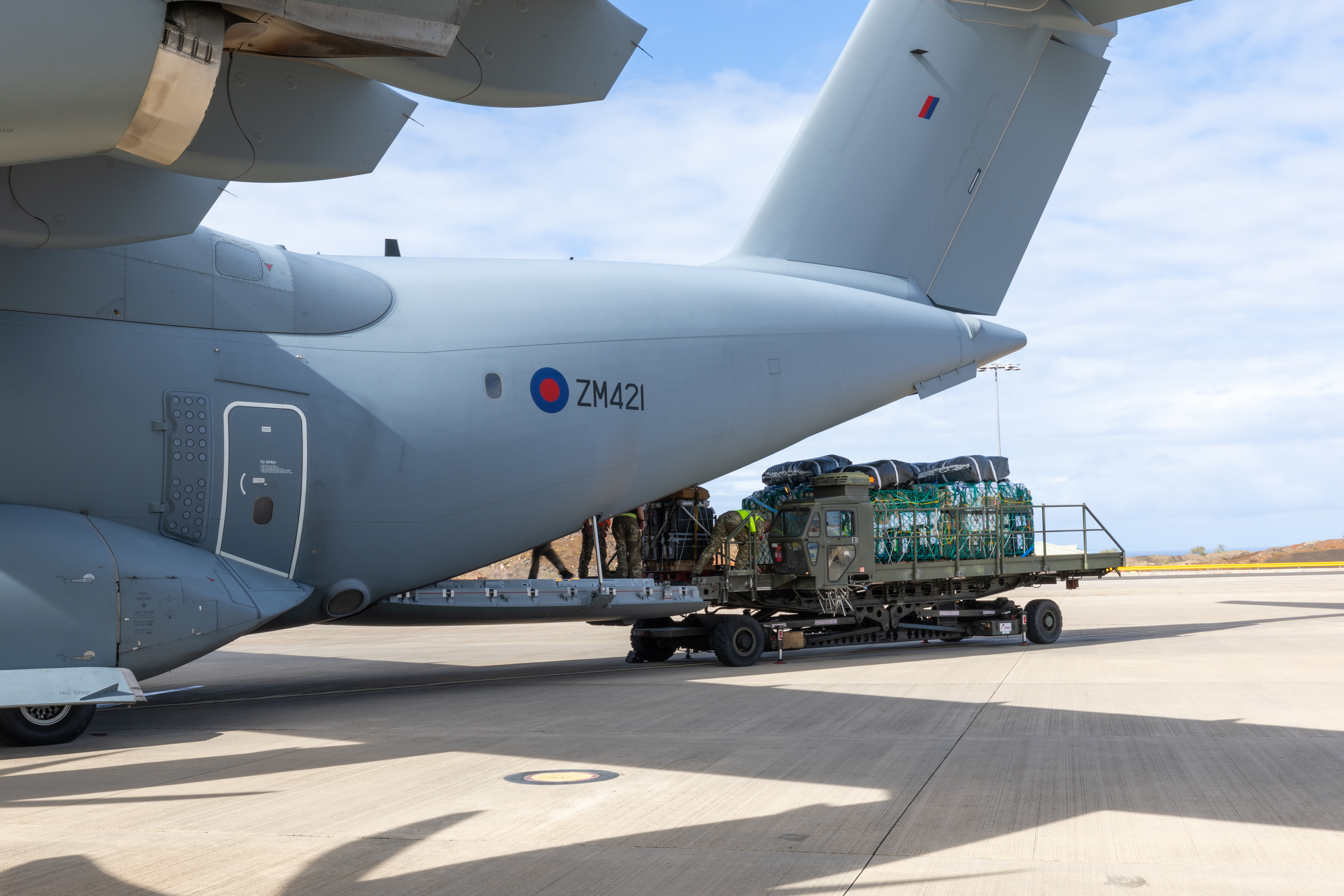
Operating around the clock and across the globe, this mission highlights how RAF forces remain ready to respond wherever required. From the High North to the Middle East, the Indo-Pacific and the South Atlantic, operations continue at reach, delivering support in places few others can access.