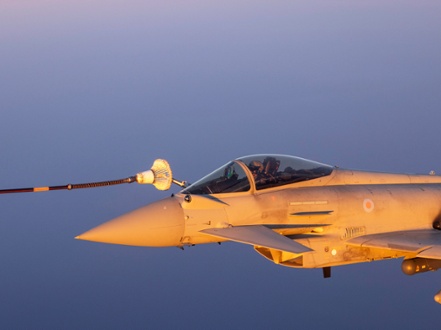
More than 80 years after flying alongside each other during Second World War operations, crews from IX (Bomber) Squadron and 617 Squadron have once again operated together on long-range combat air missions — this time flying Typhoon and F-35B Lightning aircraft from RAF Akrotiri in support of operations over the Red Sea.
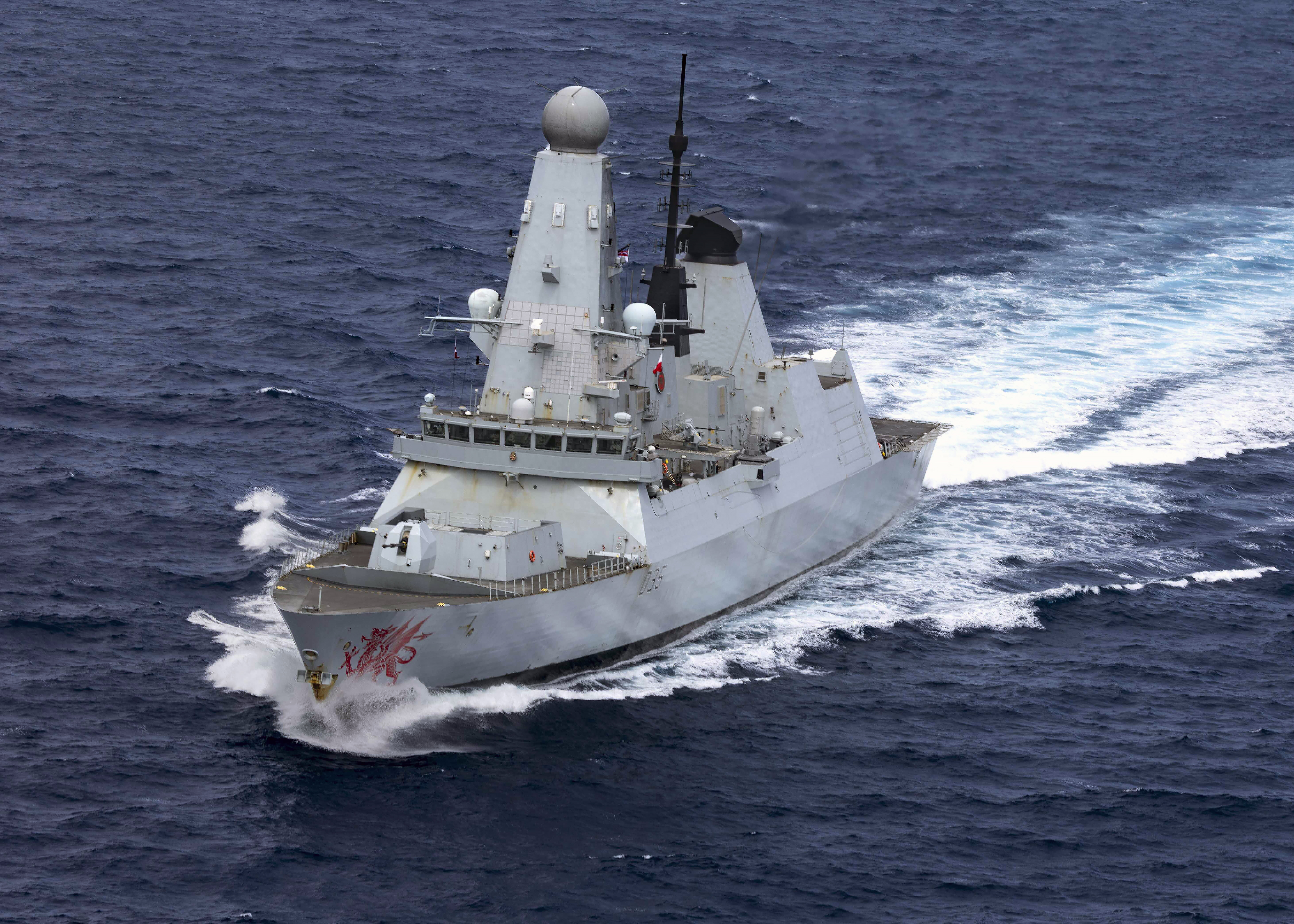
During recent Defensive Counter Air patrols in support of HMS Dragon, the two squadrons operated in mixed formations alongside RAF Voyager air-to-air refuelling aircraft, helping deliver more than 50 hours of continuous defensive cover at distances of up to 1300 miles from base.
While the aircraft, technology and battlespace have changed dramatically since the 1940s, the operation reflected a continuity that has defined the Royal Air Force for generations: adaptable combat air power, sustained at reach and integrated with maritime forces.
IX (B) Squadron is one of the RAF’s oldest squadrons. It was first formed at St Omer as 9 (Wireless) Squadron on 8 December 1914, before being re-formed at Brooklands in April 1915. During the Second World War, the squadron operated the Lancaster bomber and took part in major Bomber Command operations, including the significant raid against Peenemünde in August 1943.
617 Squadron was formed at RAF Scampton in March 1943 under Wing Commander Guy Gibson for Operation Chastise — the famous Dambusters raid. On the night of 16/17 May 1943, 19 specially adapted Lancaster bombers attacked dams in Germany’s industrial heartland. The Möhne and Eder dams were breached, while the Sorpe was damaged. The cost was significant: eight aircraft were lost and 53 aircrew were killed.
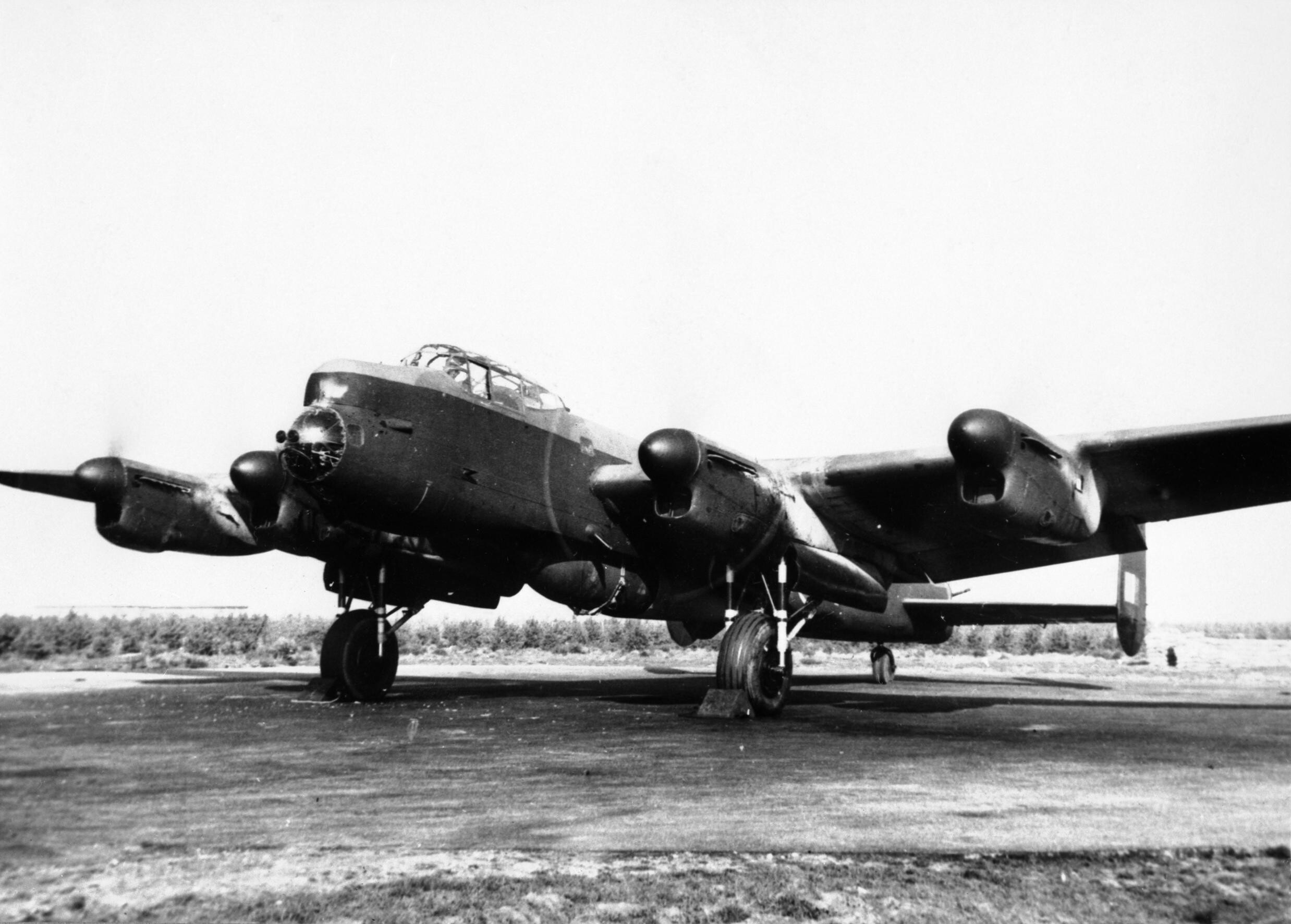
The wartime connection between IX (B) Squadron and 617 Squadron is especially clear in the later attacks on the German battleship Tirpitz. RAF records note that IX(B) Squadron flew alongside 617 Squadron on 12 November 1944, dropping 12,000lb Tallboy bombs during the raid that permanently disabled the battleship.
As the RAF evolved through the Cold War and into the modern era, both squadrons adapted repeatedly to new aircraft, new missions and new forms of warfare.
IX (B) Squadron went on to operate aircraft including the Vulcan, Canberra and Tornado. In 2011, it led the initial Storm Shadow attack on installations in Libya during Operation Ellamy — the first RAF offensive mission launched from UK soil since 1945. After Tornado operations ended, the squadron disbanded at RAF Marham in 2019 before re-forming at RAF Lossiemouth as a Typhoon QRA squadron.
617 Squadron entered a new chapter in 2018 when it re-formed to fly the UK’s F-35B Lightning, bringing the Dambusters name into the fifth-generation era, the first to fly the UK’s new F-35 fighter jets.
Since then, the squadron has been central to the UK’s carrier-enabled air power capability. In 2021, 617 Squadron’s F-35B Lightnings deployed aboard HMS Queen Elizabeth as part of Carrier Strike Group 21, demonstrating the UK’s return to carrier strike at scale. Building on that success, the squadron again operated at the forefront of UK defence on HMS Prince of Wales during Operation Highmast in 2025, playing a critical role in delivering fifth-generation combat air power as part of the UK’s Indo-Pacific deployment.

The recent Red Sea operation brought these two historic squadrons together once again - this time integrating fourth and fifth-generation combat aircraft in a modern Defensive Counter Air role.
Operating alongside Voyager aircraft and supporting HMS Dragon, the missions demonstrated the RAF’s ability to sustain agile combat air power at significant range, combining speed, endurance and interoperability across air and maritime domains.
For both squadrons, the operation represented another chapter in a shared operational story that stretches from the skies over wartime Europe to today’s contested environments in the Middle East.
From Lancaster to Lightning, RAF technology has transformed beyond recognition - but the mission to deliver credible, integrated combat air power at range, remains unchanged.