Russian drones have repeatedly entered NATO airspace over Poland, Germany and Romania in recent months, underlining the growing need for the RAF to operate effectively in non-standard conditions.
It's this challenge that took 70 Squadron (Sqn) to Poland, where its crews practised unconventional runway take-off and landing.
70 Sqn, one of the squadrons in the Air Mobility Force, deployed an Atlas C1 A400M to Powidz. Working alongside Polish Air Force pilots, they tested their skills in tactical low-level flying, temporary runway take-offs and landings, air drops, and the loading and unloading of NATO partner vehicles.
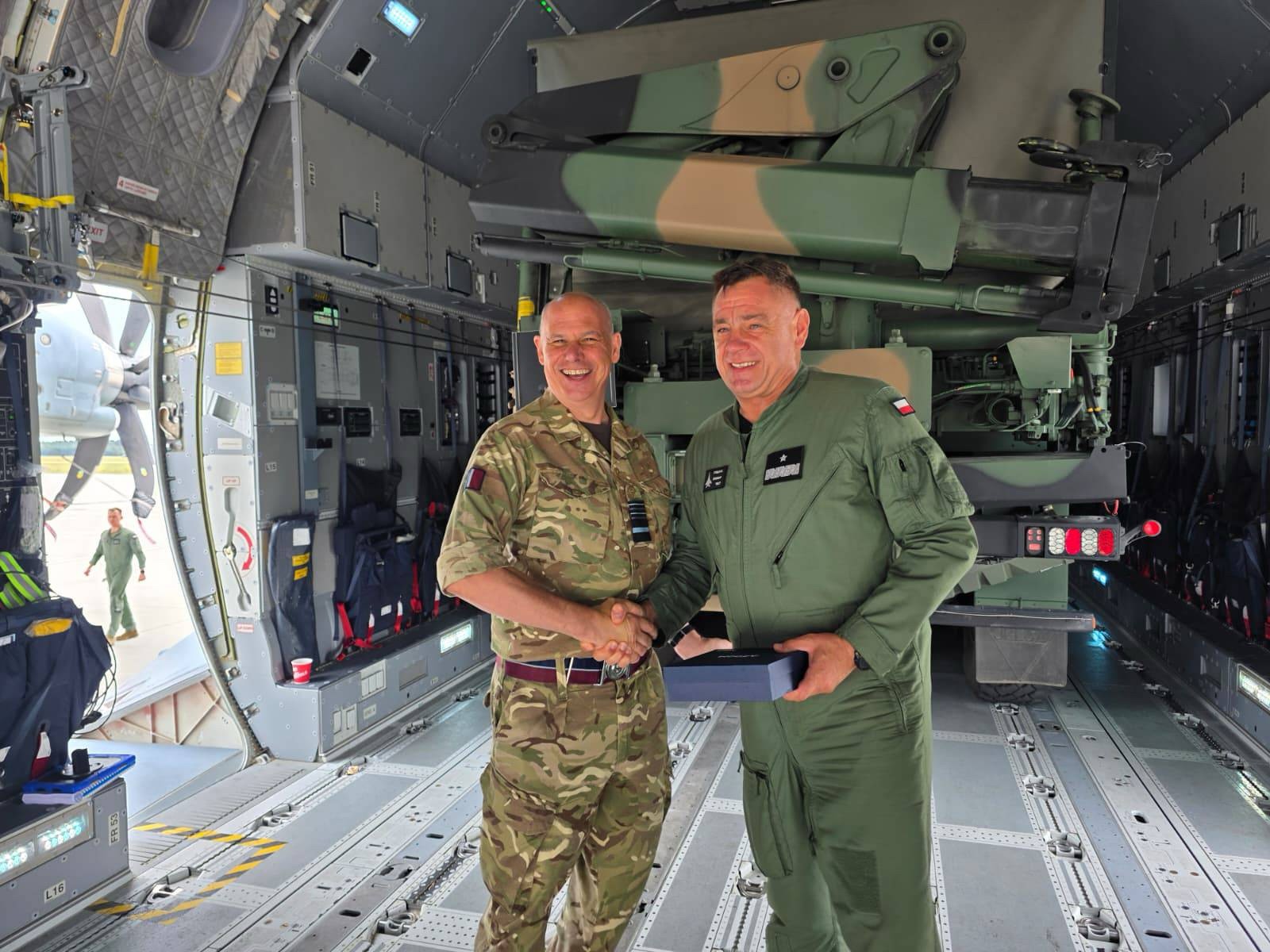
At the heart of this training lies the principle of dispersal: the ability to operate from multiple, often improvised and austere locations rather than a fixed airbase. This flexibility is key to protecting military assets and maintaining resilience, which is why practising take-off and landing on a grass strip provides such valuable experience for pilots, air crew and commanders alike.
"The A400M continues to prove its worth. By providing the RAF, UK Defence and NATO with the agility to airlift the wide variety of large vehicles, supplies and troops of the alliance to challenging locations, it remains a key cornerstone of the Air Mobility Force in helping the UK protect the homeland and secure NATO territories.
Giving our crews the chance to practise unprepared runway operations ensures the RAF remains ready to fly and fight. Seamless interoperability with our NATO partners is of particular importance to reinforcing the cohesion of the Alliance and a great deal of mutual learning has taken place with our Polish friends."
Wing Commander Doug Grove,
Officer Commanding 70 Squadron
The A400Ms adaptability has been on display throughout 2026. It was used to transport paratroopers and medical personnel into Tristan da Cunha so they could treat a seriously ill British national. It has played a vital role in the broader Middle East, supporting partner nations by flying constant resupply missions across the region.
Its versatility strengthens the UK's contribution to NATO more broadly. Its ability to transport tactical vehicles and troops, airdrop supplies and paratroopers, resupply at speed, and take off and land on temporary runways provides the RAF the flexibility to fulfil mission objectives and adapt to changing scenarios when needed.
The fact that other NATO members also operate the A400M amplifies this advantage further. Using the same aircraft across the alliance strengthens interoperability and builds resilience, which is increasingly important as the security environment grows more uncertain.
Nowhere is this more relevant than in the High North, the Arctic and sub-Arctic region spanning northern Europe, North America and Russia, which continues to grow in strategic importance for NATO. Guaranteeing operational capability in demanding environments ensures the RAF is best placed to protect the UK, its partners and its interests.
With aircraft like the A400M, the Air Mobility Force remains the backbone of the RAF's ability to fly, fight, and stay agile, integrated and ready to respond when needed.