As military activity and security pressures continue across the Middle East, maintaining control of the skies has never been more important. For the Royal Air Force, this is delivered through air battlespace management – the system that coordinates aircraft, drones, missiles and every other airborne activity within a defined area of operations, as well as identifying every single aircraft within it.
“Effective battlespace management keeps our people safe and our missions on track. When the air picture is coordinated and predictable, every aircraft can carry out its task with confidence.”
Group Captain Lisa Foy,
Commander Air C2 Force
Put simply, air battlespace management ensures friendly aircraft can operate safely, threats are identified early, and coalition forces can work together without interference. With multiple nations flying in the same airspace, alongside increasing numbers of unmanned systems and long‑range weapons, the environment is now busier and more complex than at any point in recent years.

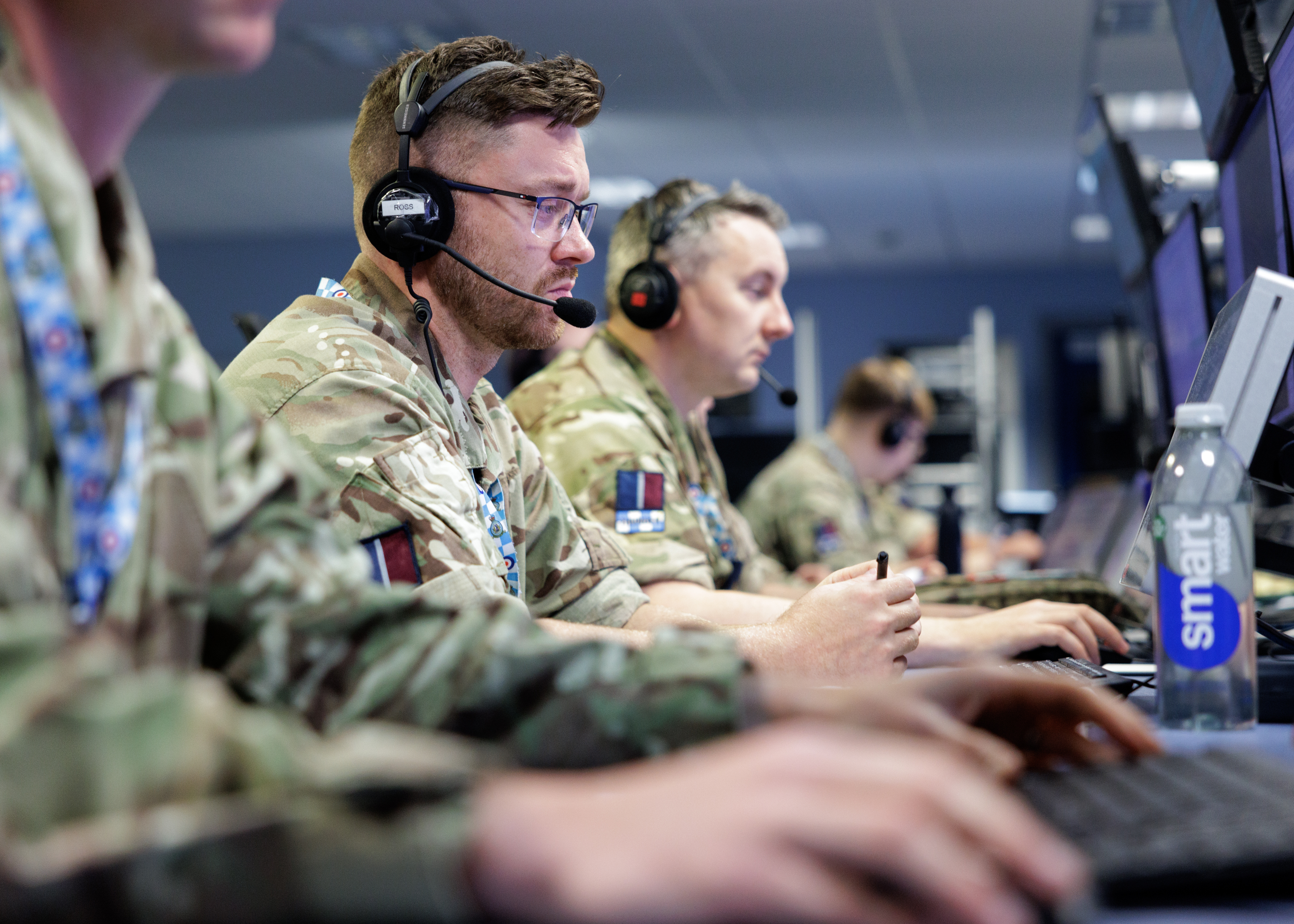
A key part of this system is Air Operations (Control), split between Air Traffic Controllers and Air Battlespace Managers (ABMs). Some RAF Air Traffic Controllers are currently deployed supporting regional partners, including Qatar, to assist in airspace management and opening airspace. While Air Traffic Controllers keep aircraft safely separated, ABMs provide a different but complementary function — they can bring aircraft much closer together when required, particularly during complex or time‑critical missions.
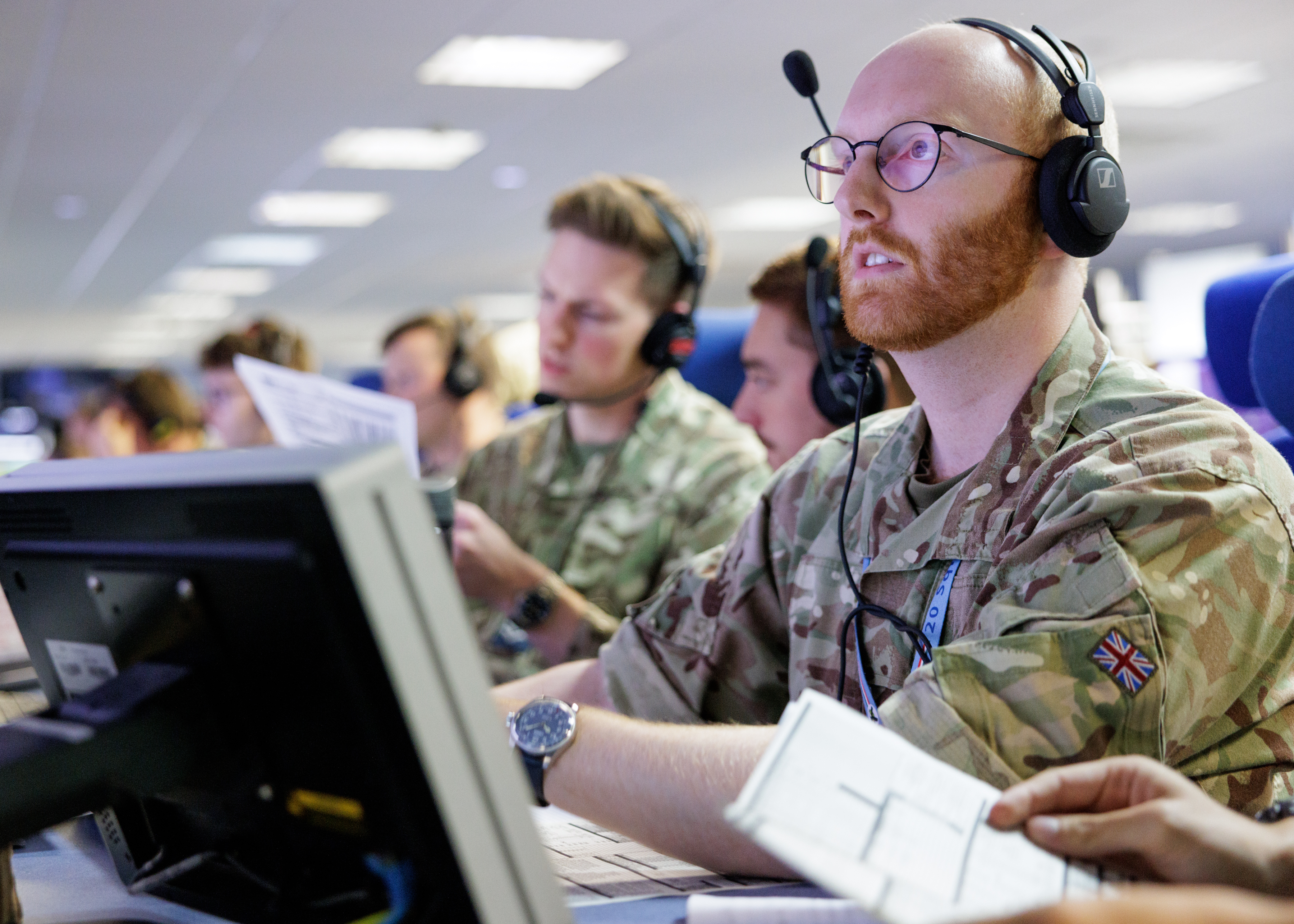
ABM (Control) teams direct and control aircraft to achieve specific mission types. They manage fighter jets, surveillance platforms, refuelling aircraft and remotely piloted systems, calling the ‘air picture’ to fast‑jet pilots, pointing out threats and deconflicting the battlespace. They also provide specialist air battlespace management support to allies. The RAF maintains a longstanding presence at KINGPIN, where tactical air command and control is executed, reporting to the Combined Air Operations Centre. ABMs are also deployed to Cyprus and other regions as part of long‑running commitments.
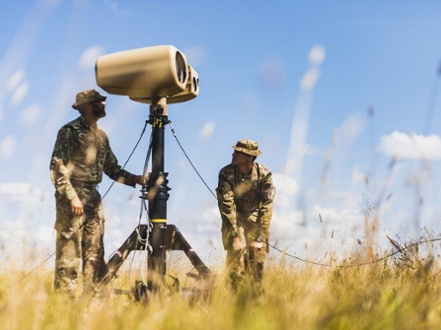
Alongside them are ABM (Surveillance) specialists, whose role is to identify every aircraft entering the area of interest. They ensure their systems remain ‘battle ready’ to provide the best air command and control picture possible. Working hand‑in‑hand with ABM (Control) teams, they form the backbone of the UK’s Air C2 architecture in theatre.
What Air Battlespace Management Really Involves
Air battlespace management is about maintaining a constant, coherent picture of everything happening above the region.
It covers far more than tracking aircraft. It includes coordinating flight paths, integrating defensive systems, deconflicting missions, and ensuring that aircraft from different services – and different nations – can share the same airspace without risk.
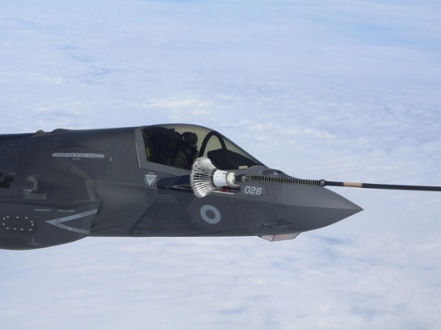
Military planners rely on networks of radars, intelligence feeds and command centres to monitor activity across vast areas. This allows RAF crews to position aircraft exactly where they’re needed, from Eurofighter Typhoon and F‑35B Lightning II to systems like Protector RG Mk1, and the transport and refuelling aircraft sustaining operations across theatre.
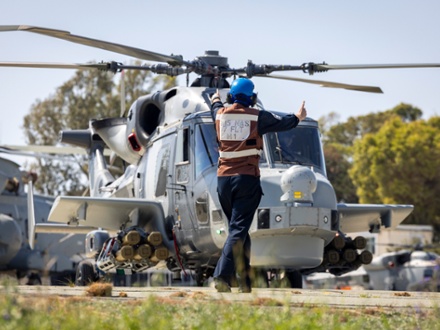
It also ensures helicopters such as the AW159 Wildcat and AW101 Merlin can integrate safely when supporting maritime security, surveillance or joint missions.
Every platform adds information to the wider operational picture, enabling commanders to keep the airspace organised, predictable and responsive.
A Busy and Demanding Air Environment
The skies over the Middle East carry a mix of civilian flights, coalition missions and irregular threats such as drones and stand‑off weapons. Managing this blend requires constant vigilance and tight coordination.
“In such a busy air environment, good battlespace management is what keeps crews protected and operations running smoothly. It ensures every aircraft has the space and clarity it needs to complete its mission.”
Group Captain Lisa Foy,
Commander Air C2 Force
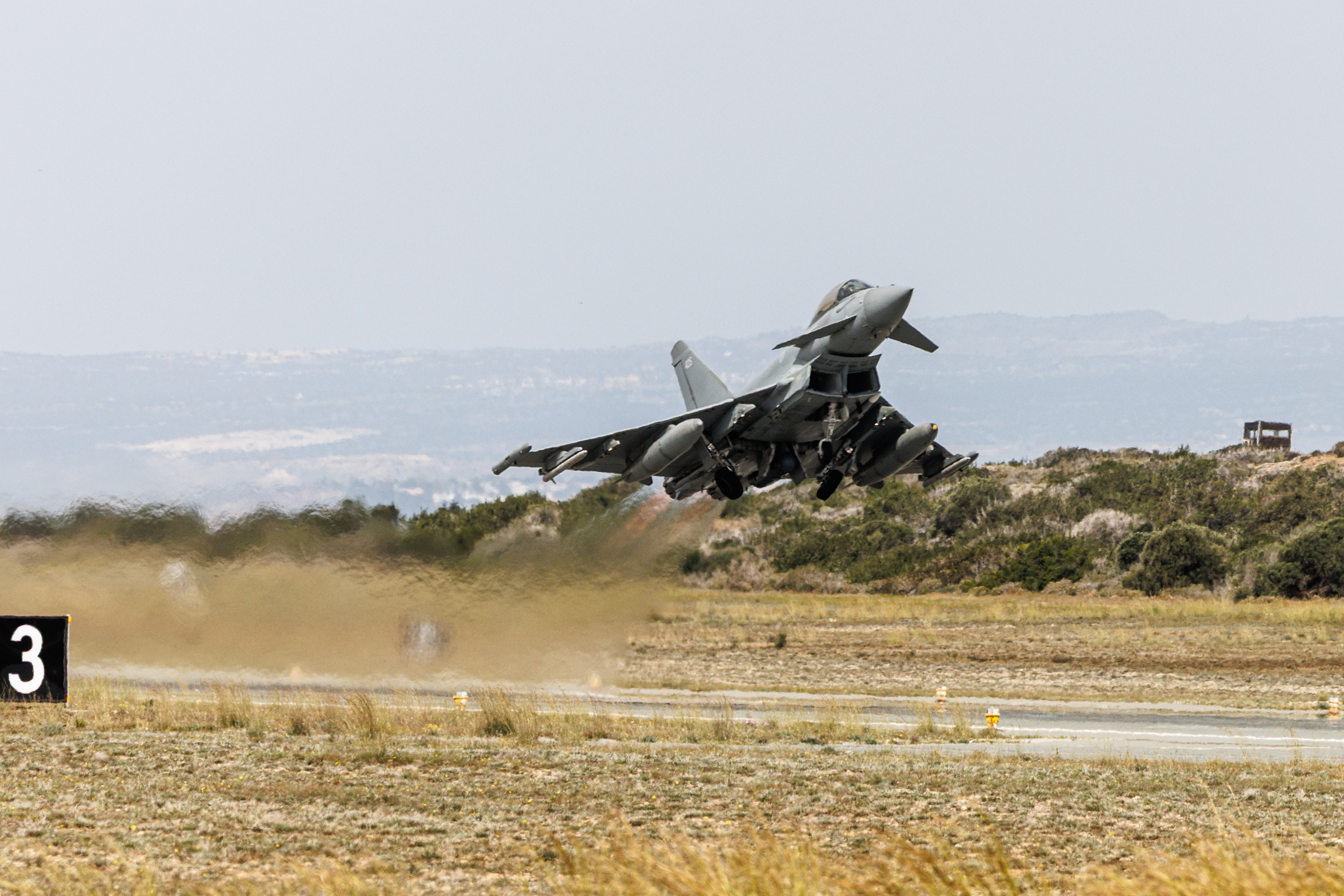
Aircraft from the RAF’s Combat Air Force help maintain security and situational awareness, while surveillance platforms and remotely piloted systems extend the reach of monitoring across large distances.
Meanwhile, the RAF’s Air Mobility Force – including A400M, Voyager and C‑17 Globemaster – remains agile and ready to move personnel, equipment and specialist capabilities wherever required. Keeping these aircraft safe as they move in, out and through the airspace demands precise planning through the air battlespace management system.
Responding to Modern Air Threats
One of the most significant shifts in recent years has been the rapid increase in unmanned aerial systems. Small drones are now used frequently for reconnaissance, surveillance and, at times, attack.
Air battlespace management plays a key role in detecting, tracking and assessing these threats, while ensuring friendly aircraft can continue operating safely.
Using a blend of aircraft sensors, radar networks and information from across the joint force, commanders can quickly build a detailed understanding of activity and respond at speed when needed.
“The threats we face are evolving, and we have to stay ahead of them. Our teams monitor the skies constantly, identifying risks early and ensuring our people are protected. Effective air battlespace management isn’t just about awareness – it’s about giving commanders the confidence to act at the right moment.”
Group Captain Lisa Foy,
Commander Air C2 Force
Supporting UK and Coalition Operations
For the RAF, effective air battlespace management underpins every mission in the region. It enables combat air patrols, surveillance sorties and air mobility flights to operate safely and without interruption. It also ensures that aircraft from across the UK’s Armed Forces — including Army and Royal Navy aviation — can integrate seamlessly.
As the security environment continues to evolve, maintaining control of the airspace will remain a critical component of UK operations. Through advanced aircraft, sophisticated sensors and close coordination between allies, the RAF continues to ensure the skies remain organised, monitored and ready to respond whenever required.