ABOUT THIS GROUP

No 1 Group has responsibility for the vast majority of the RAF’s Front-Line facing Force Elements, including the Air Mobility Force; Air and Space Warfare Centre; Combat Air Force; and Intelligence Surveillance, Targeting and Reconnaissance (ISTAR) Force, to:

"To Understand and exploit the Battlespace to deliver decisive Air Power"

No 1 Group trains, retains and empowers talented, professional and courageous people to deliver world-class Air Power. Through an intelligent use of resource and partnerships, the Group continually develops and tests operational excellence across all of its Force Elements to deliver decisive Air Power today, while being prepared to meet the security challenges of tomorrow.

With over 10,000 personnel in the Group, we are ready to meet all emerging threats and challenges to UK interests across the globe, while inspiring the next generation through our extensive fixed-wing and parachuting Display Team activity.
Swift To Attack

What we do

Air Mobility Force

The Air Mobility Force provides rapid global mobility in support of UK overseas operations and exercises, as well as air-to-air refuelling support for fast jet aircraft, both on operations and in support of UK Homeland Defence.

Air and Space Warfare Centre

The Air and Space Warfare Centre is the primary source of impartial, authoritative and integrated advice to support success on current and future operations in the Air and Space domains including associated Electronic-Warfare, Cyber and Information environments.

Combat Air Force

The Combat Air Force generates, operates and sustains effective Combat Air power in all tasked roles and environments to defend the UK and its interests globally. Concurrently, the Force defends UK sovereign airspace 24 hours a day, 7 days a week and 365 days a year; ready to intervene decisively at a moment's notice.

ISTAR Force

The ISTAR Force delivers battle-winning knowledge and effect to commanders at all levels, by the provision of near-real time information, world-leading intelligence products and through the delivery of precise, offensive and defensive effect in the land, air and maritime domains.

RAF Aerobatic Team (RAFAT), The Falcons and Typhoon Display

The Red Arrows, Falcons and the Typhoon Display teams represent the speed, agility and precision of the Royal Air Force, at numerous Display events yearly – both in the UK and overseas.

Battle of Britain Memorial Flight (BBMF)

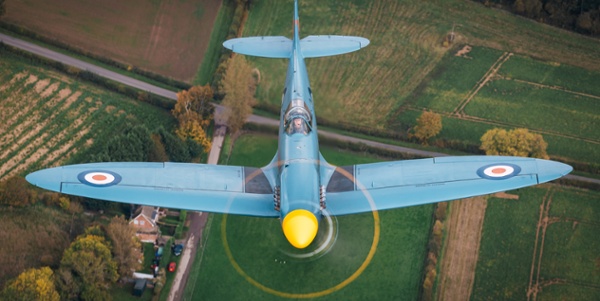
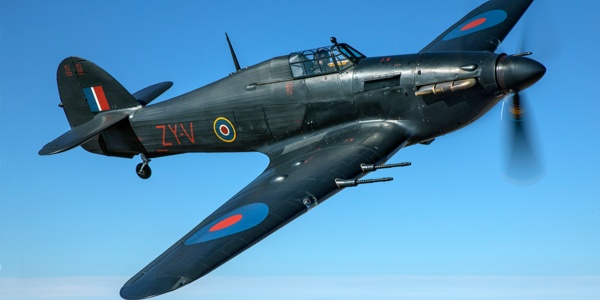
The BBMF maintain the priceless artefacts of our national heritage in airworthy condition in order to commemorate those who have fallen in the service of this country. The RAF BBMF also serves to promote the modern-day Air Force and to inspire the future generations.

Commander

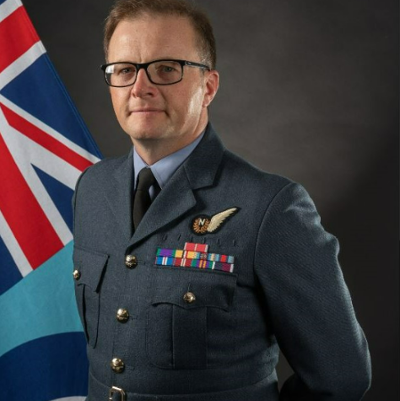
Air Vice-Marshal Simon Strasdin CBE MA RAF

Air Vice-Marshal Simon Strasdin joined the RAF in March 1992 as a Navigator. He has flown over 3700 hours and completed multiple flying tours, operating the Tornado GR1 / GR4 and the F15-E Strike Eagle. As a Qualified Weapons Instructor he has completed 13 operational tours of duty throughout the Middle East and Afghanistan. Staff assignments have included: Equipment Capability (Air to Surface Weapons procurement strategy and delivery); MOD Joint Capability; Defence Reform (2011 - Lord Levine Review); Assistant to Chief of Defence Staff’s Liaison Officer to the Chairman of the Joint Chiefs of Staff (Pentagon); Military Aviation Authority Oversight and Assurance; Programme Director for the Lossiemouth Development Programme (circa £0.5Bn infrastructure investment to deliver P-8 Poseidon and Typhoon growth); and Warfare Development (enabling the adaptation of the Current Force to succeed on contemporary and future operations).

In 2010, he completed the Advanced Command and Staff Course, gaining an MA in Defence Studies, and Higher Command and Staff Course in 2022. In 2018 he was appointed Officer of the Order of the British Empire (OBE) for his work in Aviation Safety and in 2022 he was appointed Commander of the Order of the British Empire (CBE) following a period of deployed operations in the Middle East. Simon has completed command appointments at the squadron, Expeditionary Air Wing, Expeditionary Air Group and Force levels.

Simon fulfilled the Director Strategy role within Strategic Command for 6-months as an Acting 2*, leading Project SOLARIUM (Command wide transformation programme); Strategic Plans, including Defence Review input; international liaison; and the Defence Targeting Enterprise. The significant achievement during his tenure was the establishment of the Integration Design Authority, bringing together the Defence Academy, Concepts, Capability and Warfare Development under a newly developed operating model.

In 2024, he was appointed to lead the Integrated Warfare Centre within Cyber and Specialist Operations Command, bringing together Warfare Development for the current force with Analysis and Insights, Doctrine, Innovation, Experimentation and Wargaming, Collective Training, Integration and Force Development.

In August 2026, he took command as Air Officer Commanding Number 1 Group. He is responsible for the force generation, readiness and resilience of the Royal Air Force’s air power portfolio, including Air and Space Warfare, Air Mobility, Combat Air, and Intelligence, Surveillance, Target Acquisition and Reconnaissance.

Simon is married to Andrea and they have two children; hobbies include amateur small-holder, enthusiastic DIYer, hiking, cycling, gardening and looking after pet dogs, sheep and horses.

Key dates

1918 - 1936

No 1 Group first formed to perform air defence in the South East of England against German zeppelin and Gotha Raids. It continued in the air defence role until renumbered as 6 Group in 1924 but was reformed the same day at a new location at which it operated until 1926. 1 Group was reactivated the next year, again in the air defence role which it continued until 1936 when it was again renumbered as 6 Group, 1 Group becoming a light bomber group.

1936 - 1945

As a light bomber group 1 Group went to France in 1939 as the Advanced Air Striking Force. An advance arm of Bomber Command rather than, as often thought, an army cooperation unit. The 1 Group designation was used briefly in 1939 by Bomber Command, but stood up permanently in June 1940 and has been active ever since. Largely based in North Yorkshire, the Group carried out more bombing raids than any other over the course of the War.

1946 - 1999

After the War, 1 Group stayed active. It took control of US loaned Thor ballistic missiles for a period between 1958 and 1963, and in 1968 transitioned in to Strike Command.

2000

The Group again took command of air defence within the UK and responsibility for the RAF's offensive air power on operations.